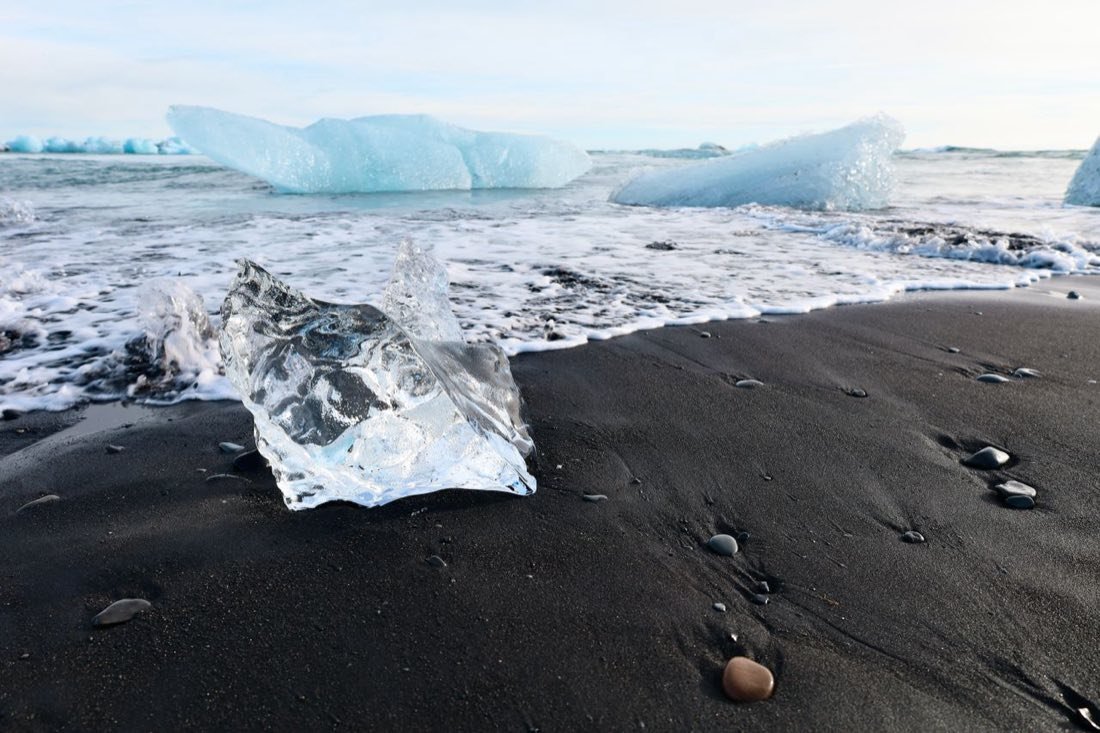
Diamond Beach is a stretch of black volcanic sand scattered with chunks of glacier ice. The ice breaks off Breiðamerkurjökull, drifts through Jökulsárlón lagoon, passes under the Route 1 bridge and washes ashore. Waves polish the blocks and the sunlight turns them into glass, which is where the name comes from. It is a short walk from the lagoon, free to visit, and a natural stop for anyone driving to the south-east.
Getting to Diamond Beach
The beach sits on the Atlantic side of Route 1, about 370 km from Reykjavík and roughly 5 hours of driving. It is about 80 km east of Skaftafell and 80 km west of Höfn. A day trip from the capital is possible, but long, and a night nearby makes the drive far easier. The car park is beside the lagoon. There are tour options from Reykjavík and from the area, so compare glacier lagoon and South Coast tours if you do not want to drive. To keep your timing flexible, hire a car in Iceland.
What to See
The beach is a long stretch of black sand that runs east and west. Ice blocks vary from fist-sized pieces to chunks the size of a car. The clearest ones show a pure blue or crystal glaze, and tide and swell move them around, so the scene changes hourly. Seals sometimes swim off the shore, and arctic terns nest nearby in summer.
At sunrise and sunset, the low sun lights up the ice and the wet sand, so this is the time to come if you want to photograph it. In winter, the aurora can appear over the beach on clear nights.
Safety
The beach has no barriers or lifeguards. Surf at Breiðamerkursandur can break unevenly, and sneaker waves can reach well past the usual waterline. Ice blocks can roll or drag back to the sea. Stay clear of the water, do not climb on the ice, and keep children away from the surf. For general conditions and weather warnings, check Safetravel.
Costs and Facilities
Entry to the beach is free. Parking has been free in recent seasons, but charges have appeared at several Icelandic sites, so look for signs. Toilets and a snack kiosk operate at the Jökulsárlón site across the road. Prices at the kiosk are high, so pack food. For the lagoon itself, see our Jökulsárlón glacier lagoon guide, which covers boat tours and ice caves. For wider planning, read about the Vatnajökull National Park.
Best Time to Visit
- Winter (November to March): The most ice washes ashore and the light is dramatic, but daylight is short and roads can be icy.
- Spring and autumn: Good light and fewer people.
- Summer: Long days and crowds. Visit after 7pm for quieter conditions.
Where to Stay
The nearest towns are Höfn, about 80 km east, and Kirkjubæjarklaustur, about 130 km west. Search stays in Höfn for the closest town with a wide range, or see our where to stay in Höfn guide. If you are coming along the South Coast, stays in Vík work as a halfway point. See also the South Coast drive and the Ring Road guide.
Tips
- Warm layers and gloves; the wind off the glacier is strong.
- Waterproof boots help if you want to walk the tide line.
- Never turn your back on the sea.
- Combine with a glacier hike at Skaftafell on the same trip.
A Realistic Timing Plan
Give Diamond Beach about an hour on its own, and pair it with the lagoon across the road for a total of two to three hours. The beach changes with every tide, so walk the full length rather than staying at the first set of ice. Early morning gives the cleanest ice and the softest light, while late afternoon gives deeper colours and more contrast on the sand. If you are staying in Höfn, an early start gets you here before the tour groups from the west arrive. If you are driving from Reykjavík in a day, build in a long buffer for the return, because the 5-hour drive each way leaves little time for the beach in winter, when the light fades by mid-afternoon.
Browse South Coast tours for guided days that reach as far as Jökulsárlón.