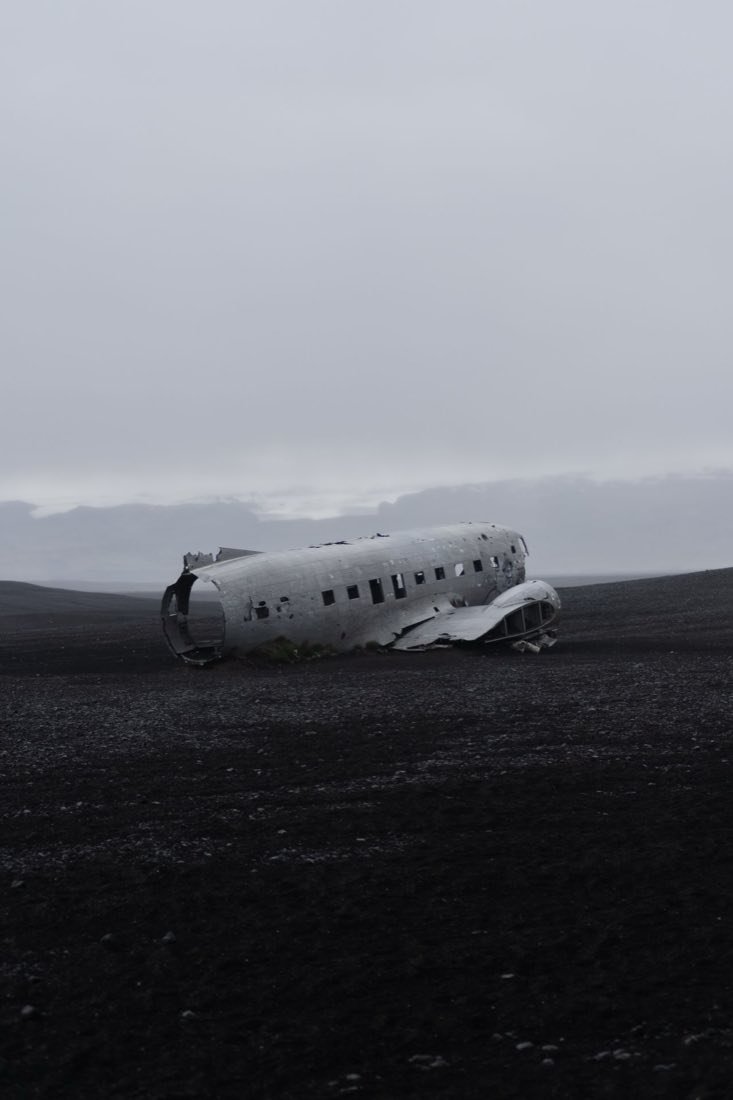
The Sólheimasandur plane wreck is the weathered shell of a US Navy Douglas Super DC-3 that made an emergency landing on a black volcanic sand plain in November 1973. All on board survived, and the plane has lain there ever since. It is one of the most photographed sights on the South Coast, and one of the few that needs a real walk to reach.
What Happened
The aircraft ran into trouble, with icing often given as the cause, and landed on the Sólheimasandur plain, far from any road. The crew walked away unharmed. The wreck was stripped of salvageable parts and left behind. The fuselage and a section of wing remain, bare of paint and marked by weather and graffiti.
Getting There
The car park is off Route 1, about 160 km from Reykjavík and about 2 hours 15 minutes by car, between Skógafoss and Vík. Look for a gate and a gravel car park on the seaward side. Driving onto the sand has been banned since 2016. The only legal access is on foot or by the shuttle that runs from the car park. If you do not have a car, many South Coast tours include the walk, so compare South Coast tours. If you drive yourself, hire a car in Iceland.
Walking or Shuttle
On foot: The track is a straight, flat line of about 3.5 to 4 km each way, around 7 to 8 km return. Allow 2 to 2.5 hours at an easy pace. There is no shade or shelter, so wind and rain are full-strength. Bring layers and a water bottle.
By shuttle: A seasonal shuttle runs between the car park and the wreck, taking 10 to 15 minutes each way. Recent guides give about 3,200 to 3,500 ISK return per adult. Check prices and times before you go, and treat older figures as outdated. The shuttle saves time and is useful for children and in bad weather.
Parking and Costs
As of 2025, one guide lists parking at 750 ISK per car and 1,000 ISK per van, paid through the Parka app. Entry to the site is free. There are toilets at the car park. Prices change, so confirm on arrival. Parking details are on Parka.
At the Wreck
The fuselage is a shell with cut-outs for windows. The black sand, grey sky and distant glacier make it look very empty. Climbing on the aircraft is discouraged because the metal is sharp and thin, and the wreck is slowly deteriorating. If you photograph it, wait for a gap in the crowds, or come early or late.
Safety and Respect
The plain is open and exposed. The weather can change quickly, and mist or snow can hide the track. Stay on the track, carry a charged phone and do not leave anything behind. Wind can be severe in winter. Check conditions at Safetravel and road.is before you go.
Best Time to Visit
- Summer: Long daylight lets you walk late. It is busiest at midday.
- Autumn and spring: Cooler and quieter, with moody light.
- Winter: Short days, strong winds and icy tracks. The shuttle may not run, so check beforehand.
Nearby Stops and Where to Stay
East of the wreck lie Reynisfjara and Vík, and west lie Skógafoss and Seljalandsfoss. The Sólheimajökull glacier is a few kilometres away, and is covered by our glacier hiking guide. For the full route, see our South Coast drive.
To break the drive, search stays in Vík, hotels in Hella or accommodation in Selfoss.
Tips
- Wear waterproofs and sturdy shoes; there is no cover.
- Bring snacks and water.
- Do not drive on the sand.
- Time the walk or shuttle outside midday when the tour buses arrive.
A Realistic Timing Plan
If you walk, count on three hours door to door, including time at the wreck and a rest on the return. Start with a full water bottle and a windproof layer, even on a sunny day, because the plain has no shelter. If you take the shuttle, the trip is closer to 1 hour 15 minutes including the ride, and you can use the time saved for another stop such as Sólheimajökull or Reynisfjara. Visit early or late to avoid the middle of the day, when tour buses unload and the wreck is surrounded by people. For the cleanest photograph, wait for a gap rather than editing people out later, and keep the horizon level against the black sand.
Browse South Coast tours for guided days that include the plane wreck.