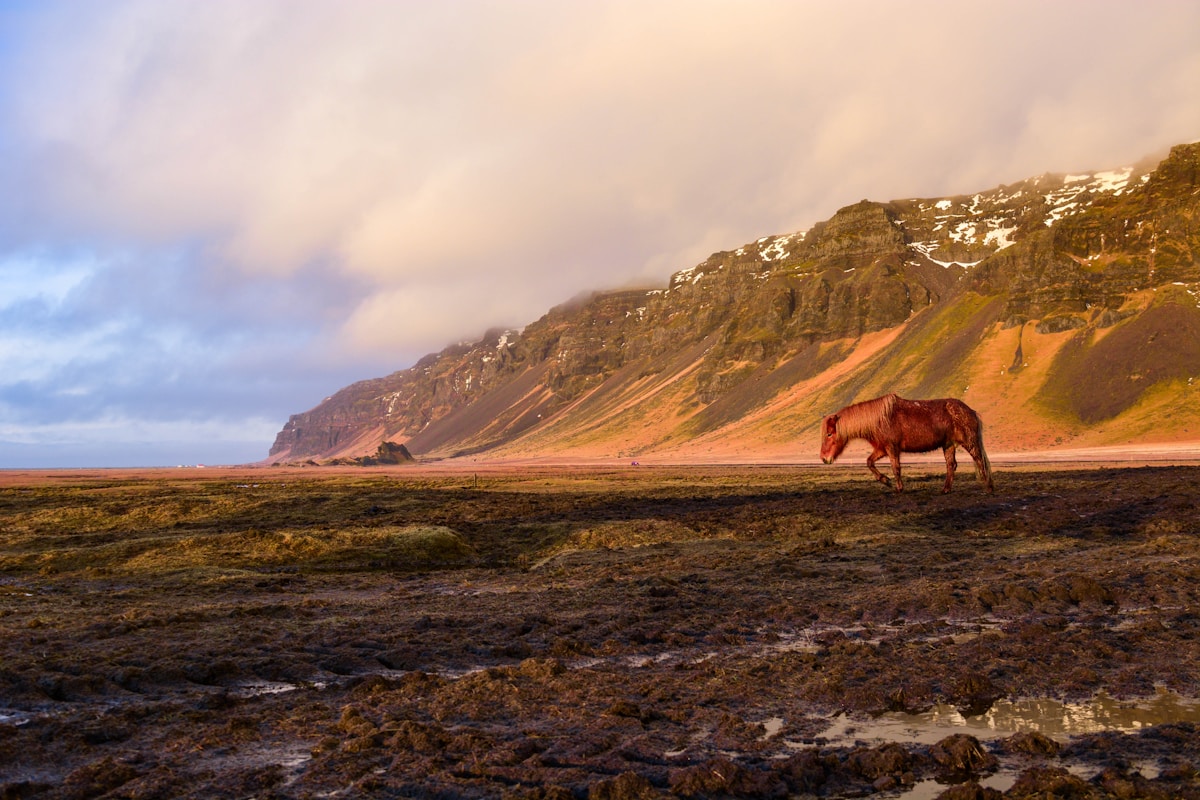
Iceland’s farm tourism tradition is older than its modern hotel industry. For most of the 20th century, farms across the country hosted summer visitors as a matter of practicality - extra income during the growing season, connections to the wider country. The farms that continue this tradition today offer accommodation that no purpose-built hotel can replicate: real working land, family-sourced food, and access to rural Iceland on the farm’s own terms.
Prices are in the mid-range bracket - typically ISK 22,000–50,000 per night - with breakfast usually included and dinner sometimes available. What justifies the rates is the combination of location (most sit away from the tourist corridors), experience (horse riding, dairy visits, farm walks), and food quality (farms that raise their own livestock and grow their own produce cook differently from hotels that order from a supplier).
Efsti-Dalur II - Borgarfjörður
Efsti-Dalur II is one of Iceland’s most visited farmstays and sits in the Borgarfjörður valley, roughly 90 km north of Reykjavík on the Snæfellsnes route. The farm raises Icelandic horses and runs a dairy. The ice cream made from their own milk has become well enough known to attract stop-in visitors who are not staying overnight.
Guest rooms run approximately ISK 22,000–32,000 per night as of 2026, with breakfast included. Horse riding excursions on the farm’s own horses are available as an add-on - the Borgarfjörður valley is good terrain for a first experience of Icelandic horses’ distinctive tolt gait.
The farm works well as a base for Snæfellsnes Peninsula day trips. The glacier and national park at the peninsula’s western end are about 90 minutes’ drive. See our Snæfellsnes guide for the main sites.
Hótel Laki - South Iceland
Despite the name, Hótel Laki functions more as a farmstay than a conventional hotel - it sits near the Lakagígar volcanic fissure system in South Iceland’s interior, accessible from the Ring Road via the F206 road (4×4 required in summer, closed in winter).
Rates run approximately ISK 28,000–40,000 per night. The location is deliberately remote - Lakagígar is one of the most significant volcanic landscapes in Iceland, a series of 130 craters formed by the 1783 Laki eruption that caused crop failures across Europe. Few travellers reach it; staying overnight rather than day-tripping allows time to walk the crater trail without the afternoon rush.
Dinner is available at the property. The surrounding landscape makes dark-sky viewing exceptional from August onwards.
Hestasport - Varmahlíð
Hestasport in the Skagafjörður valley runs horse-focused packages for visitors who want to experience Icelandic horse culture properly, not just a 45-minute trot. Multi-day riding tours into the highlands are the core offering; guesthouse accommodation at the farm is the base.
Rates run approximately ISK 25,000–35,000 per night for standard accommodation. Horse-riding packages range considerably depending on duration and route - day rides start at approximately ISK 8,000–12,000; multi-day highland packages go considerably higher.
Skagafjörður is considered the heartland of Icelandic horse breeding. More horses per capita live in this valley than almost anywhere else in the country. For anyone specifically interested in Icelandic horses - their history, genetics, and the five gaits - this is the most appropriate place to stay.
Vogafjós Farm Resort - Mývatn
Vogafjós Farm Resort sits on the eastern shore of Lake Mývatn in North Iceland, with views across the lake to the Hverfjall crater. The farm raises Icelandic cattle and the attached restaurant is known for its smoked trout and geothermally baked rye bread - the bread is buried in the geothermal ground to bake slowly over 24 hours.
Rates run approximately ISK 35,000–50,000 per night as of 2026. A viewing window in the dining room looks directly into the cowshed, making milking time a breakfast-hour spectacle that children find genuinely engaging.
Mývatn is itself worth a minimum of two nights - the pseudo-craters at Skútustaðagígar, the lava formations at Dimmuborgir, the Námaskarð mud pools, the Mývatn Nature Baths, and Krafla volcano crater are each worth several hours. Vogafjós is the best base for exploring the area.
What’s Typically Included
Across Iceland’s farmstays, a few things are consistent:
Breakfast: Almost universally included at ISK 22,000+ rates. Expect bread, cold meats, cheese, skyr, eggs, and coffee. Farms producing their own dairy typically offer notably better milk and butter.
Farm access: Guests are generally welcome to walk around the farm, interact with horses or other animals, and watch daily farm activities. This is not a zoo experience - it is a working farm that accepts visitors. Appropriate behaviour around livestock is expected.
Horse riding: Available at most horse farms as an add-on. Icelandic horses are smaller and calmer than most European breeds - suitable for beginners. The tolt (a smooth four-beat gait) is distinctive to the breed.
Dinner: Offered at some properties but rarely included in the base rate. Confirm availability and cost when booking. In remote locations, the farm dinner is often the only alternative to self-catering or a long drive.
Get travel insurance for Iceland - policies covering glacier hikes, F-road driving, and volcanic disruption.
Pre-book Keflavík airport transfers - Flybus and private options for the 45-minute route to Reykjavík.
Pick up an Iceland eSIM before you travel - works on arrival and covers most of the Ring Road.
Best Regions for Farmstays
- West Iceland and Borgarfjörður: Best for Snæfellsnes-area visits and horse farms. Efsti-Dalur II is the anchor.
- North Iceland (Skagafjörður and Mývatn): Best for horse culture and the Mývatn volcanic landscape. Hestasport and Vogafjós are the standouts.
- South Iceland interior: Remote and dramatic. Hótel Laki for Lakagígar access.
- East Iceland: Smaller-scale farmstays with fewer visitors. Less well-publicised but often good value.
For comparison with guesthouses and standard hotels, see our Iceland guesthouses guide and complete accommodation overview.