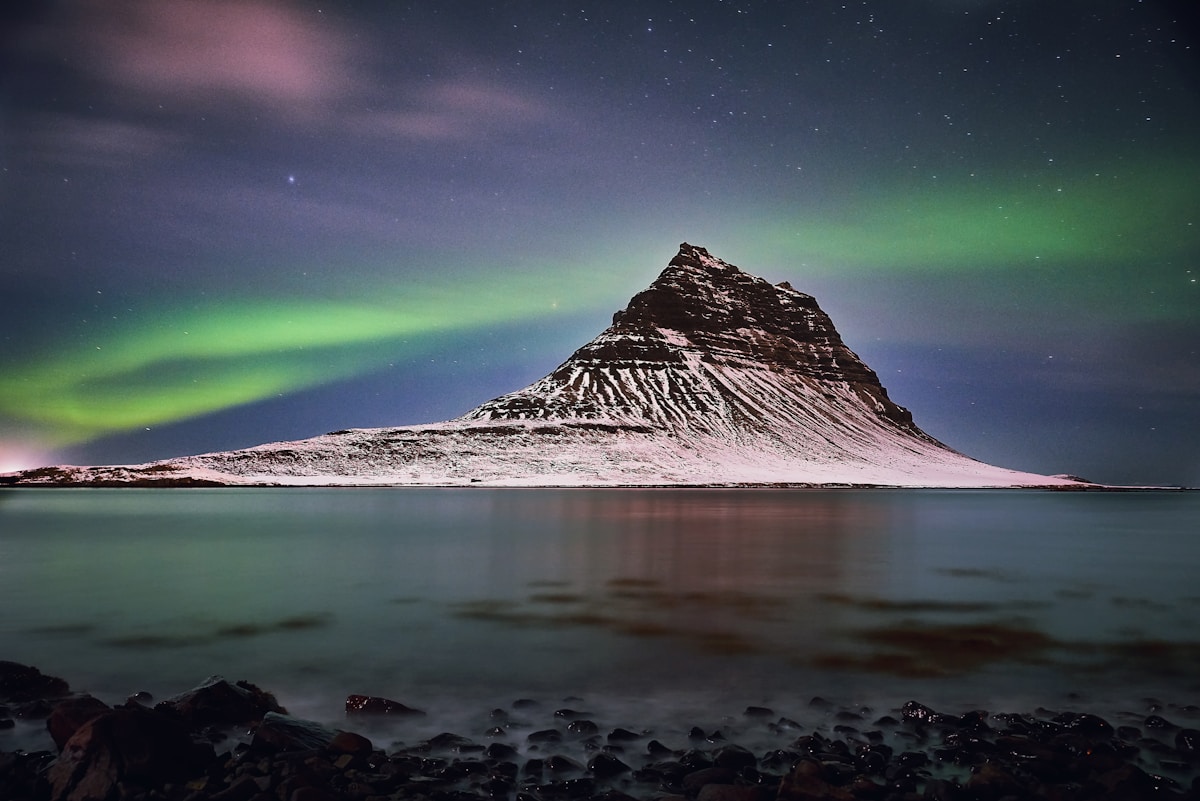
October is one of the most productive months for northern lights in Iceland. Nights are now long enough for sustained dark-sky windows, the first significant frosts have cleared the dusty summer haze, and solar activity in 2026 remains elevated following the Solar Cycle 25 peak in late 2025.
For anyone in Iceland now or travelling this month, the conditions are as good as they get for aurora viewing — the main limiting factor, as always, is cloud cover.
Why October Works Well
Three factors combine in October to make aurora conditions better than mid-winter in practical terms:
Dark enough, but not harshest conditions. By mid-October, Iceland has around 11–12 hours of darkness. That is enough for multiple viewing windows per night without requiring the extreme cold and storm risk of December and January. The weather, while increasingly unpredictable, still offers more clear spells than the deep winter months.
Solar activity still elevated. Solar Cycle 25, which peaked around late 2025, continues to produce above-average geomagnetic activity into 2026. G3-class geomagnetic storms, which produce strong aurora visible even from within Reykjavík, have been occurring more frequently than in the equivalent period of the previous cycle.
Lower tourist numbers. The September shoulder season has ended and the Christmas wave has not yet begun. Viewing spots near Reykjavík that were crowded in August are now accessible without competition.
How to Check Tonight’s Forecast
The aurora cannot be predicted more than a day or two in advance with meaningful accuracy. For current conditions, two sources are essential:
vedur.is/english/aurora-forecast — the Icelandic Met Office aurora forecast. Shows a combined map of geomagnetic activity (aurora intensity scale 0–9) and cloud cover. This is the most practical single tool because it overlays both variables. Updated several times daily.
spaceweather.com and NOAA’s Space Weather Prediction Center (swpc.noaa.gov) — for the underlying geomagnetic storm data. A Kp index of 4 or higher is reliably visible from dark-sky locations in Iceland; a Kp of 6+ is visible from Reykjavík itself.
Dedicated aurora apps (Aurora Forecast, My Aurora Forecast) aggregate NOAA data with push notifications for Kp threshold alerts — useful if you do not want to check manually each evening.
Viewing Spots Near Reykjavík
The capital’s light pollution is modest by city standards, but any elevated Kp reading looks better from a dark location. Spots within 30–45 minutes of the city:
Grótta lighthouse, Seltjarnarnes — 15 minutes from central Reykjavík, faces north over the ocean with no light competition. One of the easiest spots from the capital and genuinely dark on the water-facing side.
Þingvellir National Park — 45 km east, approximately 40 minutes. No light pollution, dramatic rift valley landscape, and fully open in October. The standard choice for organised aurora tours.
Öskjuhlíð hill (Pearl viewpoint) — within Reykjavík itself. During strong G3+ events, this elevated position with a wide sky view has produced visible aurora over the city. Not a substitute for a proper dark-sky spot but useful if you have no transport.
Snæfellsnes Peninsula — 2 hours from Reykjavík. North-facing coastlines with no light pollution and exceptional sky clarity in the absence of cloud. Best for a dedicated overnight trip rather than a same-evening attempt.
Guided Tours vs Self-Drive in October
Organised aurora tours from Reykjavík cost approximately ISK 9,000–14,000 per person (2026 prices). The main advantage is that guides monitor multiple forecasts and drive toward cloud gaps — on a borderline night, that mobility significantly improves odds. Most operators include a guarantee structure: if the aurora does not appear due to cloud cover, the tour can be rebooked.
Self-drive works well for those with a rental car and flexibility. The key advantage is being able to move further on a clear-forecast night without relying on a group schedule. Our best Iceland tours guide covers aurora tour operators and what to expect.
What to Expect on a Strong Night
On a Kp 5–6 night with clear skies, the aurora typically appears as pale green bands or arcs across the northern sky. At Kp 7+, the display can extend overhead and incorporate red and purple fringes visible to the naked eye. In 2026, G4-class events (Kp 7–8) have occurred several times — on those nights the aurora has been visible as far south as southern England.
Photography: a smartphone with night mode will capture a moderate display adequately. For structured shots on a strong night, a wide-angle lens (14–24mm), ISO 800–1600, 10–20 second exposure, and a tripod produce the results you see in professional aurora photography. Autofocus does not work in near-darkness — manual focus to infinity is required.
For a full overview of the season, optimal months, and what to do if conditions are poor, see our best time to visit Iceland guide.