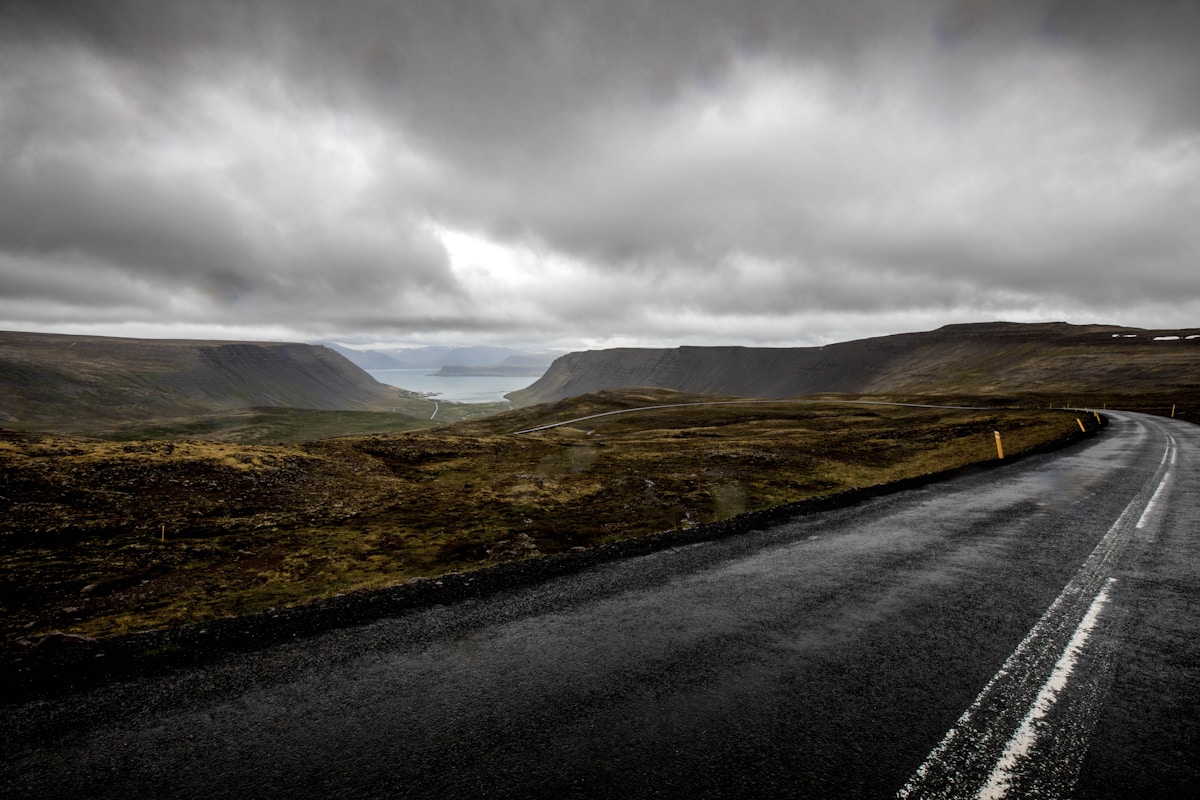
The Westfjords occupy the far northwest corner of Iceland - a peninsula the size of Wales with a population of around 7,000 people. The roads are long and mostly gravel. The fjords are deep and numerous. The payoff is some of the most dramatically untouched landscape in Europe: a 100-metre waterfall with no visitor centre, puffin cliffs at the westernmost point of the continent, and a nature reserve that sees fewer than a few hundred visitors per week even in peak summer.
Drive time from Reykjavík to Ísafjörður is approximately 6 hours. The alternative is a 45-minute flight.
Dynjandi Waterfall
The defining landmark of the Westfjords. Dynjandi falls 100 metres in a fan shape, widening from 7 metres at the top to 30 metres at the base - each level slightly broader than the one above, creating a series of smaller cascades in the gorge below. The total descent, including the lower falls, is closer to 200 metres.
The waterfall sits 6km off Route 60 on a well-maintained gravel road - any car can manage it. The trail from the car park to the base of the upper falls takes around 20 minutes. Free. No facilities other than basic toilets at the car park.
Dynjandi is accessible June through September with a standard car. The access road may be impassable in early spring.
Látrabjarg Puffin Cliffs
At 14km long and up to 441 metres high, Látrabjarg is the largest bird cliff in Iceland and the westernmost point of Europe. From June through mid-August, Atlantic puffins nest in burrows on the clifftops in very large numbers - unusually, they are accustomed to human proximity and will often allow visitors to approach within a few metres. Razorbills, guillemots, and gannets also nest here.
Access is via Route 612 and then Route 614 - the final stretch is gravel, but manageable by standard car in summer. The drive from Ísafjörður is approximately 2.5 to 3 hours. Free. No fencing at the cliff edge; take care and keep children close. Allow at least 2 hours at the cliffs.
Rauðasandur Red Sand Beach
A rare sight in Iceland - a beach with rust-red sand, formed from crushed shells over millennia, stretching 10km along a shallow bay south of Látrabjarg. At low tide the colours are most vivid; on overcast days the contrast between the red sand and grey Atlantic water is stark. Often deserted.
Access via Route 614 - a gravel road; 2WD in summer is fine, but the road is rough. Free. Allow half a day if combining with Látrabjarg (both are in the same southwest corner of the Westfjords, approximately 3 hours from Ísafjörður).
Ísafjörður and the Main Town
Ísafjörður is the largest town in the Westfjords with around 2,700 people and the main base for exploring the region. The old town centre (Neðstakaupstaður) has four original 18th-century timber warehouses from the trading era - among the oldest buildings in Iceland. The West Fjords Heritage Museum (Byggðasafn Vestfjarða) covers the fishing and trading history of the region: entry approximately ISK 1,500 as of 2026.
From Ísafjörður, guided activities include:
- Kayaking on the fjord: guided tours by West Tours from approximately ISK 9,900–14,000 per person as of 2026
- Snowmobiling in winter: available through local operators
- Guided hiking (day and multi-day) on trails around the fjord: West Tours and several independent guides offer options from ISK 8,000–15,000 per person
The Tjöruhúsið restaurant in the old harbour serves one of the best fish soups in Iceland - from approximately ISK 3,000–4,500 - and fills up by 7pm in summer without reservations.
Hornstrandir Nature Reserve
The most remote part of Iceland accessible without a private aircraft. The Hornstrandir peninsula, north of Ísafjörður, was abandoned by its farming population in the 1950s and has since returned to wilderness. The only access is by boat from Ísafjörður - there are no roads.
The area is known for Arctic foxes, which here have had no contact with farmers for 70 years and show minimal fear of humans. Sea bird cliffs, abandoned farmsteads, and complete absence of tourist infrastructure make Hornstrandir genuinely different from anywhere else in Iceland.
West Tours operates scheduled boat transfers from Ísafjörður (approximately ISK 8,000–12,000 return, seasonal). Day trips are possible to some bays; most visitors stay in the reserve’s basic mountain huts for 2–5 days. Book well ahead - hut places and boat spaces are limited.
Þingeyri Ski Area
The Westfjords has its own small ski resort at Þingeyri on the south coast of the Dýrafjörður fjord - a community-run area with a few marked runs and a basic lift. Entry approximately ISK 4,000 per day as of 2026. Equipment hire available locally. The resort operates approximately December through March, snow conditions permitting. It is never crowded. From Ísafjörður, Þingeyri is approximately 45 minutes by road.
Browse Iceland tours - day trips, activity bookings, and multi-day packages across the country in one place.
Compare car hire in Iceland - a 4WD or campervan gives the flexibility to explore at your own pace.
Drangsnes Hot Pots
On the Strandir coast (the eastern coast of the Westfjords peninsula, facing Húnafjörður bay), the tiny village of Drangsnes has three outdoor geothermal hot pots on the shore - right at the water’s edge. No admission charge. No staff. No changing rooms. Open at all hours. The pots are small and simple, but the combination of hot water, cold air, and sea views makes them one of the better free bathing experiences in Iceland.
Drangsnes is approximately 3 hours from Ísafjörður (the roads are winding). It makes more sense as a first or last stop coming from the south - if travelling through Hólmavík on the Strandir coast, it is a natural stop-off.
For accommodation across the region, see our where to stay in the Westfjords guide.
For accommodation nearby, Search hotels in Westfjords on Booking.com.