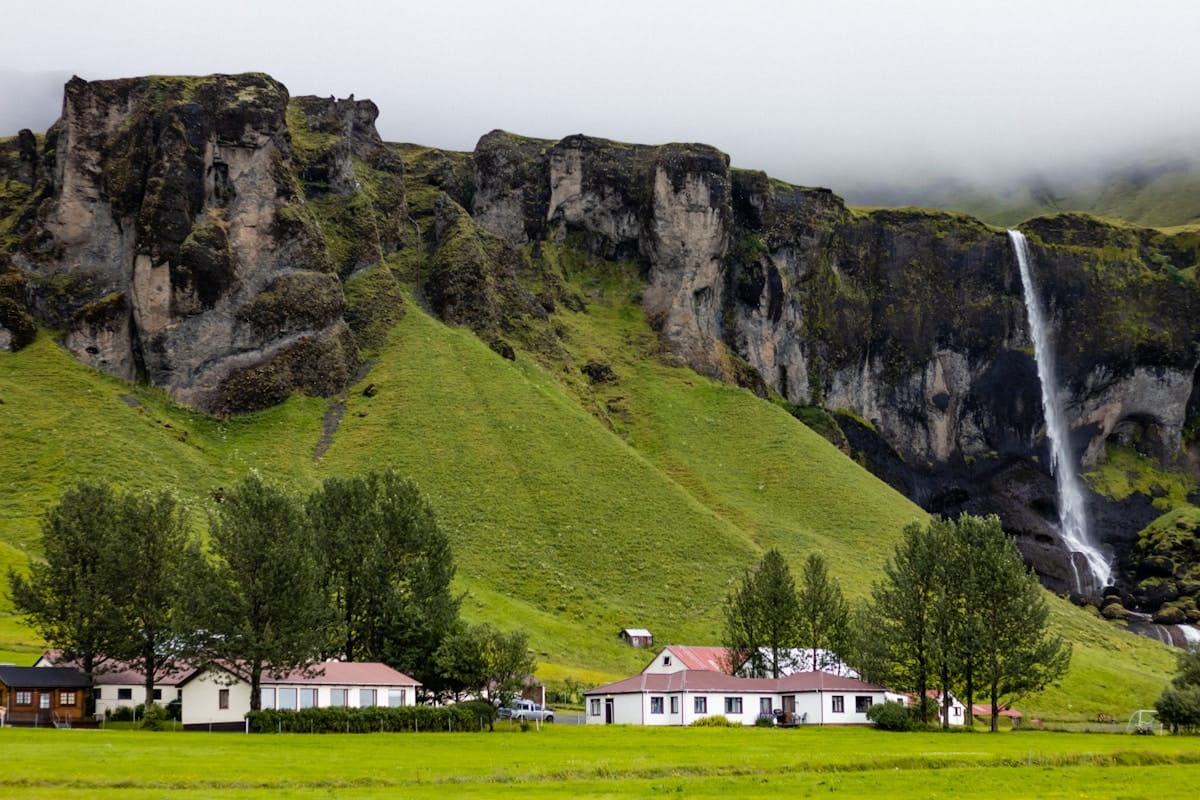
Siglufjörður is the northernmost town in Iceland, tucked into a narrow fjord cut into the Tröllaskagi peninsula on the north coast. At its herring-boom peak in the 1940s and 1950s, it was one of the most densely populated urban areas in the country - the fjord was thick with boats, and the processing factories ran through the summer nights. When the herring disappeared in 1969, the town’s population fell from over 3,000 to the roughly 1,200 who live here today.
What remains is something genuinely worth seeking out: a beautifully preserved small town, one of Iceland’s finest museums, excellent hiking on the Tröllaskagi ridge, a small ski area, and - thanks to the Trapped TV series - a growing tourism scene that has not yet overwhelmed the place. The late afternoon light on the painted houses, with the mountains rising steeply on both sides of the fjord, is one of the better views in north Iceland.
Getting to Siglufjörður
From Akureyri: approximately 100km, around 1 hour 20 minutes via Route 82 and the Héðinsfjörður tunnel. The road winds through the Tröllaskagi peninsula - if you have time, the Hólar cultural centre and the scenic ridgeline detour are worth the extra hour.
From Reykjavík: approximately 460km, around 5 hours. Most travellers combine a north Iceland loop: Akureyri as a base, then a day drive to Siglufjörður and Dalvík for whale watching.
By bus: Strætó operates a route connecting Akureyri to Siglufjörður, but frequency is limited - check straeto.is for current timetables. Having a car gives considerably more flexibility on the Tröllaskagi peninsula. Hire a car in Akureyri and drive the scenic peninsula route - the views along the coast between Akureyri and Siglufjörður are among the best in north Iceland.
There is no airport in Siglufjörður. The nearest airport is Akureyri (AEY), a 1 hour 20 minute drive.
Accommodation in Siglufjörður
The town has a compact range of accommodation reflecting its boutique tourism positioning - no large hotels, but several characterful properties that suit the destination’s pace.
Budget Options (Under ISK 22,000)
Sigló Hostel operates in the town centre, offering dorm beds from approximately ISK 6,000 per person and private rooms from ISK 20,000. The hostel has a good common area and the staff are knowledgeable about local hiking routes and conditions. This is the main budget option for backpackers and solo travellers.
Siglufjörður Camping operates on the edge of town from late May through early September, with pitches from approximately ISK 1,800 per person. The campsite facilities are basic but the setting - surrounded by mountains on three sides - is among the more dramatic campsite locations in Iceland.
Mid-Range (ISK 25,000–50,000)
Hótel Sigló is Siglufjörður’s flagship property, occupying a restored warehouse building on the harbour. Rooms look out over the marina and the mountain walls of the fjord. Doubles run approximately ISK 35,000–55,000 in peak summer. The design references the town’s herring era - fishing-related materials and colours run through the interiors without being theme-park about it. The bar and restaurant are the social centre of town in summer. Book well ahead for July weekends.
Sigló Guesthouse (separate from Hotel Sigló) offers rooms in renovated townhouses from approximately ISK 24,000–34,000. These suit travellers who want a lower rate than the hotel while staying in the centre. The older buildings give the rooms more character than a purpose-built property would.
Several small guesthouses dotted through the residential streets run approximately ISK 20,000–28,000 for a private room. Icelandic guesthouse standards - clean and functional with shared or private bathrooms.
Self-Catering
Several apartments in the town offer self-catering options from approximately ISK 28,000–42,000 per night. For the midnight sun months (late May through July), having a kitchen is useful because restaurant opening hours in Siglufjörður are limited - the town is not set up for late-night dining.
The Herring Era Museum
The Síldarminjasafnið (Herring Era Museum) is unambiguously the main reason many travellers make the detour to Siglufjörður. It occupies three restored herring processing buildings on the harbour and documents the social, industrial, and human story of the herring boom with exceptional care. The museum is open from June to August, admission approximately ISK 2,800 per adult. Allow 2–3 hours.
The salt fish factory building contains a reconstructed processing floor where guides demonstrate the herring-packing process. The dormitory building reconstructs the living conditions of the seasonal workers, many of them teenage girls from rural Iceland, who came to Siglufjörður for the summer herring runs. The boathouses hold original fishing vessels.
Hiking in the Tröllaskagi Area
The mountains rising directly from the fjord give immediate access to ridge hiking without needing to drive to a trailhead. The most popular route climbs from the edge of town to the Siglufjörðarháls pass, with views back into the fjord and across to the adjacent valleys. The ascent takes about 2 hours; a full ridge traverse back to the Héðinsfjörður tunnel area takes a full day.
The Tröllaskagi Traverse is a multi-day ridge route connecting Siglufjörður with Hofsós and further south - serious terrain requiring navigation experience and appropriate equipment.
Day-trip connections: Dalvík (whale watching, 35km from Akureyri, reachable in 1 hour 40 minutes via the tunnel from Siglufjörður) - Húsavík whale watching tours are also bookable from the north Iceland area - and Hólar (historic bishop’s see with a cathedral, 80km south) are the main excursions.
See our Siglufjörður guide for the full museum, hiking, and winter sports overview.