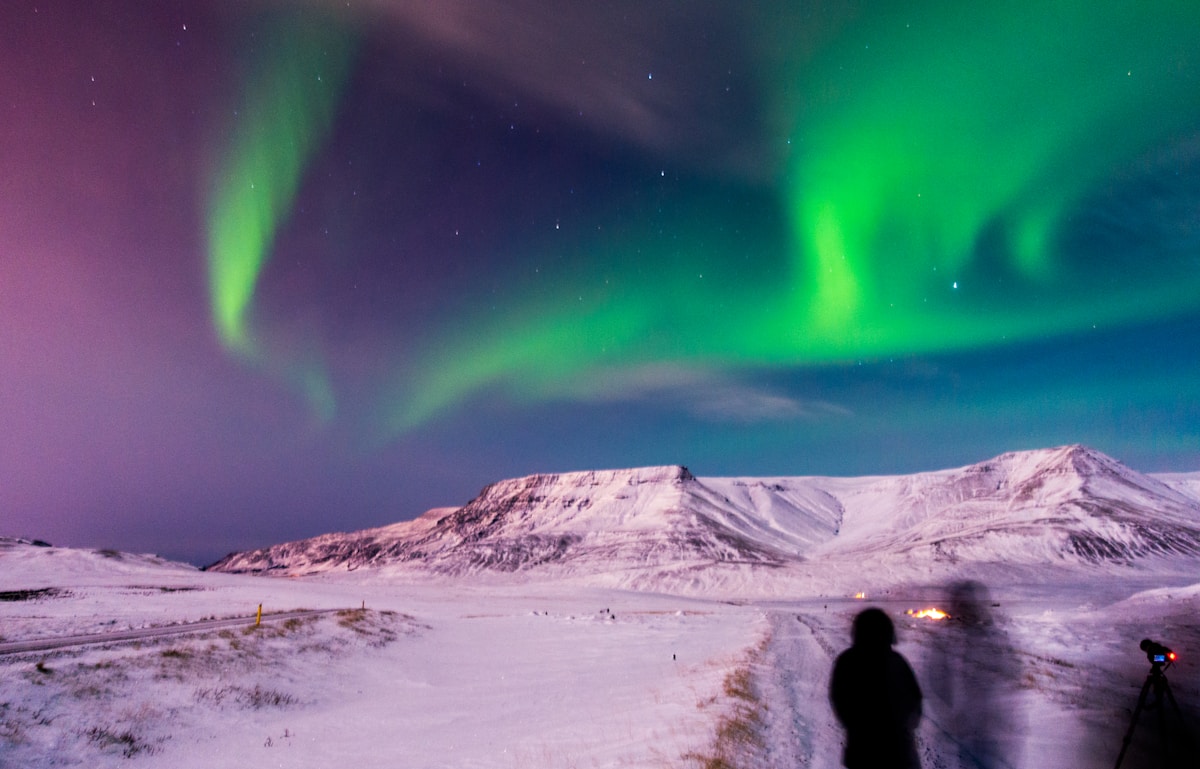
Two factors are converging in September 2026 to create some of the best aurora conditions Iceland has seen in a decade: the autumn equinox and the peak of Solar Cycle 25.
The Equinox Effect
Around both the spring and autumn equinoxes, the Earth’s magnetic field geometry creates a pronounced boost in geomagnetic activity — a phenomenon known as the Russell-McPherron effect. Simply put, the angle between the solar wind and Earth’s field becomes more favourable near the equinoxes, making it statistically much more likely that even moderate solar output will produce visible aurora displays. The September 2026 equinox falls on 22 September.
Data from the Icelandic Meteorological Office consistently shows that September and March are the two months with the highest frequency of strong aurora events at Icelandic latitudes, and the equinox window — roughly 18 September to 26 September — is the most productive period of all.
Solar Cycle 25 at Its Peak
Solar Cycle 25 reached its predicted maximum in late 2025 and is expected to remain near peak solar activity through early 2027. This means the sun is producing more coronal mass ejections (CMEs) and solar flares than at any point since 2002. When a CME hits Earth’s magnetosphere — which happens more frequently during solar maximum — the result is the strongest and most colourful aurora displays, reaching further south and appearing earlier in the evening.
The combination of a solar maximum equinox is rare. The last time these two factors aligned to this degree over Iceland was September 2013, which produced some of the most photographed aurora nights in recent Icelandic history.
Practical Notes for September Aurora Chasing
Darkness is back. Iceland’s summer midnight sun begins to give way to genuine dark nights in late August. By mid-September, you have roughly six to seven hours of darkness per night, with the darkest period running from 23:00 to 02:00 — plenty of time for a dedicated aurora outing.
Weather matters. Clear skies are essential, and Iceland’s weather can be unpredictable. Staying at least four or five nights significantly improves your odds of catching a clear window. The north and east of Iceland (Akureyri, East Fjords) tend to have slightly more stable weather patterns than Reykjavík in autumn.
Tour availability. Most Reykjavík-based northern lights tour operators resumed their evening programmes from 20 August and are now running multiple departures per night. Minibus tours depart from downtown Reykjavík and chase clear-sky windows — drivers monitor cloud cover in real time and can cover up to 200 km to find an opening.
Our northern lights tours guide covers what to expect, how to choose a tour, and what the chase actually looks like. The Iceland in September page has the full weather picture, packing advice and the rest of what’s on.