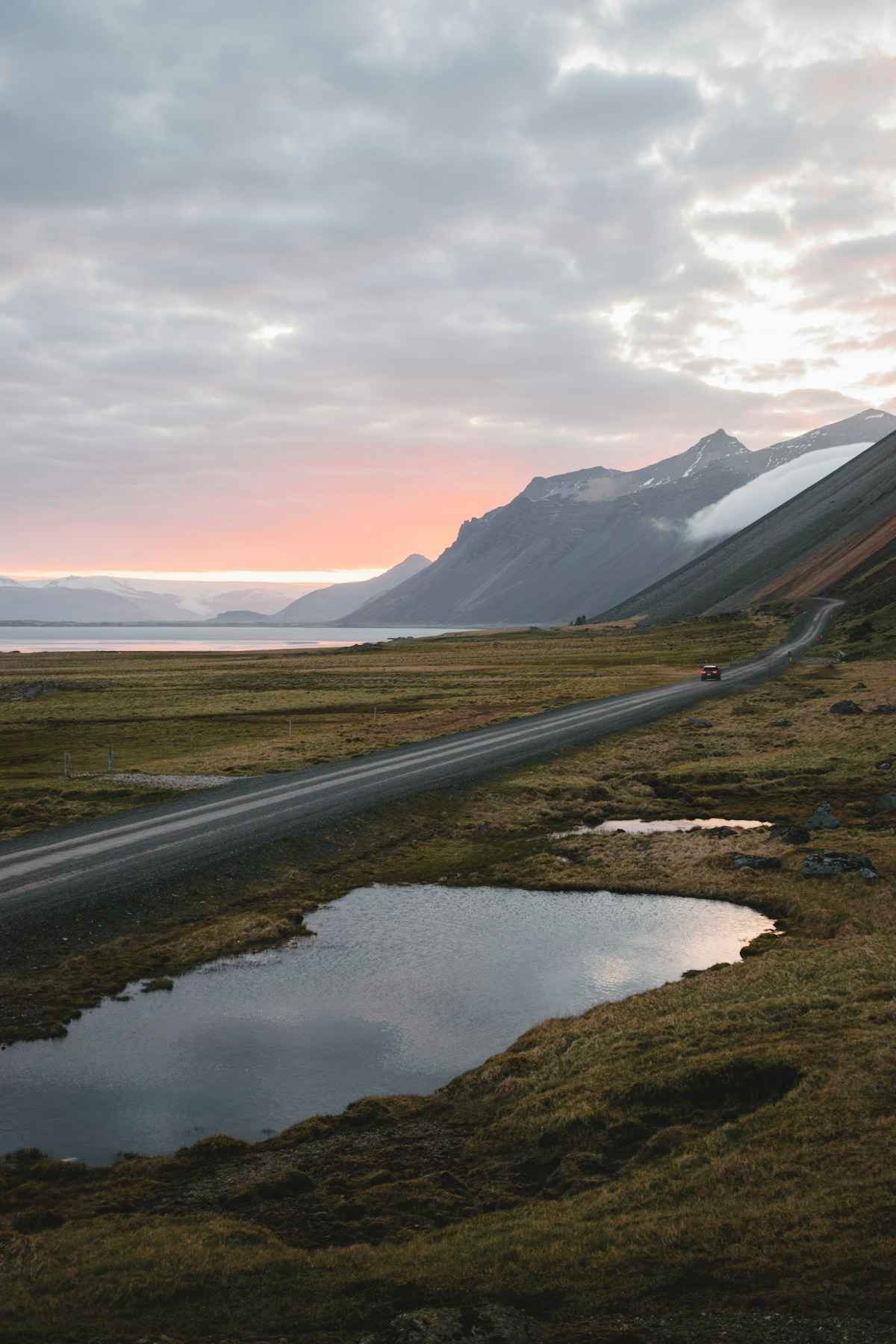
September marks the transition from Iceland’s peak summer season to its quieter autumn. Crowds thin noticeably from peak July and August levels, the Northern Lights return after the midnight sun, prices drop, and autumn colours - orange and red dwarf birch across the lowlands - add a different character to the landscape. It is widely considered one of Iceland’s best months for independent travel.
Autumn Equinox Brings Orange Dwarf Birch and the First Frosts Inland
| Region | Avg High | Avg Low | Notes |
|---|---|---|---|
| Reykjavík | 7 to 11°C | 2 to 6°C | Mild maritime climate; can be stormy |
| Akureyri | 5 to 9°C | 0 to 4°C | More continental, noticeably colder |
| South Coast | Similar to Reykjavík | Similar | More wind and rain |
| East Fjords | Often drier | Often colder | More continental conditions |
| Highlands | 0 to 5°C | Can drop below zero | Snow possible from mid-September |
Note: These are approximate averages. Iceland’s weather is highly variable - check vedur.is for current forecasts before each day’s drive.
September weather can swing between bright, calm autumn days and full Atlantic storms within 24 hours. The first frosts are possible from mid-September, particularly inland and in the north.
September Daylight: From 15 Hours Down to 11 Hours After the Equinox
| Early September | Mid-September | Late September |
|---|---|---|
| ~15 hours | ~12.5 hours | ~11 hours |
The autumn equinox falls around 22–23 September, bringing approximately 12 hours of daylight. After the equinox, darkness increases rapidly - Northern Lights become viable from late August but improve through September as nights lengthen.
By late September, Reykjavík sees sunset around 19:30–20:00, which means you can have dinner and still catch the Northern Lights if skies cooperate.
Aurora Returns and the Laugavegur Trail’s Final Hut Weeks
Northern Lights
The Northern Lights return as a realistic prospect from late August. September combines adequate darkness with statistically reasonable clear-sky chances before the full winter storms set in. Late September gives longer dark windows than early September.
Practical Northern Lights advice: You need two conditions simultaneously - clear skies and solar activity (KP3 or higher for visible aurora at Iceland’s latitude). Check vedur.is for both: the cloud cover forecast map shows expected visibility, and the aurora forecast shows the predicted KP index. Most tour operators run Northern Lights tours on evenings with good forecasts and offer a free resail (rebook) if conditions don’t deliver. Tours by super-jeep from Reykjavík from approximately ISK 8,900–12,500 per person.
Laugavegur Trail (Early September)
Iceland’s most famous multi-day hiking trail - from Landmannalaugar to Þórsmörk through the southern highlands - has its mountain huts open until approximately mid-September. Early September is often ideal: trails are in good condition, the worst highland weather hasn’t yet arrived, and the huts are less crowded than July and August. Book huts well in advance through the Ferðafélag Íslands (FI) website. Hut fees approximately ISK 8,000–10,000 per night as of 2026.
After the huts close (around 15–20 September), independent camping on the trail is possible but requires carrying all gear and food. This is an advanced hiking option requiring good preparation.
Whale Watching (Wrapping Up)
The whale watching season at Húsavík runs June–August at its peak, with September being the tail end of the season. Tours still operate from Húsavík (North Sailing, Gentle Giants) and from Reykjavík Old Harbour (Elding, Whale Safari). Sighting rates are generally still good - humpbacks are present before their migration south. From approximately ISK 12,900–15,000 from Húsavík.
Glacier Walks
Glacier walking on Sólheimajökull (near Vík) and at Skaftafell (Vatnajökull National Park) is available year-round with a guide. September conditions are good - ice is stable, temperatures are manageable, and the crowds of peak summer have eased. Local Guide and Glacier Guides both operate from Skaftafell (from approximately ISK 10,500 for a standard 3-hour walk). Arctic Adventures runs Sólheimajökull trips from Reykjavík from approximately ISK 12,900.
Autumn Photography
September brings vivid autumn colours to Iceland - the dwarf birch and willow that cover lowland areas turn orange and red from late August. The Þórsmörk valley, Landmannalaugar (if roads are still open), and Þingvellir National Park are particularly striking. Iceland’s dramatic light in September - low-angle sun well into late afternoon - is excellent for landscape photography.
Reykjavik International Film Festival (RIFF)
RIFF typically runs in late September, showing international and Icelandic independent films at multiple Reykjavík venues including Bíó Paradís (Hverfisgata). The festival is an excellent reason to base in Reykjavík for a few days around this time. Check riff.is for current dates and programme.
September Road Conditions: Highland F-Roads Closing from Mid-Month
Check road.is before every drive. Key September notes:
- Highland F-roads: Some begin closing from mid-to-late September. Landmannalaugar is typically accessible until late September; Þórsmörk is accessible until October in good years. Check the F-road status daily at road.is.
- Ring Road: Open year-round and well maintained. Expect more rain and potentially early snow at higher points on the ring in late September.
- Mountain passes: Can receive early snowfall from September. Check before crossing elevated sections.
- Tyre requirements: Winter tyres become mandatory on November 1. September does not require winter tyres, but some rental companies install them from October 1.
What to Pack for September in Iceland
- Waterproof jacket and trousers (essential - rain likely on most multi-day trips)
- Warm insulating mid-layer (fleece or down jacket for evenings and exposed areas)
- Hat and gloves (useful from early September, especially in North Iceland)
- Sturdy waterproof hiking boots (trails can be muddy)
- Thermal base layers for highland hiking or Northern Lights viewings
- Sunscreen: UV levels can still be significant, especially on glacier walks
- Eye mask: no longer needed for sleeping by September, but bring it if you tend to be light-sensitive
Post-Summer Price Drop: Hotels 15–25% Off July, Car Hire Supply Improving
September prices are generally lower than July and August across most accommodation types:
- Accommodation: Hotels and guesthouses in Reykjavík typically 15–25% cheaper than July peaks. Vík and South Coast accommodation can be 20–30% cheaper.
- Car hire: Supply is better than in peak summer. Prices fall noticeably from September, with compact SUVs from approximately ISK 8,000–14,000/day depending on vehicle type.
- Tours: Most tour prices do not change seasonally. Glacier walk prices and whale watching prices are broadly consistent through summer and early autumn.
For first-time visitors who want Iceland’s best conditions with fewer people, September is often the best month to visit.
September Bases: Reykjavík, Vík for South Coast, Akureyri for Northern Lights
Reykjavík: Good base for Golden Circle, South Coast day trips, Northern Lights tours, and the Film Festival. Apartments available from approximately ISK 18,000–25,000 per night; mid-range hotels from ISK 30,000–50,000.
Vík: Best base for South Coast exploration and Reynisfjara. Icelandair Hotel Vík from approximately ISK 30,000–45,000 in September.
Akureyri: Best base for North Iceland, Mývatn, Húsavík whale watching (end of season), and Northern Lights in clearer North Iceland skies. Hotels from approximately ISK 25,000–40,000.
Browse Iceland tours - day trips, activity bookings, and multi-day packages across the country in one place.
Compare car hire in Iceland - a 4WD or campervan gives the flexibility to explore at your own pace.
Get travel insurance for Iceland - policies covering glacier hikes, F-road driving, and volcanic disruption.
Related Guides
- Iceland in August - The month before: peak summer, warmer, and busier
- Iceland in October - The month after: aurora strengthens and crowds thin further
- Northern lights tours from Reykjavík - September is when aurora tours begin for the season
- Whale watching in Iceland - September is the tail end of humpback season in Húsavík
- Best time to visit Iceland - Full year comparison to help plan your visit
Plan Your Trip
September is the shoulder season at its best: aurora returns, the dwarf birch turns orange across highland valleys, and crowds drop sharply after the August bank holiday. The Laugavegur trail’s hut season runs until mid-September — if you want it without summer crowds, this is your window. Highland F-roads begin closing from mid-month, so plan any interior routes for the first two weeks. Watch the road.is forecasts closely. Whale watching from Húsavík remains active through September. Glacier walks on Sólheimajökull and Skaftafell are less busy than summer and the ice conditions are still excellent. Book aurora tours with a rebooking guarantee — September cloud is unpredictable.
✈️ Book your flights to Iceland 🛡️ Get travel insurance 📱 Stay connected with an eSIM 🚗 Rent a car