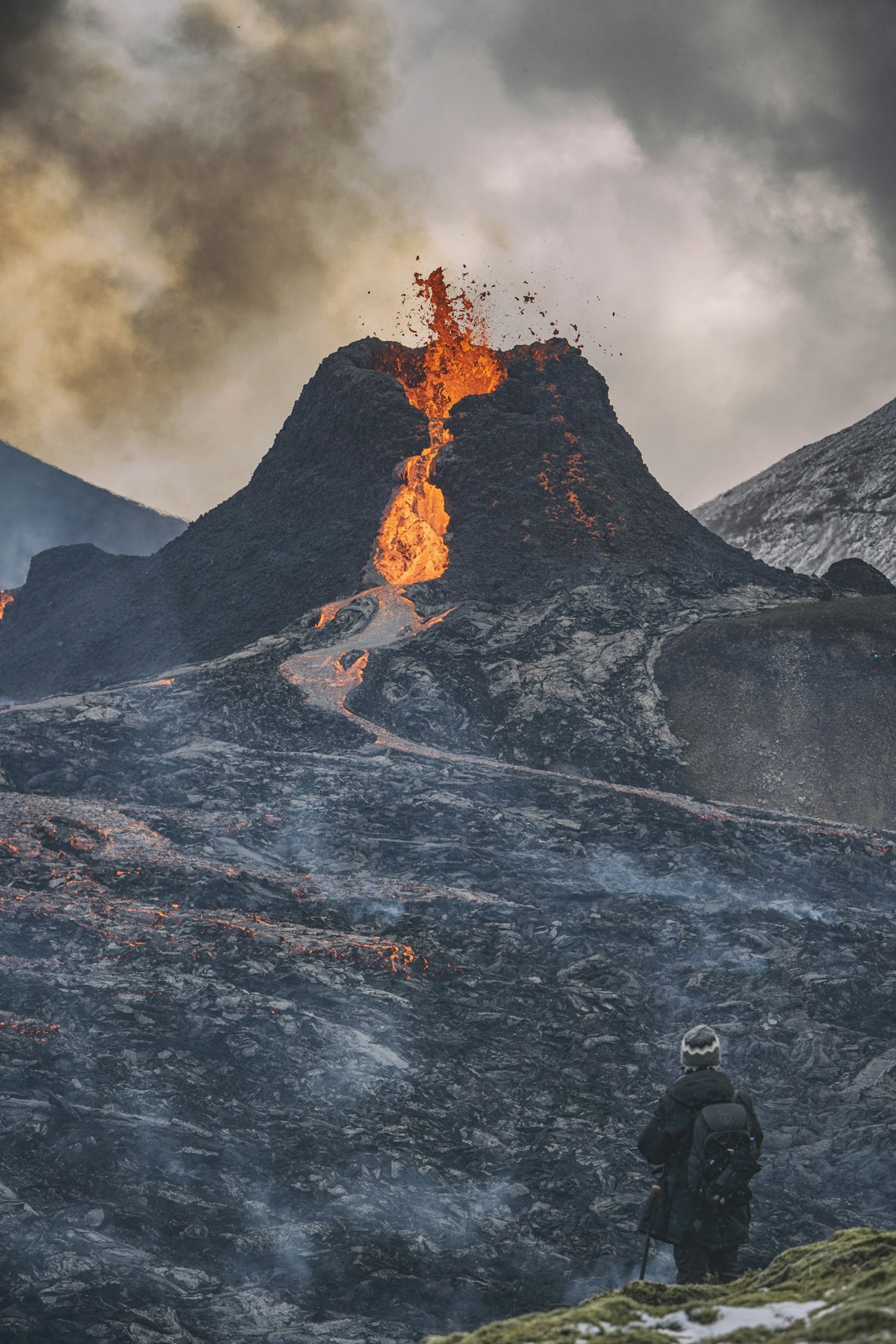
There is no active eruption on the Reykjanes Peninsula as of September 2026. The most recent eruptive phase ended in August 2025 near Svartsengi, and the subsequent months have seen the lava field cool and solidify. Grindavík, the fishing town that bore the brunt of earlier eruptive activity and evacuations, remains partially open to residents with limited visitor access.
Current Volcanic Status
Iceland’s Meteorological Office (IMO) reports that magma accumulation beneath the Svartsengi reservoir system continues at levels consistent with the pattern observed since 2023, when the current eruptive cycle began. As of April 2026 monitoring data, intrusion rates suggest further eruptions remain likely in the coming months, though precise timing is not predictable.
The key points for travellers:
- No current eruption — all roads on the Reykjanes Peninsula, including Route 43 to Grindavík and the Blue Lagoon access road, are open
- Keflavík International Airport is operating normally and has not been affected by volcanic activity in the current cycle
- Blue Lagoon reopened following its most recent precautionary closure; check the Blue Lagoon website for current status before booking, as closures can be called at short notice
- Lava fields from 2023–2025 eruptions are cool enough to walk on in guided tour conditions — check with individual operators
What Travellers Should Know
Iceland’s volcanic activity has been cyclical since the Fagradalsfjall eruption of 2021 that ended a 800-year dormancy on Reykjanes. The current cycle at Svartsengi is geologically distinct — driven by magma intrusion from the Svartsengi system — and is expected to continue with intermittent eruptions for years or decades.
The practical takeaway is that eruptions on Reykjanes have consistently been effusive (lava-producing) rather than explosive, posing no aviation ash risk and creating hazard only in the immediate lava flow zone. Keflavík Airport has remained fully operational throughout all eruptive episodes since 2023.
For more context on Iceland’s volcanic landscape — including how the different systems compare and which volcano experiences are accessible to visitors — we have a full guide to Iceland’s volcanic activity.
Planning Your Autumn Visit
Autumn is one of the better windows for visiting Reykjanes. The summer crowds thin out significantly after late August, and the first northern lights of the season appear in September as darkness returns. Lava field hikes are best undertaken on organised tours with a guide familiar with current conditions on the ground — surface stability varies across different flows.
Travel insurance policies for Iceland trips should confirm they cover volcanic disruption, including voluntary evacuation scenarios and accommodation changes if an eruption affects Grindavík or Blue Lagoon access. Most standard travel policies now include volcanic disruption clauses following the 2024 events.