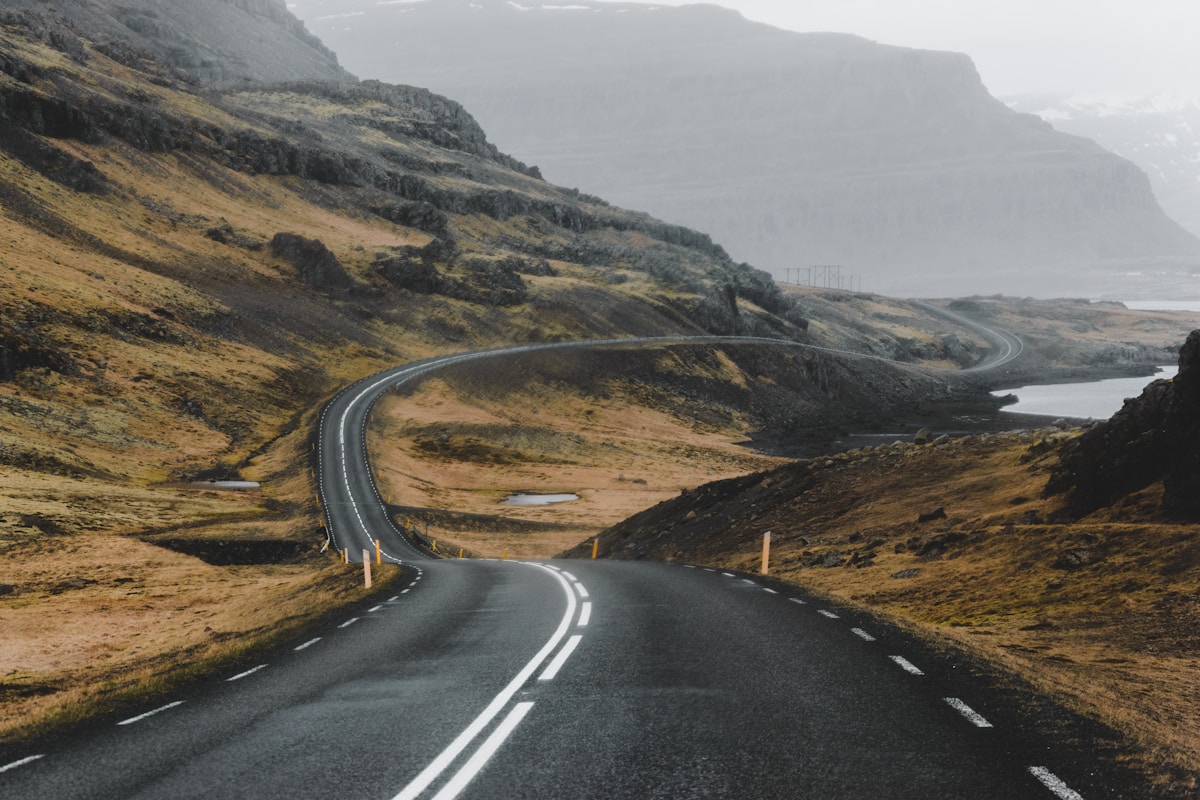
Iceland’s highland F-roads are in their closing window. Most routes across the interior — including the major corridors F35 Kjölur, F26 Sprengisandur, and F208 to Landmannalaugar — typically close between late September and mid-October, with the first significant snowfall triggering closures on individual roads.
There is no fixed calendar date for these closures. The Icelandic Road and Coastal Administration (Vegagerðin) updates road status daily at road.is and vegagerdin.is — these are the only reliable sources for current conditions.
What’s Accessible Right Now
As of mid-September, the main highland destinations remain open:
-
Landmannalaugar (F208) — the most popular highland destination, known for rhyolite mountains and geothermal bathing. Accessible by scheduled highland bus through mid-September; the bus service has already ceased for the season, so self-drive with a 4WD is now required.
-
Þórsmörk (F249/F210) — the mountain valley at the junction of three glaciers, reachable via multiple F-roads. The Volcano Huts (Volcano Huts) remain open. No scheduled bus.
-
Askja (F88) — the remote caldera lake in the northeast highlands. One of Iceland’s most demanding drive-in destinations. Road conditions here deteriorate quickly once autumn sets in.
-
F35 Kjölur route — the most accessible highland route, linking the south to the north via the interior without the river crossings required on other F-roads. Often the last route to close in autumn.
-
F26 Sprengisandur — the longer, more remote north-south highland route. Already seeing closing conditions in high sections.
Rules for F-Road Travel
F-roads require a 4WD vehicle with high ground clearance. Most F-roads include river crossings (fords) without bridges — these become impassable after heavy rain or snowmelt. A standard 2WD or urban SUV is not sufficient and driving these routes in an unsuitable vehicle is illegal and dangerous.
Key rules:
- Check road.is before every highland journey — closures can be announced overnight
- Never drive around closed road barriers
- File a travel plan with safetravel.is before heading into the interior
- Carry emergency supplies; mobile coverage is absent across most F-roads
Our comprehensive guide to driving Iceland’s F-roads covers vehicle requirements, fords, river crossing technique, and emergency procedures.
Landmannalaugar: Worth It in September
Landmannalaugar is one of the most visually striking places in Iceland — a geothermal hot spring set among multicoloured mountains of rhyolite, obsidian, and lava. Arriving in mid-September, when the tourist numbers from August have dropped but the routes remain open, gives a reasonable chance of near-solitude in what is a crowded destination in July and August.
The highland buses from Reykjavík to Landmannalaugar ran until mid-September; from now, self-drive is the only option. The F208 from the south is the most used approach route.
How Much Time Remains
Based on historical patterns, most F-roads close by mid-October at the latest. Some routes — particularly Kjölur (F35) — can remain open into late October in mild years. Others, including F26 Sprengisandur, may already have closed sections by the time you read this.
The window is open now, but it is closing. Check road.is before you go.