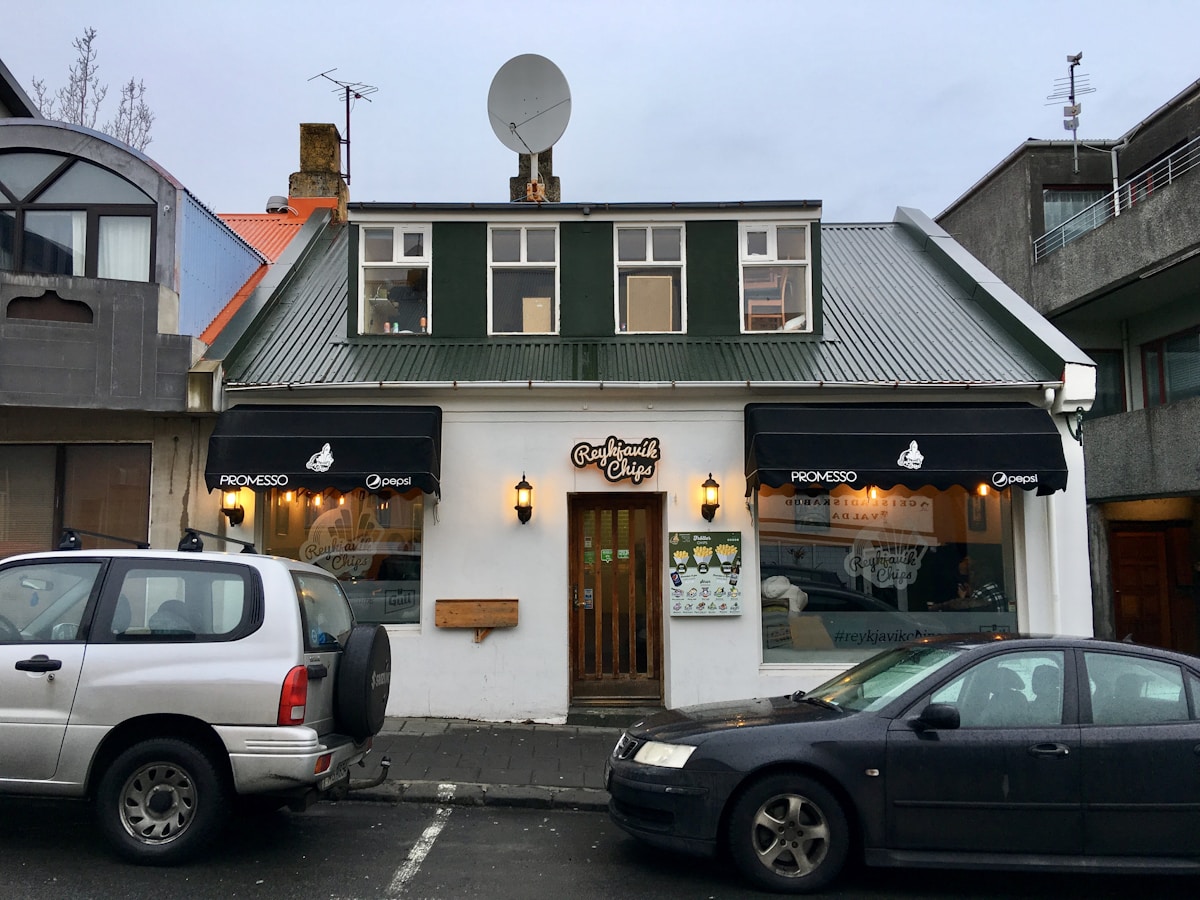
Reykjavik’s food scene has changed quickly. A decade ago, the city was known mainly for expensive fish and imported ingredients. Today it has a genuine restaurant culture - Nordic fine dining, excellent coffee roasters, a small but serious craft beer scene, and some of the best hot dogs in the world. Eating here still costs more than most European capitals, so knowing where to spend is worth the research.
Pylsur: The Reykjavik Hot Dog
The best-known food stop in Iceland costs approximately ISK 650–800 as of 2026. Bæjarins Beztu Pylsur (“The Best Hot Dogs in Town”) has operated from a small kiosk near the Old Harbour since 1937. The lamb-based hot dog is served in a steamed bun with raw and fried onions, sweet mustard, remoulade, and ketchup - locals call the full works “eina með öllu” (one with everything). The queue moves fast. Cash and card both accepted. It is open until midnight most days in summer.
This is not tourist kitsch. Icelandic politicians, fishermen, and visitors all eat here. It is genuinely good.
Fermented Shark (Hákarl)
Hákarl is Greenlandic shark fermented underground and then hung to dry for several months. The result has a strong ammonia smell and a pungent, chewy flavour. It is typically served as a small cube on a toothpick, washed down with a shot of Brennivín schnapps.
You can try hákarl at Café Loki (Lokastigur 28), which specialises in traditional Icelandic food. A tasting plate with hákarl, smoked lamb, rye bread, and pickled herring costs approximately ISK 3,500–4,500 as of 2026. If you want the full traditional spread without travelling to a farm museum, Café Loki is the most practical option.
Most visitors find the smell more challenging than the taste. The ammonia fades quickly.
Kjötsúpa: Icelandic Lamb Soup
This is the national comfort food - a slow-cooked broth with lamb, root vegetables (turnip, potato, carrot), and sometimes barley. It is heavy, warming, and inexpensive by Reykjavik standards.
Café Loki serves a bowl for approximately ISK 2,500 as of 2026. Gló (Engjateigur 19 and Laugavegur 20b) offers a lighter vegetable-forward version for those not eating meat. Kjötsúpa is a winter staple but available year-round at traditional Icelandic restaurants.
Skyr
Skyr looks like yoghurt but is technically a cultured dairy product closer to fresh cheese - high in protein, low in fat, mildly tangy. It has been made in Iceland for over a thousand years. You will find it in every supermarket in plain or flavoured varieties (blueberry, vanilla, strawberry) for approximately ISK 300–500 per pot as of 2026.
Restaurants and cafés often serve skyr as a breakfast component or dessert with cream and blueberries. Sandholt Bakery (Laugavegur 36) does an excellent skyr parfait as part of their breakfast menu.
Fine Dining
Dill Restaurant (Hverfisgata 12) holds a Michelin star and is the anchor of Reykjavik’s Nordic fine dining scene. The menu changes with the season and uses Icelandic produce throughout - hákarl gel, lamb from specific farms, wild herbs. A tasting menu costs approximately ISK 22,000–27,000 per person as of 2026 (excl. wine pairing). Book several weeks ahead; same-week availability is rare.
Grillið (Sigtún 38, on the eighth floor of the Radisson Blu Saga Hotel) offers panoramic views over the city with a grill-forward Nordic menu. A main course runs approximately ISK 6,000–9,500 as of 2026. The Sunday brunch is popular and similarly priced. Less experimental than Dill, more accessible without compromising on quality.
Mid-Range Restaurants
Snaps Bistro (Þórsgata 1) is a reliable neighbourhood bistro serving French-influenced food at prices more manageable than the fine dining tier. Mains typically cost ISK 3,800–6,500 as of 2026. The moules-frites and steak are consistently well-executed. Reservations recommended in the evening.
Hlöllabátar (multiple locations including Ingólfsstraeti 1) is the Icelandic answer to a sub sandwich, using local ingredients. Generous portions, fast service, and a bill around ISK 1,800–2,800 as of 2026. Popular with locals for a quick lunch. Completely unpretentious.
Messinn (Lækjargata 6b) focuses on Icelandic fish, served in cast-iron pans with seasonal sides. The pan-fried langoustine tails are the dish to order. Expect ISK 4,000–7,000 for mains as of 2026. Book ahead for dinner.
Coffee
Reykjavik has a serious specialty coffee culture for a city of 130,000 people. Reykjavik Roasters (Kárastígur 1 and Brautarholt 2) roasts on-site and serves espresso and filter. Kaffismiðja Íslands (Grandagarður 10, in the Old Harbour area) is another consistent option. Expect to pay ISK 750–1,000 for a flat white as of 2026.
Most cafés double as workspace during the day - laptop culture is well established, and wifi is reliable everywhere.
Craft Beer
The Icelandic craft beer scene grew sharply after alcohol restrictions were eased in the 1990s. Bryggjan Brugghús (Grandagarður 8, Old Harbour) brews on-site and has 12–14 taps of rotating Icelandic beer. A 0.5L pour costs approximately ISK 1,400–1,800 as of 2026.
Skúli Craft Bar (Aðalstræti 9) carries the widest selection of Icelandic craft cans and taps in the city centre. No food beyond bar snacks, but knowledgeable staff and a good introduction to local breweries including Borg, Segull 67, and Gæðingur.
The Microbar (Austurstræti 6) is a relaxed spot with both Icelandic and imported taps. Central location, open late.
Practical Notes
Restaurant prices in Reykjavik are noticeably higher than the rest of Iceland, and Iceland is already more expensive than most European countries. Budget travellers do best at the hot dog kiosk, supermarkets (Bónus is the cheapest chain), and lunch specials (dagsréttir) - most mid-range restaurants offer a set lunch for ISK 2,200–3,500 including soup or salad, considerably cheaper than the dinner menu.
Tipping is not expected in Iceland. Service is included. A small tip (10 percent) is appreciated at fine dining restaurants but is not standard practice elsewhere.
Most restaurants are open without reservation for lunch; evening reservations are recommended at anything above the casual tier, especially Friday to Sunday.
Take a Food Tour to Navigate Reykjavík’s Eating Scene
Reykjavík’s food culture spans a 1,000-year arc from preserved Viking staples to Michelin-starred Nordic cooking — and a guided food tour is the fastest way to understand both ends. Most tours spend two to three hours moving between the pylsur kiosk at Bæjarins Beztu, Kolaportið flea market for harðfiskur and smoked fish, and one or two restaurants where skyr, lamb, and Arctic char are served in their most interesting preparations. The guide provides context that a menu never does: the Viking logic behind air-dried fish, the exact cultural moment that created hákarl as a fermented preservation technique, and why Reykjavík’s contemporary chefs are drawing on those traditions rather than away from them. Prices start from approximately ISK 12,000.
Browse Reykjavík tours - city walking tours, food experiences, and day trips from the capital.
Get travel insurance for Iceland - policies covering glacier hikes, F-road driving, and volcanic disruption.
See Also
- Best restaurants in Reykjavík - Ranked picks from fine dining to budget eating across all price points
- Restaurants in Reykjavík - A broader restaurant guide covering all neighbourhoods
- Street food and cheap eats in Reykjavík - Hot dogs, bakeries, food halls, and how to eat well on a budget
- Vegan Reykjavík - Plant-based options across the capital for vegan travellers
- Reykjavík city guide - Complete guide to Iceland’s capital with hotels, attractions, and transport
For accommodation nearby, search hotels in Reykjavík on Booking.com.