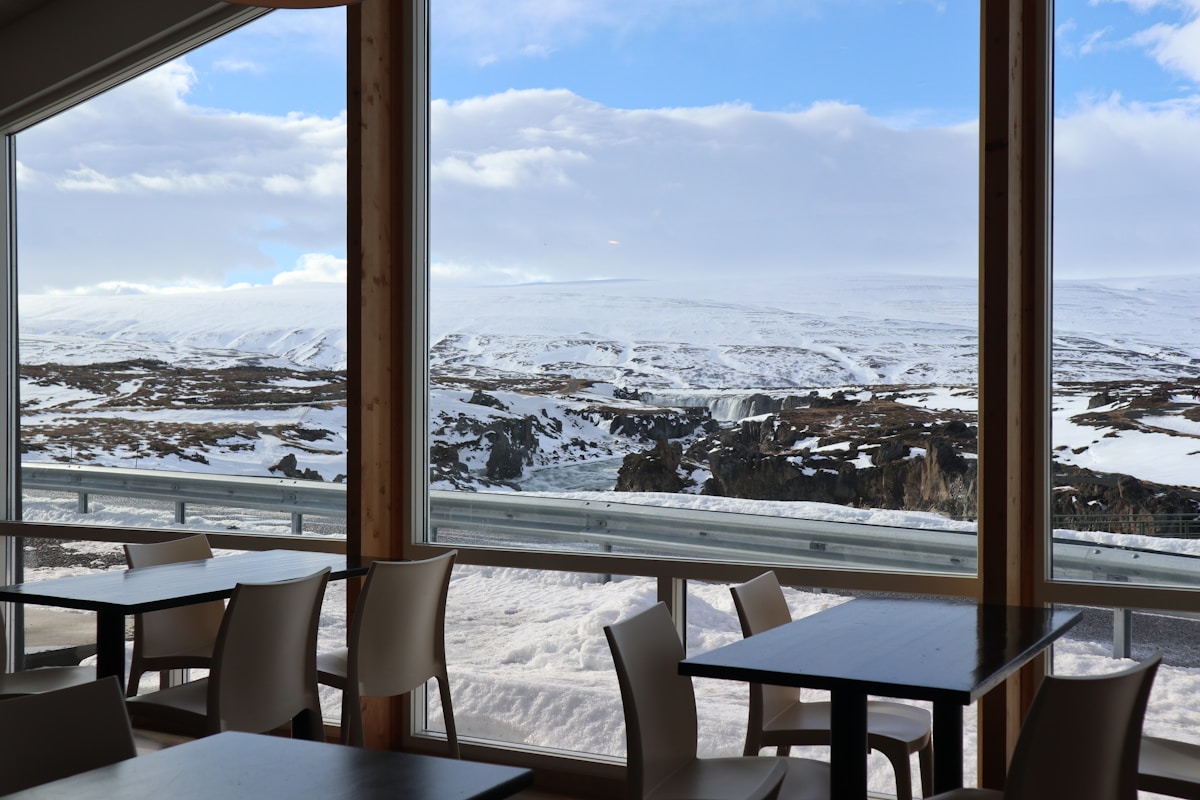
North Iceland feeds itself differently from the south. Where Reykjavík has a restaurant culture shaped by tourism and international influence, the food traditions of the north are rooted in two things that have not fundamentally changed in a thousand years: a cold fjord that produces exceptional fish, and a highland landscape that produces exceptional lamb.
Understanding North Iceland’s food culture means understanding the landscape it comes from - and understanding why ingredients that might seem simple elsewhere taste different when they come from this specific combination of Arctic latitude, geothermal heat, and deep fjord water.
Eyjafjörður and the Fisherman’s Table
Eyjafjörður - the fjord at whose head Akureyri sits - is Iceland’s longest, stretching 60 kilometres inland and reaching depths over 200 metres. It is cold, clean, and fed by rivers draining Iceland’s northern highlands. The fish that come from it, and from the North Atlantic just beyond its mouth, have shaped the food culture of every settlement along its shores.
Fishing communities in North Iceland developed a practical food tradition - high-calorie, protein-dense, preservable - that reflects the economics of working at sea in cold water. The staples were not restaurant food; they were sustenance designed to be made quickly, eaten fast, and keep a person warm through a long day.
Plokkfiskur - mashed fish stew - is the most representative dish of this tradition. Fresh cod or haddock is cooked until it flakes, then combined with mashed potato, white sauce (béchamel), and onion. The result is thick, filling, and deeply savoury. It is Iceland’s most honest home-cooking dish: it uses everything and wastes nothing. Every household in the north has a version. The proportion of fish to potato varies by family, the seasoning varies by region, but the logic is identical everywhere - take what came off the boat, cook it simply, feed everyone.
Fish soup (fiskisúpa) in North Iceland is typically a cream-based chowder rather than the clear broth of Norwegian tradition. Fresh cod, haddock, or char goes in with potatoes, carrots, and onion, finished with cream and butter. It appears on lunch menus across the north and is the most dependable thing to order in any café between Akureyri and Húsavík.
Harðfiskur - air-dried fish - was the fisherman’s away-from-home food. Dried until rigid and concentrated, it kept indefinitely without refrigeration. The drying frames (hjallur) were fixtures of every North Iceland farm and harbour settlement. Eaten with salted butter, it provided protein and fat in compact, portable form. The harðfiskur tradition persists: you can still buy it loose at farm shops and market stalls across the north, and the flavour is more complex from small producers who dry it traditionally than from the vacuum-packed supermarket versions.
Highland Lamb and the Réttir Tradition
North Iceland’s highlands are among the best lamb-producing landscapes in the country. The mountains and lava fields around Eyjafjörður, Skagafjörður, and the Tröllaskagi peninsula provide summer grazing that is both vast and botanically diverse - wild thyme (blóðberg), angelica (hvönn), various grasses and sedges, and the low-growing heather that flavours the fat of Icelandic lamb with a characteristic aromatic note.
Icelandic sheep are unique: descended from the animals the Norse settlers brought in the ninth century and isolated since, with virtually no cross-breeding. The breed is small-boned but hardy, producing meat that is leaner and more intensely flavoured than commercial European lamb. The fat is aromatic in a way that good Icelandic cooks use deliberately - lamb fat rendered in a pan, used to cook the chops that follow, is a technique that would be wasted on commercial lamb but works well here.
In September, the réttir (sheep round-up) takes place across North Iceland as farmers and their horses collect sheep from the highlands before winter. This is one of the most important annual events in rural Icelandic culture - a collaborative effort involving multiple farms and the entire local community, traditionally followed by celebrations and the first autumn lamb dishes. The réttir is not open to tourists in the way that some rural festivals are, but its cultural weight is visible in the food: the first autumn lamb sold in North Iceland markets in September carries a cultural significance beyond its culinary one.
Hangikjöt - smoked lamb - is the other essential preparation. Traditionally smoked over dried sheep dung (tað) or birch, the meat is preserved whole and sliced cold. The smoky, sweet character of hangikjöt on rye bread (rúgbrauð) with a smear of butter is one of the most distinctively Icelandic flavour combinations. North Iceland farms that still smoke their own lamb produce a product noticeably different from the commercial versions - darker, more complex, and with a cleaner finish.
Geothermal Cooking: Bread from the Earth
The most extraordinary food tradition in North Iceland is not a dish - it is a cooking method. Hverabrauð (geothermal rye bread, sometimes called lava bread) is baked underground, in sealed pots buried in geothermally heated earth, typically for 24 hours at a consistent temperature of around 100°C.
The technique requires no fire and no oven. The geothermal heat - a by-product of the volcanic activity that shapes all of Iceland’s landscape - provides sustained, even temperature that conventional ovens struggle to replicate. The result is bread that is dense and dark, with a slightly sweet flavour from the long, slow Maillard reaction, and a moist crumb that holds together rather than crumbling under pressure.
The Mývatn area is the epicentre of this tradition. The geothermal activity around Lake Mývatn - the same heat that drives the mud pools at Hverir and the hot springs at Mývatn Nature Baths - keeps the ground hot at shallow depth, making it practical to bake bread in sealed pots with minimal infrastructure. Vogafjós farm restaurant (near Reykjahlíð on the lake’s east shore) pulls its hverabrauð directly from the earth as part of meal service - a literal demonstration of the cooking technique rather than a recreation.
Hverabrauð is traditionally eaten with butter and smoked fish - particularly the cold-smoked trout and Arctic char for which the Mývatn area is known. The bread and fish combination is as old as the technique: the dense, slightly sweet bread absorbs the oils from the smoked fish and provides a carbohydrate base dense enough to sustain a working day.
Arctic Char and the Mývatn Microclimate
Lake Mývatn and the rivers that drain the geothermal highlands around it produce Arctic char (bleikja) with a flavour profile specific to the area. The geothermal influence on the water - slightly elevated mineral content, more stable temperature than purely glacial rivers - creates conditions that produce char with a delicate, mineral character and a paler flesh than Arctic char from colder lakes.
Cold-smoking was the preservation method of choice for Mývatn char. The smoking is done at low temperature (typically below 30°C) over birch or alder chips for several hours, producing fish that retains its raw texture while absorbing smoke flavour. The result is eaten on rúgbrauð (dense Icelandic rye bread) with butter - one of the most elegant simple food combinations in the country.
Beyond char, the rivers and lake provide trout in significant quantities. Trout from Mývatn is generally cold-smoked using the same method, and the two fish appear together on menus across the north under the general category of “smoked fish from Mývatn” - a local designation that carries the same regional pride that a wine appellation would carry elsewhere.
Cod and haddock from Eyjafjörður itself are the everyday fish of Akureyri. Fresh cod pan-fried in butter with boiled potatoes is not a tourist dish or a restaurant showcase - it is what North Icelanders eat on weekday evenings, the way Italians eat pasta. The fish is so routinely excellent and so simply prepared that the cooking barely merits description: the quality of the ingredient is the point.
Skyr and Northern Dairy
Iceland’s dairy tradition is strongest in the farming regions of North Iceland. The Skagafjörður valley, one of Iceland’s most intensively farmed areas, has been producing dairy for over a millennium. Small northern dairies still produce skyr in smaller batches using cultures maintained over generations - the bacterial strains that convert fresh milk to skyr are, in some cases, the descendants of cultures brought from Scandinavia in the ninth century.
Northern skyr from small dairies has a noticeably different character from the industrial versions: slightly grainier in texture, tangier, and less sweet. It is eaten at breakfast with crowberries (krækiber, the small dark berries that ripen across Icelandic lava fields from late August), or with honey from Icelandic wildflower hives. The crowberry version is the most Icelandic combination - both ingredients are local, seasonal, and ancient.
Brynja in Akureyri (Aðalstræti 3) has been making ice cream since 1939, and while ice cream is not traditional Icelandic food in any deep cultural sense, Brynja has become one of the most culturally embedded food institutions in the country. The queue in summer - locals, tourists, and lorry drivers mixed without hierarchy - reflects something genuine: good ice cream at a price that everyone can afford (ISK 700–900 per double scoop as of 2026) in a country where most pleasures are expensive. It is open year-round.
The Þorrablót Tradition
In January and February, North Iceland’s farming and fishing communities hold þorrablót - midwinter festivals that preserve the tradition of eating Iceland’s most ancient preserved foods. The þorramatur (þorra foods) served at these gatherings include hangikjöt, harðfiskur, blood pudding (blóðmör), liver sausage (lifrarpylsa), singed sheep’s head (svið), and fermented shark (hákarl).
These are not foods that anyone would describe as delicious in a contemporary culinary sense. They are foods that kept Icelanders alive through centuries of harsh winters, and eating them at þorrablót is an act of cultural memory as much as a meal. The gatherings are primarily social - community events where people from dispersed farms come together in the darkest months - but the food is taken seriously as a marker of identity and continuity.
North Iceland’s þorrablót events are not generally open to tourists, but the tradition explains why harðfiskur, hangikjöt, and blood pudding remain available at supermarkets and market stalls year-round - these are not heritage museum pieces. They are foods that living people eat at living cultural events.
Practical Notes on Self-Catering in the North
For visitors staying in North Iceland who plan to cook for themselves: Krónan and Nettó in Akureyri are the primary supermarkets, both well-stocked with local skyr, smoked fish, lamb products, and produce. Stock up before heading toward Mývatn - the single small shop at Reykjahlíð on the lake has limited range and higher prices.
Farm shops along the north coast road occasionally sell smoked fish, lamb products, and skyr directly from producers. These are worth stopping for: the quality difference between a farm-smoked char and a supermarket equivalent is significant, and the prices are often comparable.
Explore North Iceland on a Guided Food Tour from Akureyri
A guided food tour from Akureyri brings North Iceland’s food culture into focus in a way that driving between restaurants does not. Tours covering this region typically include stops at smoked fish operations around Mývatn, a demonstration of hverabrauð pulled directly from the geothermal earth at Vogafjós farm restaurant, and tastings of local lamb from highland farms whose sheep have been roaming the Eyjafjörður highlands since Norse settlement. A guide connects the food to the landscape — explaining why Mývatn’s geothermal microclimate produces trout with a flavour distinct from colder lakes, and how the dairy tradition in Skagafjörður has maintained cultures that haven’t changed in centuries. Half-day and full-day options are available from Akureyri.
Browse Akureyri food and cultural tours — guided experiences covering North Iceland’s food producers, Lake Mývatn, and Eyjafjörður.
Get travel insurance for Iceland - policies covering glacier hikes, F-road driving, and volcanic disruption.
Related Guides
- Icelandic cuisine culture - The history and meaning behind Iceland’s food traditions, from skyr to New Nordic
- Icelandic seafood guide - Langoustine, Arctic char, cod, and the fishing traditions behind Iceland’s seafood
- Akureyri city guide - Hotels, attractions, transport, and practical information for Iceland’s second city
- Things to do at Lake Mývatn - The geothermal lake district, its landscapes, and how to plan a visit
- 10 days in Iceland itinerary - A structured route through Iceland including the north, Diamond Circle, and highland interior
Plan Your Stay
Find hotels in Akureyri — search accommodation across all budgets in Akureyri.