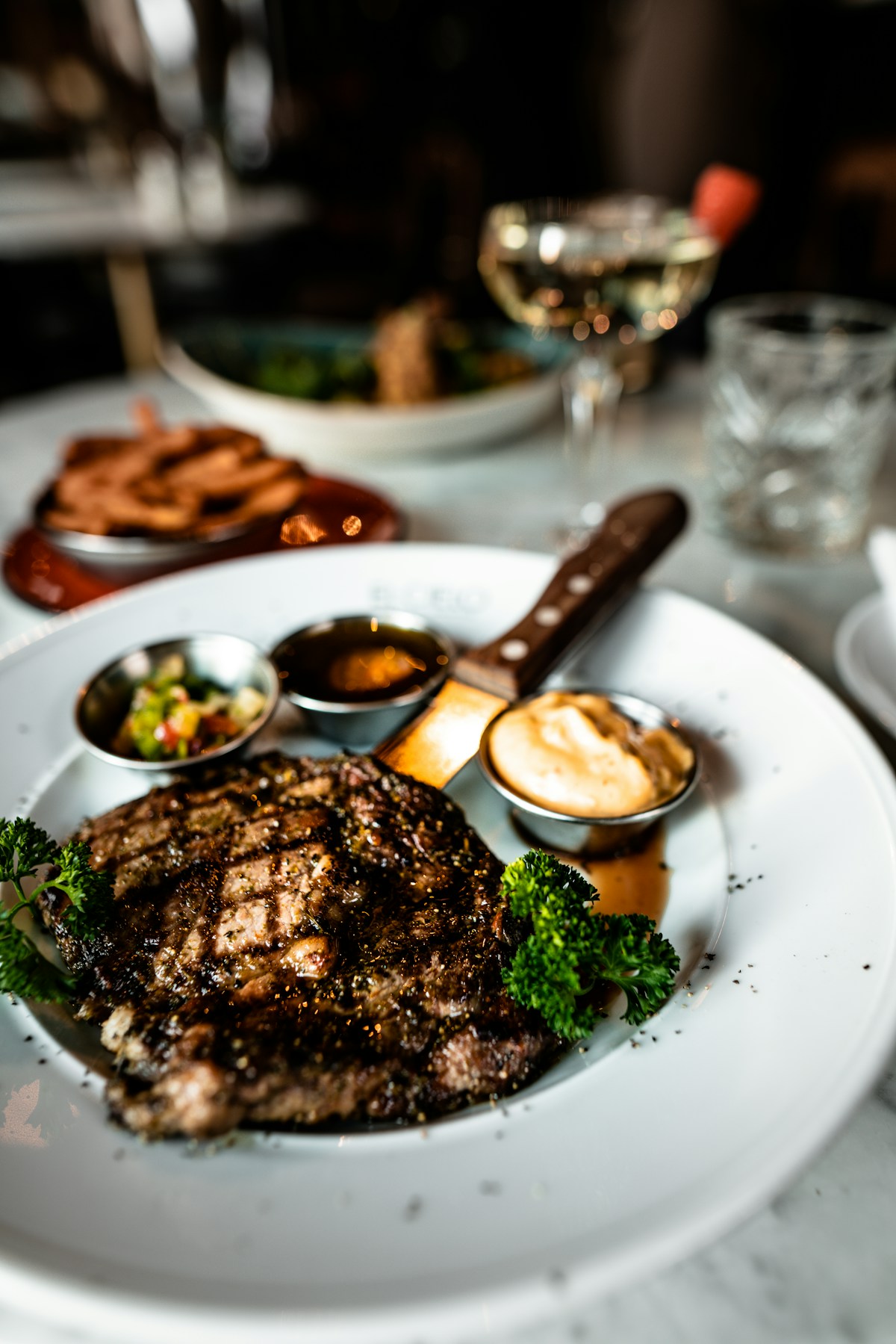
Iceland has no official national dish listed in any government document. This is not unusual — many countries never formally designate one — but Icelanders have a clear unofficial answer: kjötsúpa, a slow-simmered lamb soup that has been cooked in Icelandic households for over a thousand years. It appears at kitchen tables, farm guesthouses, and upmarket Reykjavík restaurants alike.
The case for kjötsúpa is straightforward. Iceland’s food culture was built on what the land could produce, and for most of Icelandic history, that meant sheep, fish, root vegetables, and dairy. Kjötsúpa uses all of these: lamb on the bone, swede, carrot, turnip, and leeks, simmered in cold water until the broth becomes richly flavoured and the meat falls from the bone. It requires no imported ingredients. Every element is Icelandic.
Kjötsúpa — The Lamb Soup
The name means simply “meat soup” (kjöt = meat, súpa = soup), but in Iceland it invariably means lamb. Beef is uncommon here. Pork plays a minor role. Lamb — from the roughly 800,000 sheep that graze Iceland’s highlands each summer — is the default.
What goes into it: Lamb shoulder or neck with the bone, turnip (næpa), carrot, leek, potato, and sometimes oats or rice to thicken the broth slightly. Herbs are simple: thyme, pepper, and salt. The long cooking time — two to three hours on a low simmer — is what makes it: the bones release collagen, the broth becomes gelatinous and full, and the root vegetables break down into the liquid rather than staying firm. The result is a soup that is simultaneously austere in its ingredients and complex in flavour.
Where to try it:
- Rural guesthouses and farm stays: These serve the most authentic version. Across Iceland’s Ring Road and the Westfjords, family-run guesthouses make kjötsúpa from their own sheep. No formal address — ask at any Ring Road guesthouse if it’s on the menu. Price approximately ISK 1,800–3,200 as a starter.
- Matur og Drykkur, Reykjavík (Grandagarður 2): One of Reykjavík’s most serious Icelandic restaurants, this kitchen interprets traditional recipes with precision. Their kjötsúpa stays faithful to the original — it’s not deconstructed or modernised. Mains approximately ISK 4,200–6,500.
- Café Loki, Reykjavík (Lokastígur 28): Opposite Hallgrímskirkja. A dedicated traditional Icelandic menu in a small, unpretentious room. Kjötsúpa plus other heritage dishes like hákarl and harðfiskur. Good introduction without the Michelin-level price.
Skyr — Iceland’s Daily Staple
If kjötsúpa is the national dish, skyr is the national food. It’s been produced in Iceland since Norse settlement and is now exported globally, but its home is unmistakably Icelandic.
Technically, skyr is a fresh cheese rather than a yoghurt — it’s made by separating the whey from skim milk, then culturing the solids. The result is thicker and slightly more acidic than most yoghurts, with a protein content of 10–12g per 100g. Icelanders eat it at breakfast with wild crowberries (krækiber) and cream, as a snack plain, and as a base for desserts.
Why it belongs in the national dish conversation: Skyr has been eaten continuously in Iceland since the Vikings arrived. It survived centuries of hardship because it could be made from locally available milk and preserved in wooden barrels. It is not a product of wealth or trade — it is fundamental subsistence food that happened to taste very good.
Every supermarket in Iceland carries multiple skyr brands and flavour varieties. The plainest version, eaten with fresh crowberries and a spoon of cream, is the version worth seeking out.
Plokkfiskur — The Fish Stew
Iceland’s other claim to a national dish comes from the sea. Plokkfiskur (literally “jumbled fish”) is a stew made from poached white fish — cod or haddock — broken apart and combined with mashed potato, onion, and béchamel. It’s homely, warming, and deeply embedded in Icelandic food culture.
Historically, plokkfiskur was made on Fridays using the week’s leftover fish and potatoes. The combination — creamy potato, flaky white fish, mild onion — is as close to comfort food as Iceland gets. It was daily food in fishing communities for generations.
Where to try it:
- Café Loki, Reykjavík: Serves a traditional version with rúgbrauð (geothermal rye bread) on the side. This is the pairing to try.
- Grillmarkaðurinn, Reykjavík: An elevated version with better fish quality and more precise seasoning. Approximately ISK 3,500–4,800.
- Hotel Rangá restaurant, Hella: A south Iceland destination that serves plokkfiskur as part of a traditional Icelandic starter menu.
Hákarl — Not the National Dish, Whatever You’ve Heard
Iceland’s most famous traditional food internationally is hákarl — Greenlandic shark fermented underground for several months, then hung to dry for four to six months. The ammonia smell is striking. The flavour is confrontational.
Hákarl appears on food tours, shock-journalism articles, and “world’s worst foods” listicles. It receives enormous international attention. It is not, however, the national dish.
Very few Icelanders eat hákarl regularly. It is a once-a-year ritual food associated with the Þorrablót midwinter festival (typically January-February), not an everyday ingredient. Most Icelanders who eat it do so for cultural continuity, not because it’s delicious. The hákarl phenomenon is largely a tourism export — it tells a story about historical Icelandic resourcefulness, not about contemporary Icelandic eating.
The Icelandic Hot Dog (Pylsur)
A final candidate, on different grounds: the pylsur from Bæjarins Beztu Pylsur on Tryggvagata in Reykjavík. It’s not a traditional food — it’s a 20th-century street food — but it is genuinely iconic and eaten across Iceland regardless of age or background.
The dog is made from a blend of lamb, pork, and beef, served in a steamed bun with raw and crispy fried onion, Icelandic mustard (brown, slightly sweet), ketchup, and remoulade. A single hot dog costs approximately ISK 650 as of 2026. There’s usually a queue.
It’s the most democratic food in Iceland — President Ólafur Ragnar Grímsson ate one at the stand in 2004, made famous by a photograph. Barack Obama ate one in 2016. The queue has never actually shortened.
What to Order on a First Visit
If you want to eat like Iceland eats:
- Breakfast: Plain skyr with jam or fresh berries. Every hotel serves it.
- Lunch: Kjötsúpa at a rural guesthouse, or lobster soup (humar súpa) at Sægreifinn if you’re in Reykjavík.
- Dinner: Slow-roasted Icelandic lamb at a farm restaurant or mid-range Reykjavík kitchen.
- Street food: Hot dog from Bæjarins Beztu, once.
- Traditional tasting: Plokkfiskur with rúgbrauð at Café Loki.
Browse Reykjavík food tours — guided tastings that cover kjötsúpa, skyr, harðfiskur, and the modern Icelandic kitchen in two to three hours.
Related Guides
- Icelandic food guide - The full landscape of what to eat in Iceland, from supermarkets to Michelin
- Icelandic cuisine - Key ingredients, the modern restaurant scene, and food culture
- Best restaurants in Reykjavík - Top Reykjavík picks across all budgets
- Street food and cheap eats Reykjavík - Eating well without the full restaurant price
Plan Your Stay
Find hotels in Iceland — search accommodation across all budgets in Iceland.