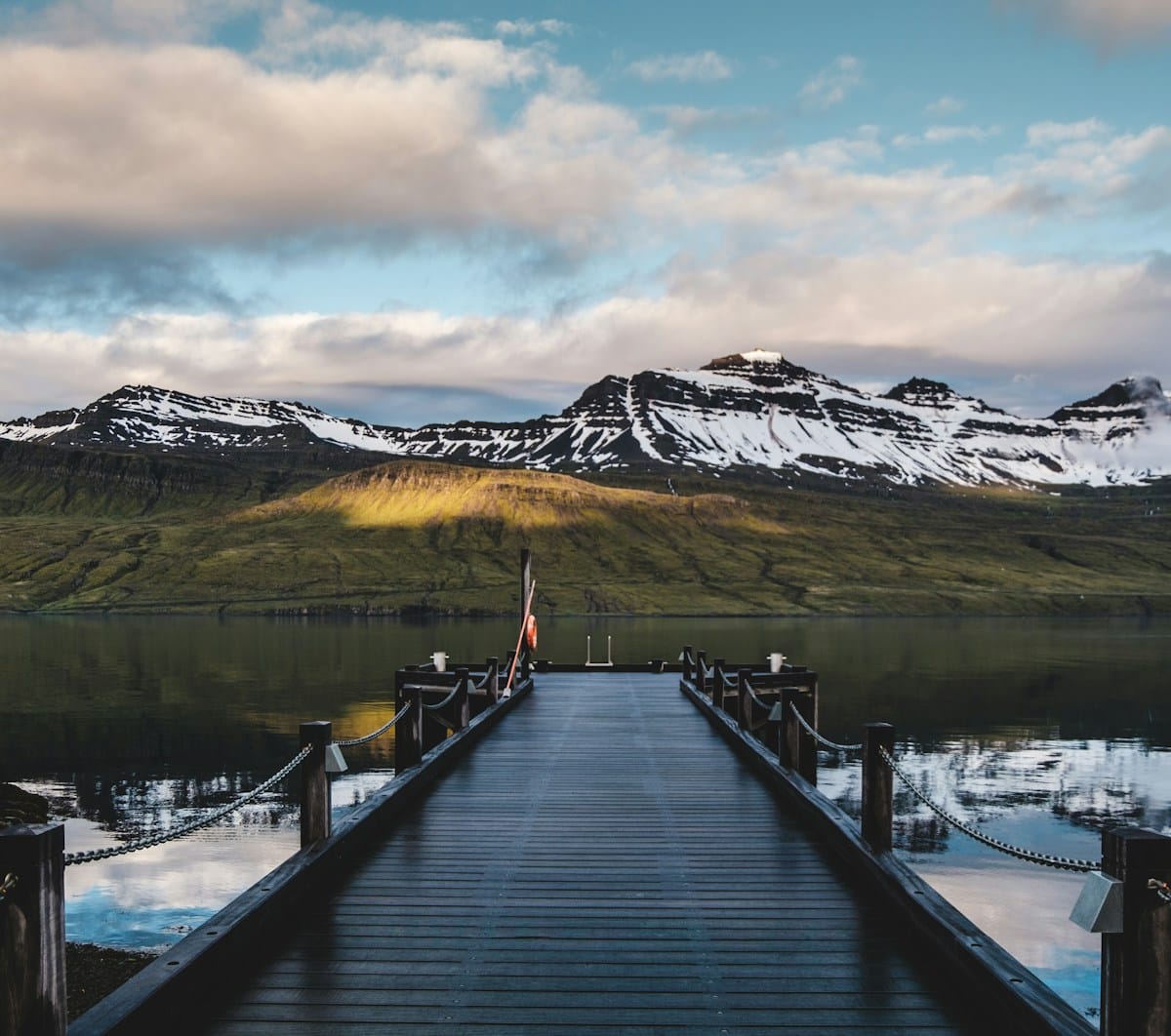
The East Fjords are Iceland’s most introspective corner - a series of deep fjords cut into the eastern highlands, connected by a winding road that takes far longer to drive than any map suggests. Unlike the south coast or the Snæfellsnes peninsula, the East Fjords are rarely congested. You are more likely to share a guesthouse common room with a Ring Road cyclist than with a tour bus group.
Accommodation here is scattered across a dozen small villages rather than concentrated in one centre. Each fjord has its own character: Djúpivogur at the southern end is a small fishing harbour; Fáskrúðsfjörður (known as Eskifjörður to Icelanders) has an unexpected French history from 19th-century Breton fishermen; Neskaupstaður is the largest settlement and has the most practical facilities; Seyðisfjörður is the most photogenic and best-known internationally because of the ferry connection.
This guide covers the specific villages worth staying in, with named accommodation and prices where available.
Southern Entry: Djúpivogur
Djúpivogur is the first East Fjord village you reach driving clockwise on the Ring Road from Höfn. Population around 460, it sits on a small peninsula with views across Berufjörður.
Guesthouse Berunes lies 16km north of Djúpivogur at the old Berunes farm - a heritage property in an extraordinary location above the fjord. Doubles run approximately ISK 24,000–32,000 in summer, with farmhouse dinners available at extra cost (approximately ISK 4,500 per person). Booking well ahead is essential: there are only a handful of rooms and it fills fast from May through September.
Við Voginn Guesthouse in Djúpivogur itself offers rooms from approximately ISK 22,000–28,000 with views across the harbour. The in-house restaurant serves local fish - langoustine and arctic char are both sourced nearby. For one night before pushing north into the fjords, this is a comfortable and appropriately located stop.
Mid-Fjords: Breiðdalsvík
Breiðdalsvík sits at the head of Breiðdalsfjörður, roughly halfway along the East Fjords road. The village has a population of around 200 and is primarily a service stop - petrol, a guesthouse, and a small café.
Hotel Bláfell is the main option here, with rooms running approximately ISK 24,000–35,000 in summer. The hotel is simple but adequate, and the Breiðdalur valley road (Route 96) heading inland from here is a beautiful back route to Egilsstaðir if you have time. The valley passes the Breiðdalsvík Visitor Centre, which covers the local geology.
Fáskrúðsfjörður: The French Connection
Fáskrúðsfjörður’s Breton fishing heritage means many street signs still appear in both Icelandic and French. The French Hospital museum (Fransmenn á Íslandi) tells the story of the Breton fishermen who worked these waters from the late 1800s and the hospital that served them.
Fosshotel Eastfjords is the main accommodation here, occupying the historic hospital building itself. Rooms are modern inside the heritage structure, running approximately ISK 30,000–45,000 in peak summer. The location and story make it one of the more distinctive places to stay in east Iceland. The restaurant serves local seafood.
Neskaupstaður: The Practical Base
Neskaupstaður is the largest town in the East Fjords with a population of around 1,500. It has a supermarket, hospital, cinema, and the best range of services in the region. The town sits at the far end of Norðfjörður and requires a slight detour off the Ring Road - but it is worth knowing about for travellers who need supplies or want an actual town feel.
Several small guesthouses and private apartment rentals operate in Neskaupstaður, typically running ISK 18,000–26,000 for a private double. The Egilsstaðir Airport (25km away) means some visitors fly in and use Neskaupstaður as a base for exploring south towards Seyðisfjörður and the ferry.
Seyðisfjörður: The Ferry Town
Seyðisfjörður deserves its own reputation beyond just the ferry. The approach road (Route 93) climbs dramatically over the mountain from Egilsstaðir and descends into a town of colourful wooden houses surrounded by waterfalls. The Smyril Line ferry to the Faroe Islands and Denmark runs weekly in summer, making this one of Iceland’s key arrival points for European road-trippers.
Hotel Aldan is the best-known accommodation, occupying a group of heritage buildings around the town centre. Rooms run approximately ISK 35,000–55,000 in summer - above the East Fjords average, reflecting the ferry traffic demand. The included breakfast is well above standard. Book at least two months ahead if you are arriving or departing on a ferry week.
Several small guesthouses offer rooms in the ISK 22,000–30,000 range. Given the ferry schedule, Seyðisfjörður on ferry arrival/departure nights books out fast - mid-week without ferry context is significantly easier to find rooms.
For a more detailed accommodation guide to Seyðisfjörður specifically, see our where to stay in Seyðisfjörður guide.
Camping in the East Fjords
Almost every village in the East Fjords has a campsite, typically charging ISK 1,500–2,000 per person per night. Standards are basic - toilets and showers, usually heated. The best-positioned sites are at Seyðisfjörður (near the ferry terminal) and Djúpivogur (harbour views). Wild camping is legal in Iceland but follow the Leave No Trace principles, particularly in the fjords where paths are fragile.
Getting Around the East Fjords
A car is essential. Bus services are limited to a few routes connecting the larger villages on weekdays - not practical for flexible exploration. The Egilsstaðir Airport (AEY) connects to Reykjavík on Eagle Air and Icelandair multiple times daily, making fly-drive the most common approach for travellers short on time. Hire a car at Egilsstaðir Airport on arrival - booking in advance is advisable in summer when supply is tight. For a fixed-price transfer from the airport to your accommodation, GetTransfer covers east Iceland routes.
The Ring Road section through the East Fjords is paved and fine in a 2WD car. Side roads into individual fjords vary - some are smooth, some are steep and gravel. Check road.is before diverting into an unfamiliar fjord.
See our full East Fjords guide for hiking recommendations, the Stuðlagil canyon route, and the best viewpoints along the route.