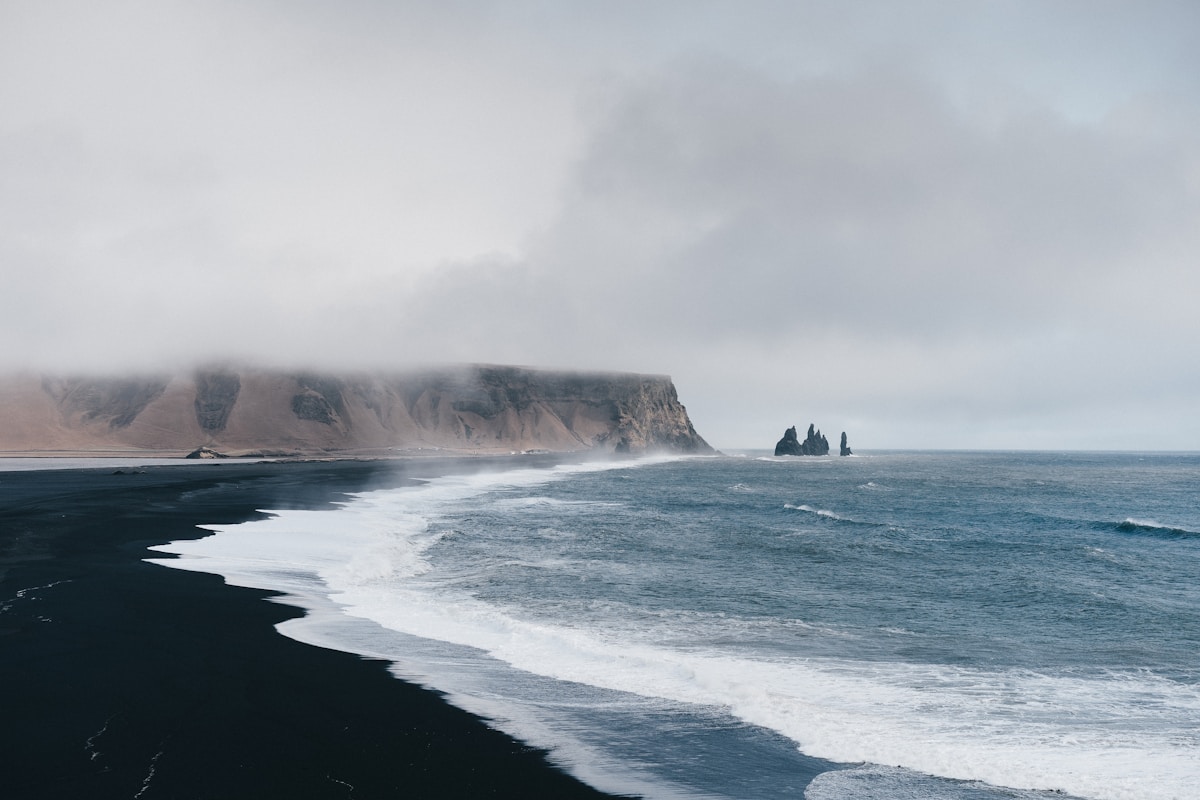
Reynisfjara is Iceland’s most photographed beach and, by a significant margin, its most dangerous. Black volcanic sand, geometric basalt columns, Atlantic surf with no continental shelf to slow it, and an unpredictable wave pattern that has killed multiple visitors since 2016. It is genuinely beautiful and genuinely hazardous - both things are true simultaneously.
Understanding the wave danger before you arrive is not optional. It is the entire basis for visiting safely.
The Wave Danger: What You Need to Understand
The Atlantic Ocean south of Iceland has no landmass between Reynisfjara and Antarctica. Waves travel unimpeded across thousands of kilometres of open ocean and arrive at the beach with enormous force. The surf at Reynisfjara looks deceptively manageable - a series of moderate waves breaking at the waterline - but approximately every 5–10 minutes, without any visual warning, a “sneaker wave” (also called a rogue wave or rogue set) arrives. It is larger, faster, and travels much further up the beach than the preceding waves.
Several visitors have been pulled into the ocean and drowned at Reynisfjara. Most were standing at or near the waterline for photographs. None of them saw it coming.
What to do:
- Stay a minimum of 30 metres from the waterline at all times
- Never turn your back to the ocean
- Never walk to the water’s edge, even briefly
- Do not let children run ahead toward the waves
- If a sneaker wave arrives and you are hit, drop flat and dig hands into the sand rather than trying to stand and run - the backwash pulls with extraordinary force
Warning signs are posted at the car park and along the beach path. Read them before walking onto the sand.
Getting to Reynisfjara
From Reykjavík: Approximately 180km east on Route 1 (Ring Road), then south on Route 215. Total drive approximately 2.5 hours without stops. The turn for Route 215 is on the western edge of Vík village.
Parking: Free car park directly at the beach. Fills quickly on summer mornings (peak season: June–August). Arriving before 9am avoids queues.
By tour: South Coast day tours from Reykjavík almost always include Reynisfjara alongside Seljalandsfoss and Skógafoss. These typically depart around 8–9am and return around 8–9pm.
What You’ll See
The Black Sand
The sand is ground-down basalt - the same volcanic rock that makes up Iceland’s interior. It is genuinely black, not grey, and the contrast with white surf and green cliff tops is dramatic. The texture is coarser than beach sand in warmer climates - more like coarse grit than fine powder. It gets into everything: shoes, bags, camera equipment.
Reynisdrangar Sea Stacks
Offshore, three basalt pillars rise from the ocean. These are the Reynisdrangar - legendary in Icelandic folklore as trolls who were caught trying to drag a ship to shore when the sun rose and turned them to stone. The stacks reach approximately 66 metres at their highest point. Atlantic puffins nest in the cliff face above the beach (typically April–August) and can be seen flying between the cliffs and the open ocean.
Hálsanefshellir Cave
At the northern end of the beach, where the basalt cliffs meet the sand, a shallow cave extends into the rock face. The walls and ceiling are made entirely of hexagonal basalt columns - the same formations visible at the Giant’s Causeway in Northern Ireland or Fingal’s Cave in Scotland. The columns form when lava cools slowly and evenly, contracting into geometric prisms.
You can walk inside. It is shallow enough that you reach the back wall quickly. The visual effect of regular black columns from floor to ceiling is exceptional for photography.
Safety note: Wave surges reach the cave entrance. Do not stand at the open face of the cave looking out to sea.
The Basalt Column Formations on the Cliffs
Above the beach, the clifftop shows thick layers of hexagonal basalt columns stacked horizontally like bundled pipes. These are visible from the beach path and from the cave viewpoint. The scale is more impressive than photographs suggest - columns are typically 30–60cm in diameter and stack in continuous runs up to 15 metres high.
Vík í Mýrdal: The Nearest Town
Vík (full name Vík í Mýrdal) is approximately 2km east of the Reynisfjara car park - a village of around 300 people and Iceland’s southernmost settlement. It sits at the foot of Mýrdalsjökull glacier, under which the Katla volcano lies dormant.
Practical in Vík:
- Petrol station (N1) with a small shop - fill up if continuing east toward Jökulsárlón
- Icewear clothing shop (useful if underdressed for the wind on the beach)
- Several guesthouses and a campsite
- Vík Víking supermarket for basic supplies
The black-sand beach visible from Vík centre is not Reynisfjara - it is Víkurfjara, which stretches east from the village. It has the same wave danger and the same warning signs.
Mýrdalsjökull and Katla
Visible from the beach and from the road approaching Vík, Mýrdalsjökull glacier sits over the Katla volcano. Katla is one of Iceland’s most powerful volcanoes and has erupted roughly every 40–80 years historically. Its last confirmed eruption was in 1918. The area around Vík is a designated evacuation zone - evacuation routes are marked on road signs. This is background information, not a reason to avoid the area.
Best Time to Visit
Summer (June–August): Largest crowds, longest daylight hours (up to 24 hours of usable light in June). The beach is popular with both independent travellers and tour groups. Puffins visible on the cliffs. Cave interior can be busier.
Spring and Autumn (April–May, September–October): Significantly fewer visitors, better light for photography (lower sun angle, dramatic cloud), and the wave danger is unchanged. Weather is colder and more variable.
Winter (November–March): Potential for aurora borealis after dark, though cloud cover is frequent. Fewer than 5–6 hours of daylight. The beach is wild, largely empty, and atmospheric. Dress for serious cold and wind.
Nearby Stops on the South Coast
Reynisfjara sits on the South Coast drive between Reykjavík and the Jökulsárlón glacier lagoon. Standard stops within an hour of Reynisfjara include:
- Skógafoss (approximately 30km west): Waterfall with a climbable staircase to the top
- Seljalandsfoss (approximately 60km west): Waterfall with a path behind the cascade
- Dyrhólaey (approximately 10km west): Sea arch and cliff viewpoint, also good for puffin sightings in summer - accessible by a side road from Route 1
- Jökulsárlón glacier lagoon (approximately 200km east): Floating icebergs, seal sightings, a further 2.5 hours east
If combining Reynisfjara with Jökulsárlón in one day from Reykjavík, you are looking at approximately 9–10 hours of driving round trip plus stops. It is achievable but long - an overnight in Vík, Kirkjubæjarklaustur, or Höfn is more comfortable.
Browse South Coast tours - guided day trips covering Seljalandsfoss, Skógafoss, Reynisfjara, and glacier access.
Get travel insurance for Iceland - policies covering glacier hikes, F-road driving, and volcanic disruption.
Related Guides
- Vík travel guide - The nearest town: accommodation, restaurants, and Katla volcano
- South Coast drive - Seljalandsfoss, Skógafoss, and the full route from Reykjavík to Jökulsárlón
- South Coast tours from Reykjavík - Guided day tours covering Reynisfjara plus the waterfall stops
- Jökulsárlón glacier lagoon - The next major stop east: icebergs, Diamond Beach, and glacier tours
- Puffin watching in Iceland - Puffins nest on the Reynisfjall cliffs above Reynisfjara from May through early August