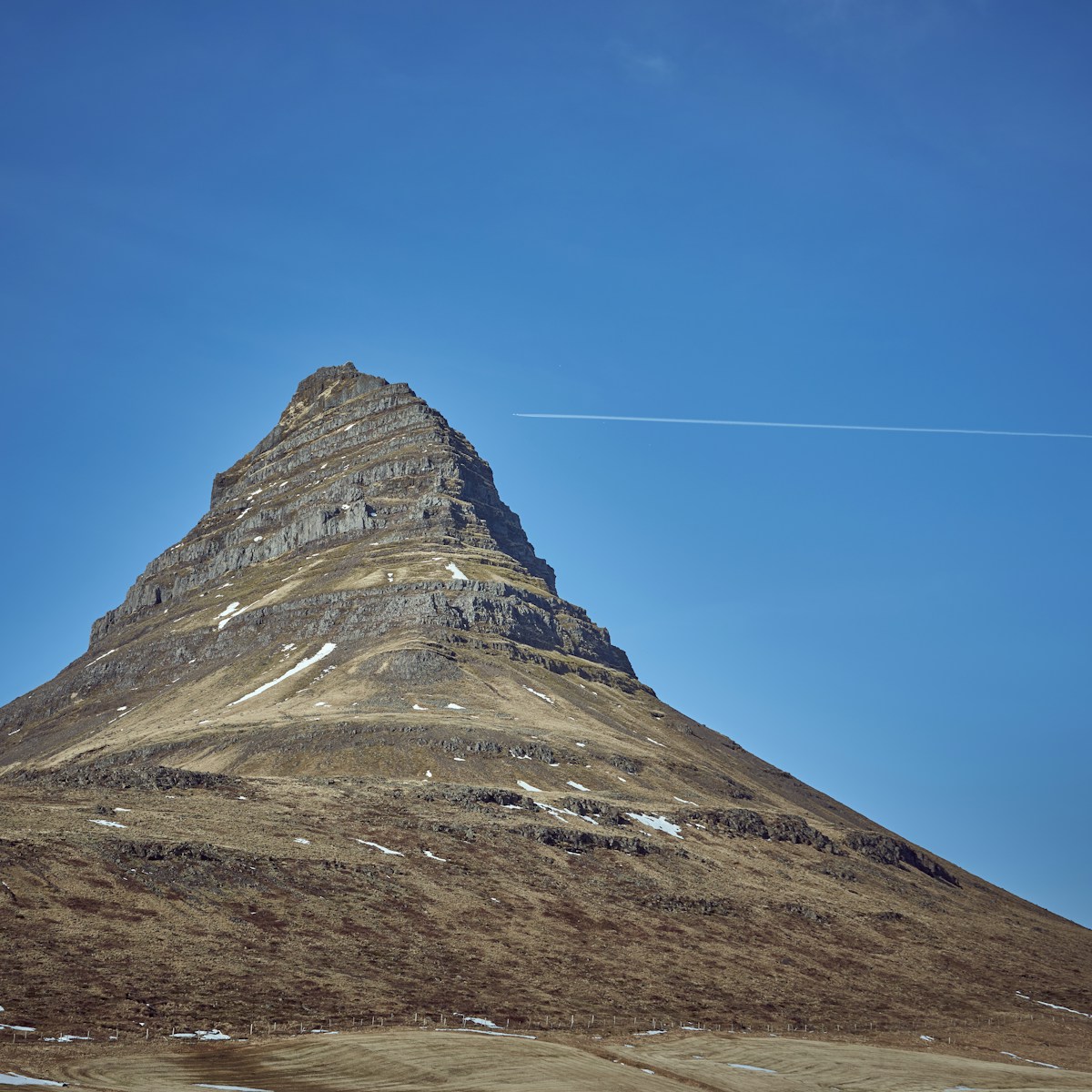
The Snæfellsnes Peninsula extends 90km into the Atlantic from West Iceland and packs more variety into that distance than most regions manage in three times the space. A glacier, a national park, black beaches, lava formations, a photogenic church, and one of Iceland’s most iconic mountains are all within a 30-minute drive of each other. The peninsula is often called “Iceland in miniature” - not for marketing reasons, but because it genuinely is.
Drive time from Reykjavík to Arnarstapi is approximately 2.5 to 3 hours via Route 54.
Snæfellsjökull Glacier and National Park
The glacier at the western tip of the peninsula is the defining landmark and the centrepiece of Snæfellsjökull National Park. Jules Verne used it as the entrance to the Earth’s core in Journey to the Centre of the Earth, and it still has that quality of looking like a portal to somewhere else - a pale ice cap floating above the lava fields and sea cliffs.
Access to the glacier requires a guided tour; the terrain is crevassed and weather can deteriorate without warning. Several operators based in Arnarstapi offer two main formats:
- Glacier walk (lower snow line, crampons and harness provided): approximately ISK 10,000–15,000 as of 2026. Duration 2–3 hours.
- Summit climb (with experienced guide, full equipment): approximately ISK 25,000+ as of 2026. Duration 5–6 hours. Requires reasonable fitness and advance booking.
The national park itself is free to enter and drive through. The road across the top of the peninsula (Route 570, open summer only) offers some of the best glacier views and passes the Saxhóll crater - a short climb up a chain-assisted path to a panoramic viewpoint over the lava fields below. Free, 10 minutes from car park to crater rim.
Arnarstapi and Hellnar Coastal Walk
The 2.5km coastal path between Arnarstapi and Hellnar is one of the most rewarding short walks in Iceland, and it is free. The route follows the cliff edge above a series of sea arches, basalt columns, and lava formations carved by Atlantic swells. Gannets and fulmars nest on the rock faces; Arctic terns patrol the path in summer. Allow 45 minutes one way at a relaxed pace.
Both villages have basic facilities. Arnarstapi has a small harbour, a café, and glacier tour departures. Hellnar has a café-restaurant (Fjöruhúsið) with outdoor seating above the sea. The walk is manageable in any weather; the formations are actually more dramatic in rough conditions.
Kirkjufell Mountain
The most photographed mountain in Iceland, and one of the most recognisable in Europe, stands 463m above the fishing village of Grundarfjörður on the north coast of the peninsula. The pointed summit reflected in the small stream-fed lake in front of it (Kirkjufellsfoss) became widely known internationally after being used as a filming location, but the mountain has been a landmark for sailors and fishermen here for centuries.
The viewpoint from the road is free. Several guided options are available if you want more than photographs:
- Kayaking around the base of the mountain from the water is offered by local operators in summer: approximately ISK 12,000 per person as of 2026.
- Hike to the base tours: approximately ISK 12,000, combining the walk with a guide who explains the geology and the human history of the fjord.
Note that climbing Kirkjufell itself is a technical scramble requiring experience; it is not a standard hiking trail and should not be attempted without appropriate skills and equipment.
Djúpalónssandur Black Pebble Beach
On the southwest coast of the peninsula, accessed by a short signposted track off Route 574. The beach is covered in smooth black pebbles of varying sizes - the result of volcanic rock gradually broken down by Atlantic waves. Four lifting stones on the beach (called aflraunasteinar) were traditionally used to test the strength of fishermen before they joined crews. They weigh 23, 54, 100, and 154 kilograms.
The rusted iron remains of the British trawler Epine, which ran aground here in 1948 with the loss of five crew, lie scattered across the beach as a permanent monument. Free. Allow 30–45 minutes.
Búðakirkja Black Church
One of the most recognisable buildings in Iceland - a small wooden church painted entirely black, standing in complete isolation in a flat lava field with the glacier in the background. The church dates from 1703 in its original form; the current building was restored in 1987. It is free to visit and usually unlocked during daylight hours. The graveyard and the surrounding lava field are worth exploring. Allow 20 minutes.
The nearby Hótel Búðir (see our where to stay on Snæfellsnes guide) is one of the most romantically positioned hotels in Iceland.
Whale Watching from Grundarfjörður
Laki Tours operates whale watching departures from Grundarfjörður harbour on the north coast of the peninsula. The tours run from April to October and cost approximately ISK 10,900 adult as of 2026. The area around Kirkjufellfoss and the outer fjord sees humpback and minke whales regularly through summer; killer whales are occasionally sighted in spring.
The Grundarfjörður departure is less busy than the major operators in Húsavík or Reykjavík, which suits those who prefer a less commercial experience. Tours run approximately 3 hours.
Getting Around the Peninsula
The standard approach is a full loop: drive out along the south coast (Route 54 then 574), stop at Arnarstapi, Hellnar, and the south-coast beaches, continue to the western tip, then return via the north coast through Grundarfjörður and Stykkishólmur. The full loop from Reykjavík is approximately 400km and takes a full day.
A rental car is required - there is no scheduled public transport on the peninsula outside of the Reykjavík–Stykkishólmur Strætó bus, which covers only the main road and does not serve the coastal stops.
For further planning, see our Snæfellsnes where to stay guide and our West Iceland itinerary for how to combine the peninsula with Borgarnes and the Snæfellsnes hinterland.
Browse Snæfellsnes Peninsula tours - full-day tours from Reykjavík covering Kirkjufell, the glacier, and coastal highlights.
Compare car hire in Iceland - a 4WD or campervan gives the flexibility to explore at your own pace.
See Also
- Snæfellsnes Peninsula guide - Full area overview: getting there, accommodation, and practical tips
- Where to Stay on Snæfellsnes - From Hótel Búðir to budget guesthouses and farmstays
- Day Trips on Snæfellsnes - How to structure a full peninsula loop from Reykjavík or Borgarnes
- Snæfellsnes road trip - The complete self-drive circuit of the peninsula with all key stops
- Whale watching in Iceland - Whale watching from Ólafsvík on the Snæfellsnes Peninsula
- Borgarnes travel guide - The gateway town to Snæfellsnes from Reykjavík
For accommodation nearby, Search hotels in Snæfellsnes on Booking.com.