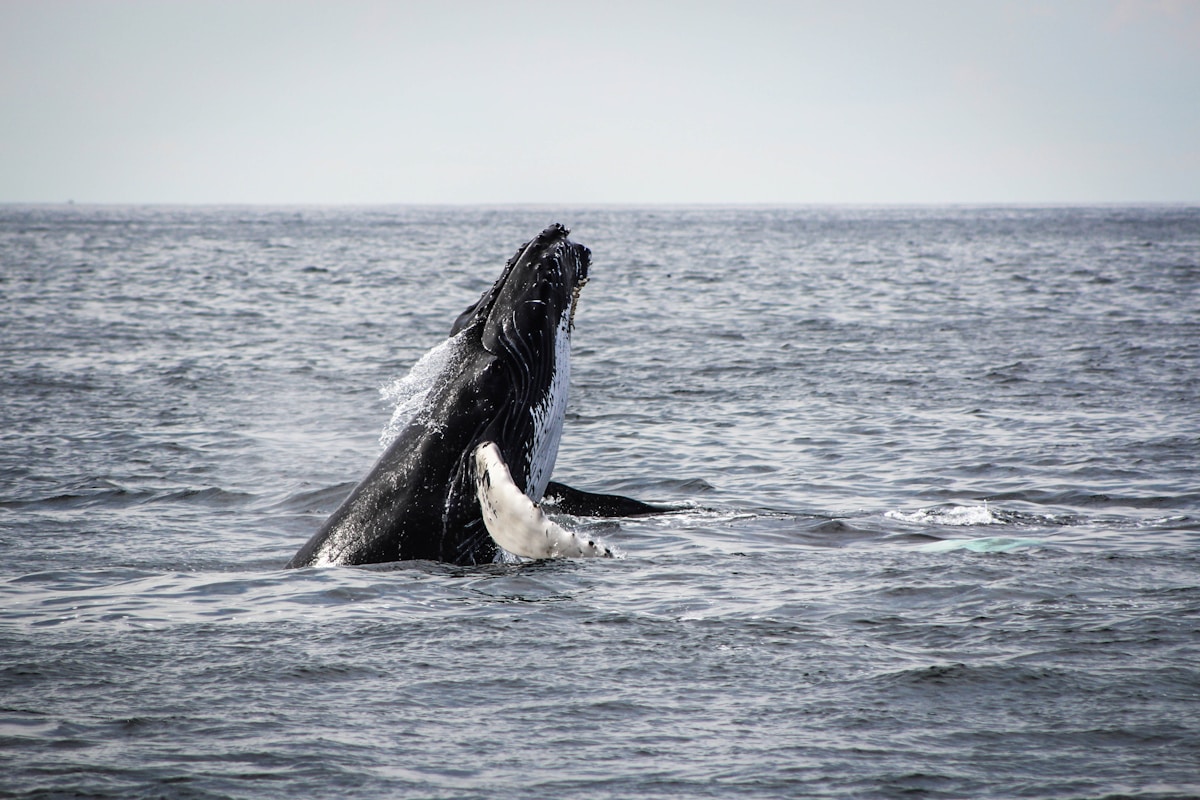
Iceland is one of Europe’s premier whale watching destinations. The cold, plankton-rich waters of the North Atlantic and the Greenland Sea attract some of the highest concentrations of large whales accessible from any coastline on the continent. Whale watching tours depart from multiple ports; the best conditions are from June through August.
Where to Watch
Húsavík (Best for Humpbacks)
The dedicated whale watching capital of Iceland. Skjálfandi bay consistently produces the highest sighting rates in Iceland for humpback whales, and in peak season (June–August) sightings happen on the large majority of tours. The bay also occasionally produces blue whales - a genuinely rare encounter.
North Sailing (northsailing.is): Operates traditional oak sailing schooners alongside modern vessels. 3-hour tours approximately ISK 13,900–15,000 adult as of 2026. The sailing experience is distinctive and worth the choice.
Gentle Giants (gentlegiants.is): Larger fleet. 3-hour tours approximately ISK 12,900–14,900 adult. Both traditional vessels and fast RIBs available.
Húsavík is 90km east of Akureyri - a day trip from there, or a standalone overnight.
Reykjavík (Most Accessible)
Year-round whale watching from the Old Harbour. Shorter transfer time from anywhere in the capital region. Humpback whales are seen primarily May–October; minke whales year-round.
Elding Adventures at Sea (elding.is): 3-hour tours approximately ISK 12,900–15,900 adult. Also runs midnight sun tours and express tours.
Special Tours (specialtours.is): 3-hour tours approximately ISK 11,900–14,900 adult. Express 1.5-hour tours also available.
Dalvík (Quieter Alternative)
A small fishing port 40km north of Akureyri. Less visited than Húsavík with competitive sighting rates in summer. Ambassador (ambassador.is) runs tours from approximately ISK 11,900 adult.
Ólafsvík (Snæfellsnes)
Whale watching from the Snæfellsnes Peninsula. Shorter boat travel time to whale zones compared to Reykjavík. Láki Tours (lakitours.com) runs tours from approximately ISK 11,900 adult.
What to Expect
Tours run for approximately 3 hours. Boats range from converted wooden fishing vessels (traditional character, slower) to modern catamarans (more stable, faster). Overall comfort level for cold weather.
What to wear: Cold wind on the water even in summer. Pack windproof and waterproof outer layers, warm mid-layers, and a hat regardless of weather in Reykjavík. In Húsavík, bring serious layers.
Motion sickness: The North Atlantic can be choppy. Take motion sickness medication before boarding if you’re susceptible. Most operators recommend taking it 1–2 hours before departure.
Photography: A 300mm+ zoom lens gives better results than a standard kit lens for whale photos. A fast shutter speed (minimum 1/1000s) is needed to freeze motion.
Species Guide
| Species | When | Location | Notes |
|---|---|---|---|
| Humpback whale | May–Oct | Húsavík, Reykjavík | Most commonly seen; acrobatic |
| Minke whale | Year-round | All ports | Common but less spectacular |
| Blue whale | Jun–Sep | Húsavík area | Rare; world’s largest animal |
| White-beaked dolphin | May–Oct | All ports | Often playful around boats |
| Orca | Year-round | Varies | Uncommon; spectacular when seen |
| Harbour porpoise | Year-round | All ports | Small; often missed |
Booking
Book in advance for summer (June–August). Húsavík tours sell out in peak season - book at least 1–2 weeks ahead. Reykjavík has more capacity but book 2–3 days ahead to guarantee a specific departure time. Most operators have apps and online booking. Spots open up due to cancellations - our last-minute Iceland tours page shows current availability if you’re booking on short notice.
Compare Whale Watching Tours on GetYourGuide
| Tour | Departs | Duration | From (approx) | Book |
|---|---|---|---|---|
| Húsavík: Traditional Whale Watching Tour | Húsavík | 3 hrs | $85 | Book |
| Húsavík: Whale Watching + Puffins Guided Cruise | Húsavík | 3 hrs | $85 | Book |
| Húsavík: Speedboat Big Whale Safari + Puffins | Húsavík | 2 hrs | $170 | Book |
| Reykjavík: 3-Hour Whale Watching Tour | Old Harbour | 3 hrs | $85 | Book |
Prices from GYG as of 2026. Browse all whale watching tours
Book Húsavík whale watching tours - traditional oak boat and high-speed RIB options from the harbour.
Browse Iceland tours - day trips, activity bookings, and multi-day packages across the country in one place.
Get travel insurance for Iceland - policies covering glacier hikes, F-road driving, and volcanic disruption.
Related Guides
- Whale watching Húsavík vs Reykjavík - Side-by-side comparison of sighting rates, costs, and which port suits your itinerary
- Húsavík city guide - The whale watching capital: accommodation, restaurants, and what else to do
- Things to do in Húsavík - Whale Museum, harbour walks, and day trips from the town
- Puffin watching in Iceland - Combining a whale watching trip with puffin spotting in the same area
- Birdwatching in Iceland - Seabirds, waders, and where to find them across the country
- Reykjavík city guide - The most accessible whale watching departure point and Iceland’s capital