Iceland’s west holds two of the country’s most dramatic landscapes, separated by a short ferry crossing but worlds apart in character. Snaefellsnes and the Westfjords both reward travellers willing to leave the Ring Road, but they attract different visitors and suit different trips. Here is what you actually need to know before choosing one - or fitting both into the same journey.
Overview
Snaefellsnes is a peninsula roughly 80km long that juts out into the Atlantic west of Reykjavik. Its defining feature is Snaefellsjökull, the glacier-capped volcano that Jules Verne used as the entry point for his Journey to the Centre of the Earth. The roads are fully paved, the distances manageable, and Reykjavik is only about 90 minutes from the eastern edge of the peninsula. It is accessible, rewarding, and well set up for visitors.
The Westfjords is a different proposition entirely. This enormous northwest region - shaped roughly like a hand with fjords as fingers - contains 460km of coastline when measured straight. The roads are a mix of paved and gravel, many routes involve steep switchbacks around fjord heads, and some areas require a 4WD vehicle. It is the least-visited region of Iceland, which is both its appeal and its practical challenge. If Snaefellsnes is Iceland’s accessible dramatic west, the Westfjords is its remote, uncompromising one.
Getting There and Around
From Reykjavik to Snaefellsnes, the drive is about two hours via Route 54, which is paved throughout. Strætó operates bus services to the peninsula, though services are limited and schedules require planning. You do not need a special vehicle - a standard rental car handles every road on the peninsula. This makes it a realistic day trip, though two or three nights gives you time to explore properly rather than rushing between viewpoints.
Getting to the Westfjords takes longer, whichever route you choose. The drive from Reykjavik to Ísafjörður, the region’s main town, is roughly four to five hours depending on exactly where you are heading. One of the best approaches - particularly if you have already visited Snaefellsnes - is the Baldur ferry, which crosses from Stykkishólmur on Snaefellsnes to Brjánslækur in the southern Westfjords. The crossing takes about two hours and runs from May to September, with adult fares around 6,500 ISK and a car adding approximately 23,000 ISK. This route lets you combine both peninsulas without doubling back through Reykjavik.
Once in the Westfjords, road conditions vary considerably. The main route to Ísafjörður (Route 60) is mostly paved, but side fjords frequently involve gravel roads and occasionally F-designation sections that require 4WD by law. Mountain passes can close from October through May due to snow. Always check road.is before departing, and if you plan to explore beyond the main towns, a 4WD is strongly recommended even in summer.
What You Will See
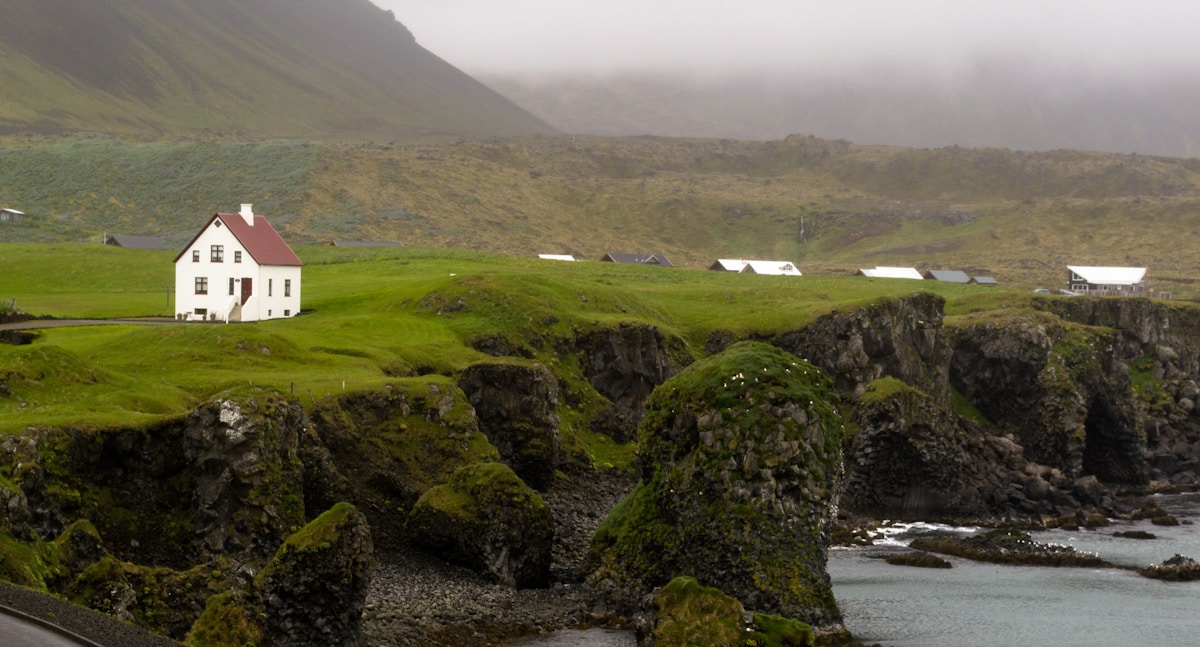
Snaefellsnes concentrates an unusual number of distinct landscapes into a small area. Snaefellsjökull National Park covers the western tip of the peninsula and is free to enter. The glacier itself is visible from much of the peninsula on clear days - a white dome above black lava fields. Kirkjufell, the steep arrow-shaped mountain near Grundarfjörður, is the most photographed mountain in Iceland, particularly at dawn when the waterfall beside it catches the light. Djúpalónssandur on the south coast is a black pebble beach strewn with lifting stones that fishermen once used to test their strength - it is free to visit and takes about an hour to walk properly. Arnarstapi on the south coast has basalt sea cliffs and rock arches reachable on a short coastal walk. For context on the region’s folklore, the Bárðar Saga Snæfellsáss Museum costs around 1,500 ISK. For more detail on what to see across the peninsula, our guide to things to do in Snaefellsnes covers the full range, and day trips from Snaefellsnes includes options for extending your time in the area.
The Westfjords rewards those who make the effort with sights that are genuinely hard to find elsewhere. Dynjandi is the centrepiece - a series of waterfalls that fan out in tiers as they descend, the largest dropping 100 metres. It is free to visit and reachable by car from the main road, with a 20-minute walk to the base. Látrabjarg is the largest bird cliff in Europe, a 12km-long headland at the westernmost point of Iceland where puffins, razorbills, and guillemots nest from June through August. It is free to visit and the birds are unusually approachable. Ísafjörður, the largest town in the Westfjords with a population of around 2,700, has the Westfjords Heritage Museum (approximately 1,500 ISK) in a cluster of 18th-century timber buildings. For those with time and determination, Hornstrandir Nature Reserve in the far north is accessible only by boat from Ísafjörður - there are no roads at all, and the hiking is genuinely remote. Our guide to things to do in Westfjords goes into more depth on the main attractions and how to plan your time.
Where to Stay
Search hotels in Snæfellsnes on Booking.com
On Snaefellsnes, accommodation is spread across small villages along both coasts. Hotel Búðir is one of the most atmospheric places to stay in Iceland - a remote hotel near black sand and a historic church, with doubles running from around 40,000 to 55,000 ISK per night. The Freezer Hostel in Grundarfjörður occupies a converted fish factory near Kirkjufell and offers dorms from around 6,000 ISK, a useful option for travellers keeping costs down. Hotel Hellissandur at the western end of the peninsula provides a more straightforward base from around 28,000 ISK per night. Our full accommodation guide covers more options: where to stay on Snaefellsnes.
In the Westfjords, Ísafjörður is the natural base for most visitors. Hotel Ísafjörður has doubles from around 30,000 ISK per night, while Gamla Guesthouse offers a quieter alternative at around 22,000 ISK. Further into the fjords, farmstays become the main accommodation option, with prices typically starting from around 18,000 ISK per night - basic but often in extraordinary locations. For the full picture, see our where to stay in Westfjords guide.
Search hotels in the Westfjords on Booking.com
Food
The dining options on Snaefellsnes are limited but the quality is reliable at the better spots. Fjöruhúsið café at Hellnar on the south coast has become well-known for its lobster soup - a large bowl with bread costs around 3,500 ISK, and it is the kind of meal that justifies the drive on its own. Hotel Búðir has a more formal restaurant where mains run from around 6,000 to 8,000 ISK, making it a special-occasion stop rather than an everyday choice. Our best restaurants on Snaefellsnes guide covers the full range.
In Ísafjörður, Tjöruhúsið is the standout - a no-reservations fish soup restaurant where the menu is whatever came in on the boats, served family style at shared tables for around 4,500 ISK. It fills quickly, so arrive early or expect to wait. Húsið and Gamla Bakaríið bakery both offer more casual options in the town centre.
Road Conditions
This is one of the most important practical differences between the two destinations. Every road on Snaefellsnes is paved and suitable for a standard rental car throughout the year. You will not encounter gravel, river crossings, or closed routes on the peninsula in normal conditions.
The Westfjords is considerably more variable. Route 60 to Ísafjörður is mostly paved but includes steep and winding sections over mountain passes. The main route is driveable in a standard car in summer, but anything off the primary route - visiting Dynjandi, Látrabjarg, or the northern fjords - involves gravel roads and can include F-designation sections. Mountain passes on side routes can close from October through May, sometimes abruptly if weather deteriorates. Check road.is before every day of driving in the Westfjords.
Budget Comparison
Snaefellsnes is affordable enough to visit as a day trip from Reykjavik, with fuel as the main cost. Spending two nights adds accommodation but no ferry costs. The Westfjords requires a minimum of two to three nights to make the journey worthwhile - fewer nights and the logistics consume the experience. Factor in approximately 5,000 to 8,000 ISK extra for the Baldur ferry crossing per person if you approach via Snaefellsnes, or additional fuel if you drive from Reykjavik. Remote farmstays can actually be cheaper per night than Reykjavik hotels, but food options are more limited and you will need to stock up before leaving main towns.
Season
Snaefellsnes is accessible year-round. The paved roads remain open in winter, and driving the peninsula in snow with the glacier visible above is a compelling experience. Summer glacier tours on Snaefellsjökull run from approximately June through August, typically costing around 15,000 to 20,000 ISK per person.
The Westfjords is much more seasonal. The peak window is June through August, when roads are fully open, puffins are at Látrabjarg, guesthouses and restaurants are operating, and daylight is near-continuous. Outside this window, services thin out sharply: many guesthouses, restaurants, and activities close from October through May, and some mountain roads remain impassable until June. If you are visiting outside summer, confirm that your specific accommodation and planned routes are actually operating.
The Verdict
Choose Snaefellsnes if this is your first or second time in Iceland, if your schedule allows two to three days at most, or if you want a dramatic western destination that is reliably accessible in any season. The glacier, Kirkjufell, the coastal lava landscapes, and the quality of the food at Fjöruhúsið make it a complete destination that does not require special planning or equipment.
Choose the Westfjords if you have visited Iceland before and want to go further, if you can commit to four or five days minimum, and if you are prepared to navigate gravel roads and variable services. Dynjandi, Látrabjarg, and Hornstrandir are experiences that genuinely cannot be matched elsewhere in Iceland. The Westfjords rewards patience and flexibility in a way that few other regions in Europe can match.
If your schedule allows it, combine both by driving to Snaefellsnes first, then taking the Baldur ferry across to the Westfjords. This loop avoids retracing your route and gives you a logical progression from the accessible to the genuinely remote. More on each peninsula: Snaefellsnes and Westfjords.
Browse Snæfellsnes Peninsula tours - full-day tours from Reykjavík covering Kirkjufell, the glacier, and coastal highlights.
Compare car hire in Iceland - a 4WD or campervan gives the flexibility to explore at your own pace.
See Also
- Snæfellsnes Peninsula guide - The accessible western option: glacier, Kirkjufell, and coastal lava
- Westfjords guide - The remote option: Dynjandi, Látrabjarg, and Hornstrandir
- Snæfellsnes road trip - How to drive the Snæfellsnes Peninsula in a day or two
- Westfjords road trip - Planning the Westfjords self-drive circuit
- Puffin watching in Iceland - Látrabjarg in the Westfjords and Grundarfjörður in Snæfellsnes both have puffins
More Iceland Comparisons
- Westman Islands vs Snæfellsnes — Volcanic island versus glacier peninsula
- Landmannalaugar vs Þórsmörk — Two legendary highland hiking destinations
- Reykjavík vs Akureyri — Iceland’s capital versus the north Iceland hub
- Vík vs Höfn — Two south coast Ring Road overnight bases