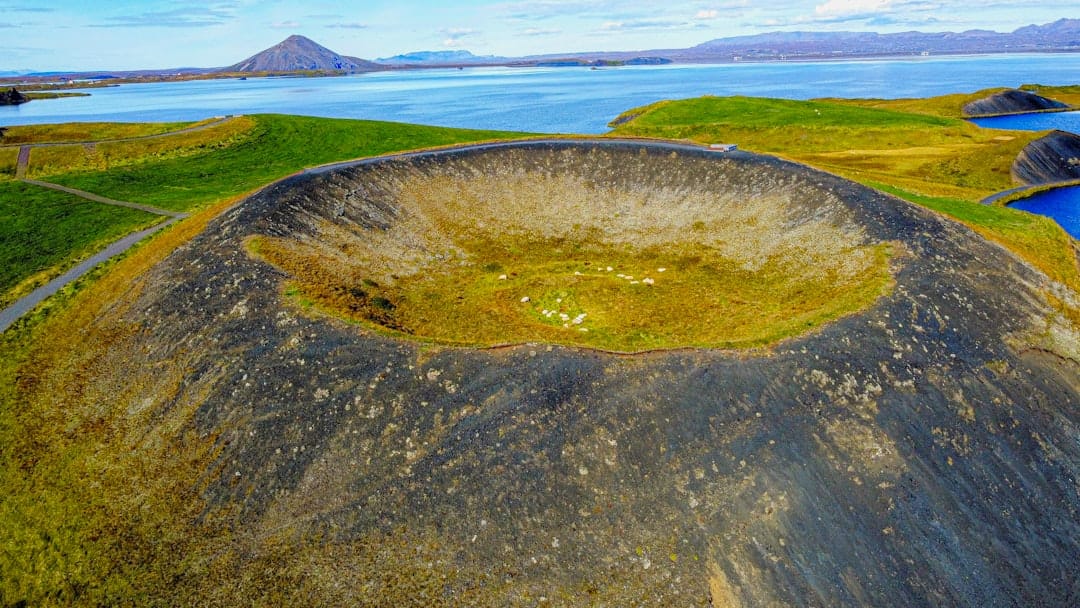
Lake Mývatn sits in the volcanic interior of north Iceland, 100km east of Akureyri, in one of the most geologically active landscapes on the planet. The lake itself formed roughly 2,300 years ago during a massive lava eruption and is surrounded by the evidence - pseudocraters, lava pillars, explosion craters, and geothermal fields that hiss and bubble along the road north toward Krafla. For travellers interested in Iceland’s volcanic geology, or for those wanting a dramatic Northern Lights base in winter, Mývatn is one of the most rewarding stops on the Ring Road.
The accommodation scene here is practical rather than extensive. Reykjahlíð, the main village on the north shore, has the most options and all the services: a petrol station, supermarket, and the majority of the hotels. The south and east shores are quieter, with guesthouses closer to specific sights like Dimmuborgir and the pseudocraters at Skútustaðir.
See also our Mývatn city guide for wider context.
Zones: Where Around the Lake to Base Yourself
Reykjahlíð (North Shore) The central hub of the Mývatn area, where you’ll find the petrol station, N1 stop, supermarket, most hotels, and the majority of tourist services. If you want to minimise driving logistics and have all your meals, fuel, and bookings concentrated in one place, stay here. Fosshotel Mývatn and Hótel Reykjahlíð are both in Reykjahlíð. The Mývatn Nature Baths are also on this side of the lake, approximately 3km east.
East Shore / Dimmuborgir Area The Dimmuborgir lava formations - a series of eerie pillars, arches, and caves formed from collapsed lava tubes - sit on the eastern shore. Staying here puts you at one of the lake’s most photogenic sights and away from the north shore cluster. It’s quieter in the evening once day visitors leave, but you’ll be driving a few kilometres to Reykjahlíð for dinner.
South Shore / Skútustaðir The pseudocraters (Skútustaðagígar) dot the south shore - volcanic landforms that look like craters but were formed by steam explosions rather than volcanic venting. Hotel Gígur is located here, making it the most peaceful and scenically distinct location to stay if you prioritise lake views over convenience.
Krafla (10km North) The Krafla volcanic caldera - with the Viti explosion crater and the vivid Leirhnjúkur lava fields - lies 10km north of Reykjahlíð via Route 863. There is no accommodation at Krafla itself; most visitors drive out from Reykjahlíð for a few hours.
Budget Stays - Under ISK 22,000 Per Night
Hótel Reykjahlíð Campsite
For travellers with tents or campervans, Hótel Reykjahlíð operates a lakeside campsite open June through September. Pitches run approximately ISK 1,800–2,200 per person per night as of 2026. The setting directly on the lakeshore makes this one of the better-placed campsites on the Ring Road, and amenities are adequate. Midsummer here means 24-hour daylight, which requires a good sleep mask.
Hótel Reykjahlíð Standard Rooms
The standard rooms at this property - distinct from the campsite - are the most affordable en-suite option in Reykjahlíð. Rates run approximately ISK 22,000–30,000 per night as of 2026. Rooms are functional and clean. The hotel’s central position makes it easy to access the Nature Baths and the Námaskarð geothermal field without a long drive. A practical base for budget-conscious Ring Road travellers who want a private room.
Mývatn Guesthouse
The most affordable conventional option in Reykjahlíð village. Rooms are basic - shared bathrooms in most configurations - but clean and centrally located. The communal kitchen is a significant cost-saving advantage given the limited eating-out options at the lake. Doubles run approximately ISK 18,000–26,000 per night as of 2026.
Mid-Range - ISK 28,000 to ISK 55,000 Per Night
Vogafjós Farm Resort
The most distinctive property at Mývatn, operated by a working dairy farm. Rooms have lake views and the famous restaurant is built around an observation window into the cowshed - guests can watch the evening milking while eating. The menu focuses on dairy-based Icelandic food (skyr desserts, fresh cream, butter) alongside lamb and local fish. Book dinner in advance even as a guest - it fills up. Doubles run approximately ISK 35,000–50,000 per night as of 2026.
Fosshotel Mývatn
The largest hotel at the lake, Fosshotel Mývatn is the most reliably full-service option in Reykjahlíð. Rooms run approximately ISK 35,000–50,000 per night as of 2026. The hotel has an on-site restaurant, a small geothermal pool for guests, and knowledgeable staff who handle the most common tour bookings - Krafla evening tours, aurora expeditions in winter, and day trips to Húsavík for whale watching (70km northwest). This is the default choice for travellers who want everything in one place without splurging on a premium property.
Dimmuborgir Guesthouse
Positioned near the Dimmuborgir lava formations on the east shore, this guesthouse offers a noticeably quieter stay than the Reykjahlíð cluster. Rates run approximately ISK 26,000–36,000 per night as of 2026. Rooms are comfortable without being elaborate. The appeal is location - the formations are a short walk away and catch extraordinary golden-hour light in summer evenings when day visitors have gone. A good choice if you want the lava landscape outside your window rather than a car park.
Splurge - ISK 50,000 and Above
Hótel Laxá
The best-appointed hotel at the lake, with rooms overlooking the water and volcanic landscape - some have floor-to-ceiling lake-facing windows. The restaurant is one of the better dining options in the area, serving local fish and lamb with a seasonally changing menu. The hotel runs Northern Lights tours in autumn and winter. Doubles run approximately ISK 38,000–55,000 per night as of 2026.
Hotel Gígur
The most scenically positioned hotel at Mývatn, sitting directly on the lakeshore at Skútustaðir with views across the water to the pseudocraters. Rates run approximately ISK 50,000–70,000 per night as of 2026, with breakfast included. The restaurant is one of the better dining options in the area. This is the Mývatn property to book if the lake view matters - particularly in autumn when the surrounding landscape turns amber and the Northern Lights reflect on the water. Book well ahead for August; this property fills up.
Berjaya Iceland Hotels Mývatn
A comfortable modern property near Reykjahlíð with consistently maintained rooms and reliable service. Rates run approximately ISK 48,000–65,000 per night as of 2026. Less distinctive in character than Hotel Gígur but a solid choice for travellers who prioritise predictable comfort and proximity to services over a lakeside position.
Getting to Lake Mývatn
By Air to Akureyri The standard approach for visitors who don’t want to drive the full Ring Road from Reykjavík. Akureyri Airport (AEY) receives regular domestic flights from Reykjavík Domestic (RVK) - flights take approximately 45 minutes. From Akureyri, Mývatn is 100km east on Route 1 (approximately 1 hour 15 minutes). Car hire at Akureyri Airport is available from the major rental companies; book in advance in summer.
By Road from Reykjavík Approximately 460km east via the Ring Road - expect 5 to 6 hours of driving depending on stops. This is a full day’s drive and best broken into two days with an Akureyri overnight en route. The road passes through the Hvalfjörður tunnel, the Borgarnes junction, and through the north highlands on Route 1.
By Bus (Seasonal) SBA Norðurleið operates summer bus services linking Akureyri and Mývatn. Journey time is approximately 1 hour 45 minutes. Buses run on a limited schedule - verify current timetables before planning your trip. This option suits travellers who specifically want to avoid driving, but the limited schedule means the sights around the lake still require either a hired car or organised tours.
Seasonal Pricing Notes
Summer (June–August) brings maximum tourist volume and the highest prices - accommodation at Mývatn runs approximately 35–50% above winter rates in peak season. July specifically brings the midge season, which discourages some visitors and can make outdoor photography uncomfortable. The late June to early July window and August are generally better balances of good weather and manageable midges.
Autumn (September–October) is increasingly popular with photographers targeting the Northern Lights and the autumn colour on the tundra around the lake. Prices begin to soften after mid-September, making this a strong value-season choice.
Winter (November–March) sees prices drop 30–40% at most properties. The lake takes on a stark, minimalist quality with ice on the shoreline and snow on the crater rims. Northern Lights tours operate from here; Hotel Gígur and Fosshotel Mývatn both offer aurora wake-up calls. Some smaller properties close entirely - confirm before booking.
Key Nearby Attractions
Námaskarð - 5km northeast of Reykjahlíð, a vivid geothermal field with boiling mud pots and sulphur vents. Free to visit, dramatic at any time of year.
Dimmuborgir - 5km east, the lava pillar formations include a signed walking circuit. The “church” formation is the most photographed. Free to visit.
Skútustaðagígar - south shore pseudocraters with a short walking circuit. Free to visit.
Krafla and Viti - 10km north via Route 863, the Krafla caldera contains the electric-blue Viti explosion crater and the Leirhnjúkur lava field, still warm in places from the 1980s eruption.
Grjótagjá Cave - a lava cave with geothermal water visible inside. Entry is currently prohibited due to temperature and geological safety, but the cave exterior is accessible.
Mývatn Nature Baths - milky blue geothermal bathing pool on the north shore. Entry approximately ISK 5,500 per adult as of 2026. Open year-round.
For accommodation elsewhere on the Ring Road, see our guides to Ring Road accommodation in Iceland and farmstays in Iceland.