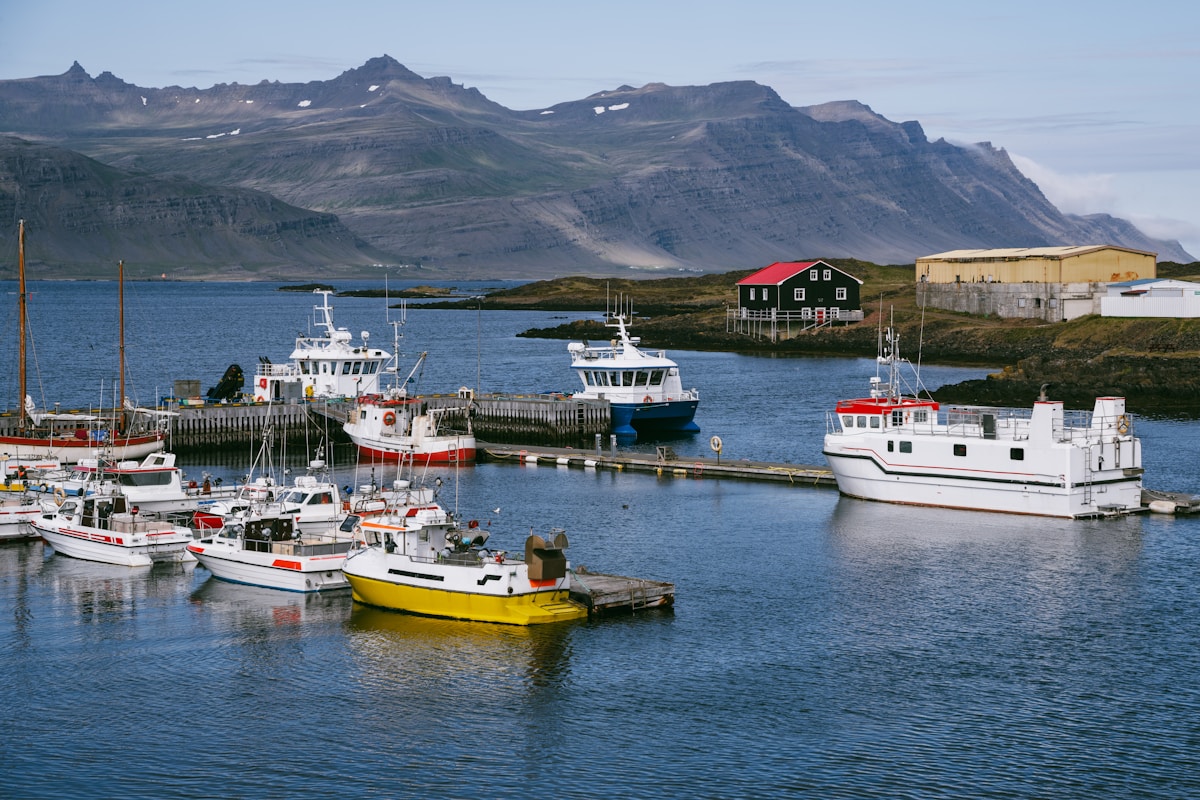
Iceland is one of the most dramatic cruise destinations in the North Atlantic — and the itineraries have expanded significantly in recent years. Seven ports now carry regular cruise traffic: Reykjavik in the southwest, Akureyri in the north, Ísafjörður in the remote Westfjords, Grundarfjörður on the Snæfellsnes Peninsula, Seyðisfjörður in the east, Heimaey in the Westman Islands, and Djúpivogur on the southeast coast. Each offers a completely different experience, from Golden Circle day trips to glacier lagoon boat rides to kayaking in Arctic fjords. Here is what you need to know about every port of call.
Quick Port Comparison
| Port | Region | Dock or Tender | Distance from Reykjavik | Best For |
|---|---|---|---|---|
| Reykjavik | Southwest | Dock | — | Golden Circle, city, Blue Lagoon |
| Akureyri | North | Dock | 385 km | Mývatn, Goðafoss, whale watching |
| Ísafjörður | Westfjords | Dock | 450 km | Dynjandi, kayaking, wild hiking |
| Grundarfjörður | Snæfellsnes | Dock (small ships); tender (large ships) | 175 km | Kirkjufell, Snæfellsnes Peninsula |
| Seyðisfjörður | East Iceland | Dock (small ships); sometimes tender | 680 km | Stuðlagil Canyon, Vök Baths |
| Heimaey | Westman Islands | Dock | 130 km south | Puffins, Eldfell volcano, Eldheimar Museum |
| Djúpivogur | Southeast | Tender | 490 km | Jökulsárlón Glacier Lagoon access |
Cruise Season Overview
The core Iceland cruise season runs June through August, when temperatures are mild (8–20°C depending on location), roads are fully open, and daylight is effectively continuous. May and September are shoulder months with smaller crowds but higher chance of weather disruption — and, from mid-August onward, occasional aurora sightings after midnight.
| Month | Daylight | Weather | Crowds |
|---|---|---|---|
| May | 17–20 hrs | Unpredictable, cool | Low |
| June | 22–24 hrs | Mild, calm | Growing |
| July | 20–22 hrs | Warmest, driest | Peak |
| August | 16–20 hrs | Warm, some rain | Peak |
| September | 12–15 hrs | Cooler, windier | Low |
Most major sights — the Golden Circle, Goðafoss, Dynjandi — are accessible year-round but tour availability expands significantly in summer.
Which Cruise Lines Call at Iceland Ports?
Iceland has become a fixture on Northern European itineraries for most major lines. The port breakdown by ship type:
Large ships (over 300 m — typically Reykjavik and Akureyri only): Royal Caribbean, Norwegian Cruise Line, MSC, Princess Cruises, Holland America Line, Celebrity Cruises. These ships are too large for the smaller western and eastern ports.
Mid-size ships (180–300 m — most Iceland itineraries): Viking Ocean Cruises, Azamara, Cunard, Fred. Olsen. These access all three main ports (Reykjavik, Akureyri, Ísafjörður) and sometimes Grundarfjörður.
Expedition and small ships (under 170 m): Hurtigruten Expeditions, Silversea, Lindblad/National Geographic, Ponant, Seabourn. These reach all seven ports including Seyðisfjörður, Heimaey, and Djúpivogur. If reaching the remoter ports matters to you, choose an expedition-class itinerary.
Port 1: Reykjavik (Skarfabakki / Vör Terminal)
Terminal location and getting to the city
Reykjavik’s cruise ships berth at Skarfabakki terminal, a working commercial port roughly 3 km east of the city centre. The new Vör cruise terminal opened at Skarfabakki in spring 2026, with an official opening festival on 29 May 2026. The rebuilt facility has significantly improved passenger facilities — expect a proper arrivals hall, café, and shuttle drop-off area compared to the previous bare-bones setup.
Walking: Technically possible in 35–40 minutes along the waterfront, but the route passes industrial docklands and is not recommended for limited port time.
Shuttle bus: Many cruise lines run a paid shuttle directly to Laugavegur (the main shopping street) or Harpa Concert Hall. Expect to pay around USD 10–15 per person return. Check with your cruise line — schedules align with port opening hours.
Taxi: Available outside the terminal. The ride to the city centre takes around 10 minutes and costs approximately ISK 2,500–3,000 (around USD 18–22). Taxis accept card payment. Uber does not operate in Iceland.
Strætó Bus 14: The public bus stops near the terminal and connects to central Reykjavik. A single fare is approximately ISK 560 (around USD 4). Journey time is around 20 minutes. Download the Strætó app before your trip to buy tickets (credit card accepted in-app).
What to do in Reykjavik: 6–8 hour port day
Walkable from the city centre (within 1–2 km):
- Hallgrímskirkja church — the iconic rocket-shaped Lutheran church towers over the city. The tower lift costs approximately ISK 1,000 (around USD 7) and offers views across the rooftops to the mountains. No need to book.
- Harpa Concert Hall — architect Henning Larsen’s glass-and-steel landmark on the waterfront. Free to enter and explore; concerts require tickets.
- Old Harbour (Grandi) — a 20-minute walk from Harpa, this revitalised fishing harbour has the Whales of Iceland exhibition (ISK 3,300 / around USD 24), the Marshall House gallery, and several good seafood restaurants.
- Laugavegur — the main street for cafés, Icelandic wool shops (lopapeysa sweaters from around ISK 15,000 / USD 110), and the Kolaportið flea market on weekends.
Shore excursions from Reykjavik:
Golden Circle (8–9 hours, from approximately USD 75–110 per person): The classic day trip covering Þingvellir National Park (UNESCO World Heritage Site, where the North American and Eurasian tectonic plates meet), the Geysir hot spring area (Strokkur erupts every 6–10 minutes), and Gullfoss waterfall. Multiple operators run these daily in summer. Check availability via GetYourGuide or Arctic Adventures.
Whale watching from the Old Harbour (3–4 hours, from approximately USD 90–110 per person): Minke whales, humpbacks, dolphins, and white-beaked dolphins are all regularly sighted from Reykjavik in summer. Elding Whale Watching and Whale Safari both depart from Ægisgarður pier at the Old Harbour. Book in advance in July–August — trips fill up. Heavy-duty waterproof overalls are provided.
South Coast highlight day trip (10–12 hours, from approximately USD 130–160 per person): A longer option combining Seljalandsfoss and Skógafoss waterfalls, Reynisfjara black sand beach, and a glacier walk on Sólheimajökull. Not ideal for a port day unless your ship departs late (after 8pm).
Blue Lagoon (3–4 hours from port, from approximately USD 60 entry + USD 30 transport): The Blue Lagoon geothermal spa is about 45 minutes from Reykjavik, making it feasible for a port day. Entry must be pre-booked months in advance — walk-ins are not accepted. Book via the official Blue Lagoon website before your cruise departs.
Port 2: Akureyri
Terminal location and getting to town
Akureyri is northern Iceland’s largest town (population around 20,000) and one of Iceland’s most pleasant cruise stops. Cruise ships berth at Oddeyrarbryggja pier, which sits right at the southern edge of the town centre.
Walking to town: Yes — the walk from the pier to the main pedestrian street (Hafnarstræti) takes around 10 minutes. Akureyri is compact, hilly, and very walkable. You do not need a taxi to explore the town itself.
Taxis: Available near the pier for excursions. Approximately ISK 2,000–3,000 (around USD 14–22) for local trips. Book via Akureyri Taxi (phone or app).
Does the ship dock or tender? Akureyri is a docking port — no tenders required.
What to do in Akureyri: 6–8 hour port day
In town (all walkable):
- Akureyrarkirkja — the distinctive twin-towered church visible from the pier. Free to enter; hilltop position gives great views over the fjord. Worth the short uphill walk.
- Akureyri Botanical Garden (Lystigarður) — the world’s most northerly botanical garden, 5 minutes from the church. Free entry. In bloom June–August.
- Ráðhústorg (Town Square) — the charming pedestrian centre has cafés, the 1201 Restaurant (Icelandic lamb from around ISK 3,500 / USD 26), and small independent shops.
Shore excursions from Akureyri:
Goðafoss Waterfall (3 hours return, approximately USD 60–80 per person): The “Waterfall of the Gods” sits about 45 minutes east of Akureyri on Route 1. One of Iceland’s most photogenic falls — a broad horseshoe of glacial water dropping 12 metres. Several half-day tours include a stop and return you to the ship in time for departure. Also reachable by rental car if you’re confident driving Route 1.
Mývatn Nature Baths and Lake Mývatn (6–8 hours, approximately USD 120–160 per person): Mývatn is about 1 hour from Akureyri. The lake area has pseudocraters, lava formations at Dimmuborgir, and the Námafjall geothermal field. The Mývatn Nature Baths are a less crowded alternative to the Blue Lagoon (entry approximately ISK 6,500 / USD 47). A full Mývatn day trip is tight but doable if your ship arrives early and departs late.
Whale watching from Dalvík (4 hours total, from approximately USD 90–110 per person): The small fishing village of Dalvík, 35 km north of Akureyri, is one of Iceland’s best whale-watching bases. Humpback whales are reliably spotted in Eyjafjörður throughout summer. Some cruise lines run direct transfers; alternatively, book via Arctic Sea Tours and arrange a taxi or rental car to Dalvík.
Arctic Coast Way scenic drive (self-drive or guided, full day): Experienced drivers with a pre-booked rental car can explore the peninsula north of Akureyri — Hrísey island ferry, Hofsós swimming pool with fjord views, and the herring museum at Siglufjörður. This is a full-day commitment; only attempt it if your ship departs after 7pm.
Port 3: Ísafjörður (Westfjords)
Terminal location and getting to town
Ísafjörður is the most remote of Iceland’s main cruise ports, set at the head of Ísafjarðardjúp — one of the deepest fjords in the Westfjords. The town population is around 2,700. Cruise ships berth directly alongside Ísafjörður’s town pier, which deposits you within 2 minutes’ walk of the main street.
Getting around: The town itself is tiny — the café strip, few restaurants, and local shops are all within a 5-minute walk of the pier. There are no city buses. Taxis can be arranged but must usually be pre-booked via your cruise director or local hotels.
Does the ship dock or tender? Ships dock directly — no tendering.
What to do in Ísafjörður: 6–8 hour port day
In town:
- Westfjords Heritage Museum (Byggðasafn Vestfjarða) — small but well-curated local history museum. Entry approximately ISK 1,500 (around USD 11).
- Við Pollinn café — the best coffee in town, a few minutes from the pier. Good place to warm up before or after an excursion.
Shore excursions from Ísafjörður:
Dynjandi Waterfall (5–6 hours return, approximately USD 80–130 per person): Dynjandi is Iceland’s most spectacular Westfjords waterfall — a tiered fan cascade dropping 100 metres, accessible via a 20-minute hike from the parking area. It sits about 90 km from Ísafjörður along a partly unpaved mountain road. A dedicated tour is the most practical approach; self-drive is possible for confident off-road drivers with a pre-booked 4WD rental. Several local operators run Dynjandi trips timed to cruise arrivals — book before you board.
Westfjords hiking (half-day, approximately USD 60–100 per person with a guide): The mountains around Ísafjörður offer some of Iceland’s most dramatic and crowd-free hiking. The trail up Eyrarfjall (above town) can be done independently if you’re fit and the weather is clear — allow 2–3 hours return. For guided hiking on more remote terrain, Westfjords Adventures runs small-group trips departing from the pier.
Sea kayaking in the fjord (3–4 hours, approximately USD 90–110 per person): Kayaking through Ísafjarðardjúp is one of the highlights of any Westfjords visit. Operators including West Tours and Borea Adventures run guided kayak sessions from the pier. No prior kayak experience required. This is a calm-water fjord, but waterproof kit is essential — water temperature in summer is around 8°C.
Hornstrandir Nature Reserve (full day, only possible with very late departures): Hornstrandir is Iceland’s most remote nature reserve — uninhabited, with no roads, reachable only by boat. If your ship departs after 8pm, Westfjords Adventures run day trips into Hornstrandir for hiking and wildlife watching (Arctic foxes are abundant). Confirm directly whether the schedule is compatible with your port timing.
Port 4: Grundarfjörður (Snæfellsnes Peninsula)
Terminal location and getting to town
Grundarfjörður is a small fishing town of around 900 people on the north coast of the Snæfellsnes Peninsula. It has become one of Iceland’s most sought-after cruise stops thanks to one reason: Kirkjufell, Iceland’s most photographed mountain, sits almost directly beside the pier.
Docking or tendering? Small and mid-size ships dock alongside the pier; large ships (over roughly 300 m) may need to tender. Check your cruise line’s port notes before assuming you can walk straight off.
Kirkjufell from the pier: The mountain and its companion waterfall (Kirkjufellsfoss) are a 5-minute walk from the dock. You do not need a tour or a car to see Iceland’s most Instagrammed viewpoint — it is genuinely that close. Allow 30–45 minutes to walk around, photograph, and return.
Getting further afield: The town has few taxi options — pre-arrange transport through your cruise director for longer excursions. A “Kirkjufell Express” shuttle sometimes operates at the pier, running to the mountain and back on a 30-minute circuit for around €15 per person.
What to do in Grundarfjörður: 6–8 hour port day
At the pier:
- Kirkjufell and Kirkjufellsfoss — free, 5-minute walk, allow 45 minutes for photos. The waterfall frames the mountain perfectly; most photographers position themselves slightly uphill from the falls for the classic shot.
- Town walkabout — Grundarfjörður is small but pleasant, with a few local cafés and the Grundarfjörður Swimming Pool (geothermally heated outdoor pool, approximately ISK 1,000 / USD 7).
Shore excursions from Grundarfjörður:
Snæfellsnes Peninsula tour (5–6 hours, approximately USD 80–120 per person): The full peninsula loop covers Djúpalónssandur black pebble beach (where iron rings from a 19th-century shipwreck still lie on the shore), Arnarstapi’s sea-cliff arches, Snæfellsjökull glacier (the inspiration for Jules Verne’s Journey to the Centre of the Earth), and Ytri Tunga seal colony. This is one of Iceland’s best day trips and perfectly timed for a cruise port stop.
ATV tour toward Snæfellsjökull glacier (2 hours, approximately USD 120–150 per person): Off-road ATV circuits into the lava fields below the glacier. No off-road driving experience required. Departs from near the pier.
Sea kayaking with Kirkjufell views (2–3 hours, approximately USD 90–110 per person): Paddle out into Grundarfjörður bay with Kirkjufell as your backdrop. Very calm water; good option even for first-time kayakers. All equipment and drysuits provided.
Port 5: Seyðisfjörður (East Iceland)
Terminal location and getting to town
Seyðisfjörður is a small fjord town in East Iceland, reached via an extraordinary mountain road (Route 93) from the regional hub of Egilsstaðir. The town of around 700 people has a strong creative community — it hosts a summer arts festival and is notable for its colourful wooden buildings clustered along the waterfront.
Docking or tendering? Small ships (under approximately 170 m) dock alongside the pier. Larger vessels anchor in the fjord and transfer passengers by tender.
Getting around: The town is walkable in 20 minutes end-to-end. The main attraction — the rainbow street (Tækniminjasafnið) and the Blue Church (Blái Kirkjan) — are a 5-minute stroll from the pier. For excursions further inland, tours must be pre-booked as there are few taxis in town.
What to do in Seyðisfjörður: 6–8 hour port day
In town:
- Blue Church (Blái Kirkjan) — the town’s most photogenic landmark, a wooden church painted powder blue that hosts summer concerts. Free to enter.
- Rainbow street (Reginbogagatan) — the painted road leading to the Blue Church; the LGBTQ+ rainbow has been maintained by the community since 2019.
- Technical Museum of East Iceland (Tækniminjasafnið) — industrial heritage and local history, entry approximately ISK 1,500 (around USD 11).
- Local cafés — Skaftfell Bistro and Nord Austur Sushi & Bar are both within easy walking distance of the pier.
Shore excursions from Seyðisfjörður:
Stuðlagil Canyon (5 hours return, approximately USD 100–140 per person): This is the headline excursion from Seyðisfjörður. Stuðlagil is one of Iceland’s newest high-profile attractions — a narrow canyon of basalt columns rising up to 30 metres, through which the turquoise Jökla river flows. It is about 90 km from Seyðisfjörður. Tours pick up from the pier and return in time for sailing. The east-bank viewpoint requires a 25–35 minute walk each way on easy terrain.
Stuðlagil Canyon and Vök Baths (7 hours, approximately USD 150–200 per person): Combine the canyon with a visit to Vök Baths — floating geothermal pools on the shores of Urriðavatn lake near Egilsstaðir. An excellent combination for longer port days.
Puffin colony at Borgarfjörður Eystri (4 hours return, approximately USD 80–110 per person): Available May through August. Borgarfjörður Eystri hosts one of Iceland’s most accessible puffin colonies — a designated viewing platform lets you get close without disturbing nesting birds. The round trip from Seyðisfjörður is about 3 hours driving plus viewing time.
Port 6: Heimaey (Westman Islands)
Terminal location and getting to town
Heimaey is the largest and only inhabited island in the Westman Islands archipelago, located about 10 km off Iceland’s south coast. It was nearly destroyed in January 1973 when Eldfell volcano erupted and buried one third of the town in lava and ash — an event that transformed the island’s geography and became one of the 20th century’s most dramatic volcanic disasters.
Cruise ships dock directly at Heimaey harbour, depositing you within a 5-minute walk of the main town. The island is compact — almost everything of interest is within 30–40 minutes on foot.
Docking or tendering? Ships dock directly — no tendering required.
Getting around: The town and main viewpoints are walkable. Bikes can be rented from near the harbour for approximately ISK 2,000–3,000 (around USD 14–22) per day for reaching the outer parts of the island.
What to do in Heimaey: 6–8 hour port day
In town:
- Eldheimar Museum — one of Iceland’s best small museums, built around a home that was buried to its rooftop in volcanic ash during the 1973 eruption. The excavated house is preserved inside the museum. Entry approximately ISK 2,500 (around USD 18). Allow 1.5 hours.
- Eldfell Volcano hike — the trail to the 205-metre summit of the still-warm Eldfell begins near the Eldheimar Museum, about a 20-minute walk from the harbour. The hike takes around 1.5–2 hours return (moderate difficulty). At the top, the ground is warm enough in places to feel through boot soles. Panoramic views over the harbour and mainland Iceland on clear days.
- Stórhöfði headland — the south tip of the island where the puffin viewing is best. A 20-minute drive or taxi from the harbour; worth combining with a tour.
Shore excursions from Heimaey:
Puffin and volcano guided tour (3–4 hours, from approximately USD 80–100 per person): The Westman Islands host the world’s largest Atlantic puffin colony — over one million breeding pairs use the island’s cliff faces from May through mid-August. Guided tours cover both the puffin viewpoints at Stórhöfði and the volcanic history of Eldfell and Helgafell. This is the most popular shore excursion on the island.
Zodiac boat trip around the bird cliffs (2 hours, approximately USD 90–120 per person): A Zodiac or RIB boat circuit around the sea cliffs and sea stacks of the Westman Islands. Puffins, guillemots, razorbills, and gannets are all regularly seen from the water. The perspective from sea level, looking up at the towering basalt cliffs, is extraordinary.
ATV lava field tour (2 hours, approximately USD 100–130 per person): Off-road ATV circuits through the 1973 lava field and across the island’s south end. Passes “Elephant Rock” and historic fishing beaches.
Timing note: Puffins are present on Heimaey from May through mid-August. If your itinerary calls at Heimaey in September, the birds have left — adjust your shore excursion plans accordingly.
Port 7: Djúpivogur (Southeast Iceland)
Terminal location and getting to town
Djúpivogur is a tiny fishing village of around 400 people on Iceland’s southeast coast. By itself, the village has limited attractions. Its value as a cruise port is almost entirely geographic: it is the closest cruise port to Jökulsárlón Glacier Lagoon — just 105 km (approximately 1.5–2 hours’ drive) compared to 380+ km from Reykjavik.
Docking or tendering? Djúpivogur is Iceland’s main tender port. Ships anchor offshore and transfer passengers to a wheelchair-accessible pontoon by tender boat. Factor in 20–30 minutes for tender transfers each way.
Getting around: The village is small enough to walk in 15 minutes. A small sculpture park (Eggin í Gleðivík — 34 large eggs representing local bird species) is a 5-minute walk from the pier and makes a pleasant short stroll. Beyond the village, a pre-booked tour is essential — there are no local taxis and no public bus service.
What to do in Djúpivogur: 6–8 hour port day
Shore excursions from Djúpivogur:
Jökulsárlón Glacier Lagoon and Diamond Beach (6.5–7 hours, approximately USD 130–170 per person): This is the headline attraction. Jökulsárlón is Iceland’s most photogenic location — a vast lagoon filled with icebergs calved from the Vatnajökull glacier, where seals haul out on the floating ice. Diamond Beach, immediately across the Ring Road, is where icebergs strand on a black sand beach. The round trip from Djúpivogur takes approximately 3–4 hours of driving; combined with 2 hours at the sites, this fills most port days. Tours often stop at Eystrahorn mountain en route for additional photography.
Amphibious boat safari on Jökulsárlón (1 hour on-water, combined with above): Many tours include a 40-minute amphibious DUKW boat ride on the lagoon itself, drifting between the icebergs. Book through your shore excursion package or via Icelandic Travel Market.
Papey Island puffin tour (3–4 hours, available May–August, approximately USD 110–140 per person): Boat trips from Djúpivogur to the uninhabited island of Papey, which hosts a puffin colony and a small lighthouse. A very different experience from Heimaey — wilder, less touristed, with the open ocean on all sides.
Note on timing: Tender transfers add 30–45 minutes to every excursion. A 6.5-hour Jökulsárlón tour may stretch to 7.5 hours total including tenders. Confirm the schedule with your tour operator and factor in buffer time.
Practical Notes for All Ports
Wi-Fi and connectivity
Cruise ship Wi-Fi is typically slow and expensive. Iceland has excellent 4G/5G coverage in all three port towns. The most convenient option for a day-long port visit is an eSIM — activate it before you sail and it switches on automatically when you’re ashore. Airalo, Holafly, and Nomad all sell Iceland eSIMs. Alternatively, physical SIM cards (Siminn, Nova, Vodafone) are sold at Keflavik Airport and at Bonus and Krónan supermarkets in Reykjavik.
For offline navigation, download the maps.me or Google Maps offline area for Iceland before your cruise. Mobile signal disappears quickly on rural excursion routes.
Payments
Iceland is one of the world’s most cashless societies. Every café, taxi, shop, and tour operator at all seven ports accepts Visa and Mastercard. Contactless payment works everywhere. There is no practical reason to carry ISK cash for a standard port day. Notify your card issuer before you travel to avoid automated fraud blocks.
Weather preparation
All ports can deliver wind, rain, and cold temperatures even in July. Pack:
- Waterproof outer layer (jacket and trousers if you’re doing outdoor excursions)
- Mid-layer fleece or down jacket
- Walking shoes with grip — cobblestones in Reykjavik; muddy trails in Ísafjörður
- Hat and gloves (even in August for Ísafjörður and high-altitude stops)
Ísafjörður in particular sits deep in a fjord and can feel cold even when it’s warm elsewhere. The fjord walls create wind tunnels on blustery days.
Getting back to the ship
Allow buffer time before the all-aboard deadline — especially on long excursions from Reykjavik (Golden Circle, South Coast) and Djúpivogur (tender transfers add time). Traffic into the Skarfabakki port area can slow in the late afternoon if multiple ships are in. Akureyri and Ísafjörður are compact enough that missing the ship is unlikely unless you self-drive into remote areas.
Should you book through the cruise line or independently?
Booking independently through GetYourGuide, Arctic Adventures, Guide to Iceland, or local operators typically saves 20–40% compared to cruise-line shore excursions. The key trade-off: cruise-line tours guarantee the ship waits if they run late. Independent tours do not. As a rule: at well-connected ports (Reykjavik, Akureyri, Grundarfjörður), independent booking is low-risk. At remote ports (Ísafjörður, Djúpivogur, Seyðisfjörður), where road distances are greater and transport options fewer, cruise-line or pre-booked local tours are the safer choice.
The seven ports together offer an extraordinary cross-section of Iceland: the cosmopolitan energy of Reykjavik, the photogenic drama of Grundarfjörður, the fjord-framed calm of Akureyri, the genuinely wild edge of Ísafjörður, the creative community of Seyðisfjörður, the volcanic story of Heimaey, and the glacier access of Djúpivogur. With a bit of planning before you board, each stop delivers experiences well beyond the pier.
Browse Reykjavík tours — city walking tours, food experiences, and day trips from the capital.
Pre-book Keflavík airport transfers — Flybus and private options for the 45-minute route to Reykjavík.
Related Guides
- Reykjavík city guide - The full Reykjavík guide: what to see, where to eat, and the best shore excursions
- Akureyri city guide - Iceland’s second city: whale watching, Lake Mývatn, and the Goðafoss day trip
- Ísafjörður travel guide - The Westfjords capital: what to do in a cruise port stop
- Golden Circle tours - The most popular Reykjavík shore excursion: Þingvellir, Geysir, Gullfoss
Plan Your Trip
✈️ Book your flights to Iceland 🛡️ Get travel insurance 📱 Stay connected with an eSIM 🚗 Rent a car