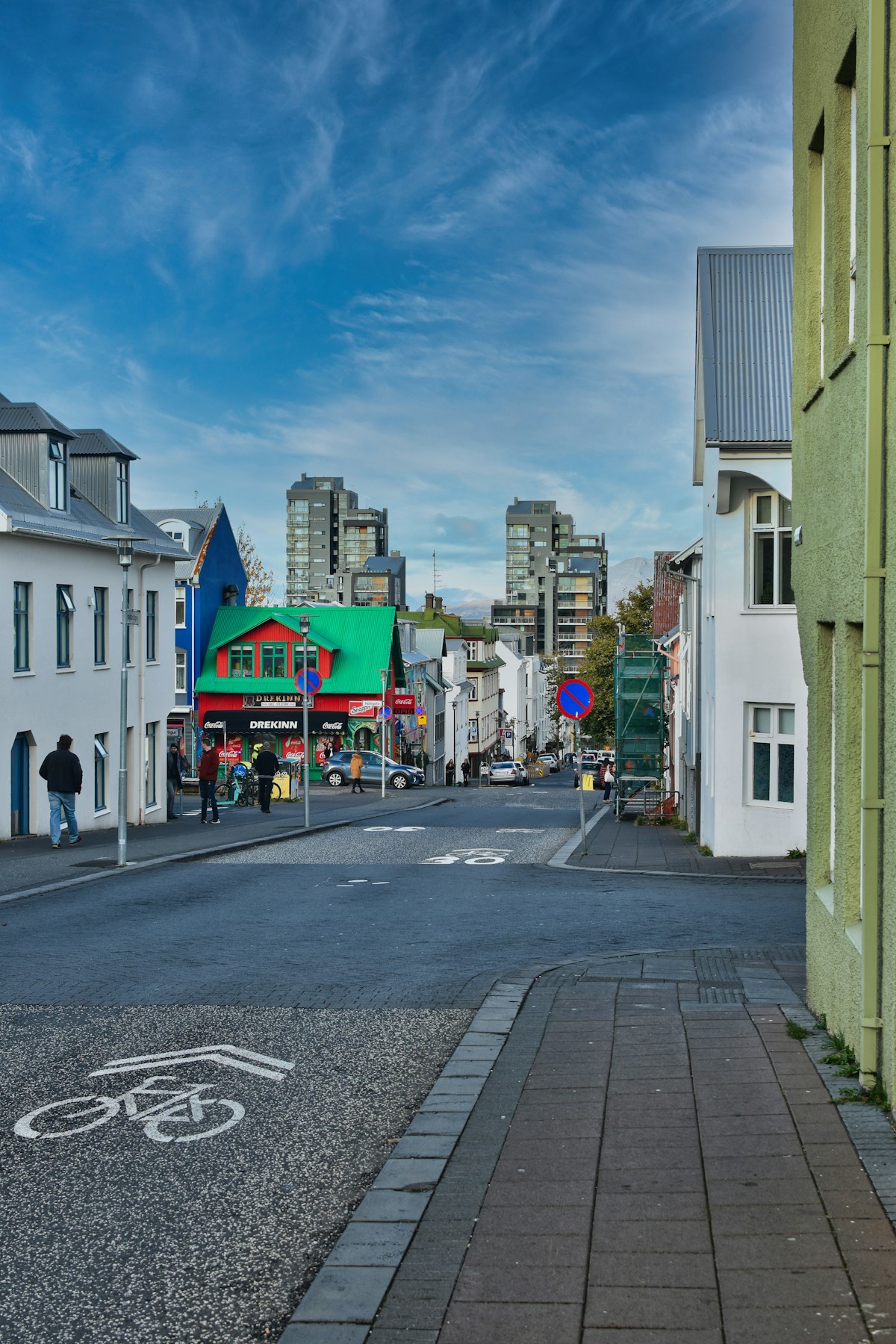
Icelandic (íslenska) is a North Germanic language that has changed remarkably little since the Viking Age. Modern Icelanders can still read the medieval sagas in their original form - a linguistic continuity that has no parallel in Europe. The language preserves Old Norse grammatical features that other Scandinavian languages shed centuries ago: noun declensions, verb conjugations, and four grammatical genders that mean the same word shifts form depending on its role in a sentence.
For travellers, this complexity is academic. Iceland has one of the highest English-proficiency rates on earth, and you will not need Icelandic to navigate a petrol station, order dinner, or ask for directions. What you will gain from learning a few phrases is something harder to buy: a visible signal of respect that Icelanders respond to warmly and consistently.
The language uses the Latin alphabet with several distinctive characters. There is no letter c, q, w, or z in native Icelandic words. Understanding a handful of characters and sound rules will transform your ability to pronounce place names correctly - and Iceland’s place names are wonderfully descriptive once you can decode them.
Book ahead: a few phrases go a long way, but a Reykjavik tour with a local guide decodes the place names as you go, and an Iceland eSIM keeps your translation app online.
The Icelandic Alphabet: Unique Characters
Icelandic uses several letters not found in English. These three are the ones you will encounter most often on signs, menus, and maps.
| Character | Name | Sound | English equivalent | Example |
|---|---|---|---|---|
| Þ / þ | Thorn | voiceless th | th in think | Þórsmörk → THORS-muhrk |
| Ð / ð | Eth | voiced th | th in this | Ísafjörður → EE-sah-FYUR-thoor |
| Æ / æ | Ae | long ai/eye | eye | Ægi → EYE-gee |
Accented vowels are not decorations - they represent entirely different sounds from their unaccented counterparts.
| Vowel | Sound | Example |
|---|---|---|
| á | ow (as in cow) | Á → OW |
| é | ye | Félag → FYEH-lahg |
| í / ý | ee | Vík → veek |
| ó | oh | Hótel → hoh-TEHL |
| ú | oo | Húsavík → HOO-sah-veek |
| ö | like German ö / French eu | Þórsmörk → THORS-muhrk |
Pronunciation Rules Worth Knowing
A few patterns make Icelandic place names much easier once you internalise them.
Double L (ll): Pronounced as “tl” - not like English double-L. Fjall (mountain) → fyatl. Suðurland → SUTH-oor-lahnd.
HV: Pronounced “kv.” Hvað (what) → kvath. Hveragerði → KVEH-rah-gehr-thee.
GJ / KJ: Both produce a soft “y” sound before front vowels. Gjá → GYOW. Kjöt (meat) → kyuht.
Stress: Always falls on the first syllable. REYK-ya-veek, not ray-KYAH-vik.
R: Rolled (trilled), similar to Spanish. Hringvegur → HRING-veh-goor.
Ó + I: Together, ói sounds like “oy.” Bói → boy.
A guided Reykjavík tour is an easy place to practise these place names with a local guide.
Greetings and Basics
| English | Icelandic | Pronunciation |
|---|---|---|
| Hello | Halló | HAL-loh |
| Good day | Góðan daginn | GOH-than DIE-in |
| Good morning | Góðan morgun | GOH-than MOR-goon |
| Good evening | Gott kvöld | got KVUHLD |
| Good night | Góða nótt | GOH-tha noht |
| How are you? | Hvað segir þú? | kvath SAY-ir thoo |
| Fine, thank you | Fínt, takk | feent, tahk |
| Please | Vinsamlegast | VIN-sahm-leh-gahst |
| Thank you | Takk (fyrir) | tahk (FIR-ir) |
| Thank you very much | Kærar þakkir | KYE-rahr THAH-keer |
| You’re welcome | Ekkert að þakka | EH-kehrt ath THAH-kah |
| Excuse me / Sorry | Afsakið | AHF-sah-kith |
| Yes / No | Já / Nei | yow / nay |
| I don’t understand | Ég skil ekki | yeh skil EH-kee |
| Could you repeat that? | Gætirðu endurtekið þetta? | GYEH-tir-thoo EN-door-teh-kith THEH-tah |
| Do you speak English? | Talarðu ensku? | TAH-lar-thoo EN-skoo |
| I only speak a little Icelandic | Ég tala aðeins svolítið íslensku | yeh TAH-lah ATH-ayns SVOH-lee-tith EES-len-skoo |
| Goodbye | Bless | bless |
Getting Around and Transport
| English | Icelandic | Pronunciation |
|---|---|---|
| Where is…? | Hvar er…? | kvar ehr |
| How do I get to…? | Hvernig kemst ég til…? | KVER-nig kemst yeh til |
| Left / Right / Straight ahead | Vinstri / Hægri / Beint áfram | VIN-stree / HYE-gree / baynt OW-frahm |
| Bus stop | Strætóstöð | STRY-toh-stuhth |
| Airport | Flugvöllur | FLOOG-vuht-loor |
| Petrol station | Bensínstöð | BEN-seen-stuhth |
| How far is it? | Hversu langt er? | KVER-soo langt ehr |
| How much is a taxi to…? | Hvað kostar leigubíll til…? | kvath KOS-tar LAY-goo-beetl til |
| One ticket to…, please | Einn miða til…, takk | aytn MITH-ah til, tahk |
| Road closed | Vegur lokaður | VEH-goor LOH-kah-thoor |
| Road accessible only by 4WD | Vegur aðeins fær í jeppa | VEH-goor ATH-ayns fyehr ee YEP-ah |
| Is this an F-road? | Er þetta F-vegur? | ehr THEH-tah EFF-veh-goor |
The F-road question matters. F-roads (highland roads) are illegal for standard rental cars and closed to all vehicles until June at the earliest. Asking before you turn off the ring road can save you a large fine and a very expensive recovery.
Accommodation
| English | Icelandic | Pronunciation |
|---|---|---|
| I have a reservation | Ég er með bókun | yeh ehr meth BOH-koon |
| Do you have any rooms available? | Eruð þið með laust herbergi? | EH-rooth theeth meth loyzt HER-behr-gee |
| A room for two people | Herbergi fyrir tvo | HER-behr-gee FIR-ir tvoh |
| How much is one night? | Hvað kostar ein nótt? | kvath KOS-tar ayn noht |
| Is breakfast included? | Er morgunmaturinn innifalinn? | ehr MOR-goon-MAH-toor-in IN-ee-fah-lin |
| What time is check-in / check-out? | Hvenær er innritun / útritun? | KVEH-nyehr ehr IN-ree-toon / OOT-ree-toon |
| The key, please | Lykilinn, takk | LIK-il-in, tahk |
| Is there WiFi? | Er WiFi hér? | ehr WHY-fee hyehr |
| The heating is not working | Hitinn virkar ekki | HIT-in VEER-kar EH-kee |
Food and Dining
| English | Icelandic | Pronunciation |
|---|---|---|
| The menu, please | Matseðilinn, takk | MAHT-seh-thil-in, tahk |
| What do you recommend? | Hvað mælirðu með? | kvath MYE-lir-thoo meth |
| The bill, please | Reikninginn, takk | RAYK-ning-in, tahk |
| Water | Vatn | vahtn |
| Coffee | Kaffi | KAH-fee |
| Beer | Bjór | byohr |
| Fish | Fiskur | FIS-koor |
| Lamb | Lamb | lahm-b |
| Skyr (Icelandic dairy) | Skyr | skeer |
| Hot dog | Pylsa | PIL-sah |
| Delicious! | Ljúffengt! | lyoof-FENGT |
| I am vegetarian | Ég er grænmetisæta | yeh ehr GRYNE-meh-tee-SYE-tah |
| I am vegan | Ég er vegan | yeh ehr VEE-gahn |
| I have an allergy to… | Ég er með ofnæmi fyrir… | yeh ehr meth OF-nyeh-mee FIR-ir |
| Cheers! | Skál! | skowl |
The “pylsa” (hot dog) deserves special mention. The hot dog stand Bæjarins Beztu Pylsur in Reykjavík is an institution - order “eina með öllu” (AY-nah meth UHT-loo) meaning “one with everything” and you will get mustard, ketchup, raw onion, crispy onion, and remoulade, exactly as locals order it.
Numbers
| Number | Icelandic | Pronunciation |
|---|---|---|
| 0 | Núll | nootl |
| 1 | Einn | aytn |
| 2 | Tveir | tvair |
| 3 | Þrír | threer |
| 4 | Fjórir | FYOH-reer |
| 5 | Fimm | fim |
| 6 | Sex | sex |
| 7 | Sjö | syuh |
| 8 | Átta | OWT-ah |
| 9 | Níu | NEE-oo |
| 10 | Tíu | TEE-oo |
| 20 | Tuttugu | TOOT-oo-goo |
| 50 | Fimmtíu | FIM-tee-oo |
| 100 | Hundrað | HOON-rath |
| 1,000 | Þúsund | THOO-soond |
Numbers matter when you are checking prices at the pump (petrol in Iceland is expensive - knowing you have paid for 50 litres, not 15), confirming road distances in kilometres, or reading a weather forecast wind speed.
Emergencies
| English | Icelandic | Pronunciation |
|---|---|---|
| Help! | Hjálp! | hyowlp |
| I need a doctor | Ég þarf lækni | yeh tharf LYKE-nee |
| Call the police | Hringdu í lögregluna | HRING-doo ee LUH-greh-gloo-nah |
| Call an ambulance | Hringdu í sjúkrabíl | HRING-doo ee SYOO-krah-beetl |
| Hospital | Sjúkrahús | SYOO-krah-hoos |
| I’m lost | Ég er villtur / villt | yeh ehr VILT-oor / vilt |
| It’s an emergency | Þetta er neyðartilfelli | THEH-tah ehr NAY-thar-til-FEL-ee |
| Pharmacy | Apótek | ah-POH-tehk |
| I’m injured | Ég er slasaður / slösuð | yeh ehr SLAH-sah-thoor / SLUH-soothh |
| Emergency number: 112 | Neyðarlínan: 112 | NAY-thar-LEE-nahn |
112 is the universal emergency number in Iceland - police, fire, and ambulance. The website 112.is also runs a GPS-tracking app (Safetravel) that lets you register your route before heading into the highlands. Registering costs nothing and can save your life if conditions change.
Language Etiquette in Iceland
Attempting Icelandic is always welcome. Icelanders are protective of their language - the government actively resists loan words and invents Icelandic equivalents for new concepts (the word for computer is “tölva,” from “tala,” to count, and “völva,” a prophetess). When a visitor makes the effort, locals treat it as genuine respect, not a curiosity.
Do not attempt to speak Danish. Danish is taught in Icelandic schools, and some older Icelanders speak it, but it carries historical weight. Iceland was under Danish rule until 1944, and the independence of the language is a point of pride. Swedish or Norwegian work better as a fallback if you speak a Scandinavian language, but English is the universally preferred option for visitors who are not native Icelandic speakers.
Pronunciation of place names matters in one specific context: safety. When filing a route plan or describing your location to emergency services, clear pronunciation of Icelandic place names can prevent confusion. “Landmannalaugar” (LAHND-mah-nah-LOY-gar) and “Þórsmörk” (THORS-muhrk) are common trekking destinations - knowing how to say them clearly is worth the practice.
Icelanders do not expect Icelandic from tourists. There is no social awkwardness in switching to English immediately. The cultural value is in the attempt, not the fluency. A “takk” at the end of a transaction and a “bless” when leaving are genuinely appreciated - and those two words cover 80% of the interactions you will have.
Formality is low. There is no formal/informal register divide the way French has tu/vous or German has du/Sie. Everyone uses the same pronoun (þú), which reflects the egalitarian social culture. You will not accidentally offend someone by being too casual.
English in Iceland
Iceland consistently ranks among the top five countries globally for English proficiency. The EF English Proficiency Index has placed Iceland in the “very high” band every year it has published rankings, and for good reason.
Television and film are subtitled rather than dubbed - Icelanders grow up watching English-language content in the original. English is compulsory from age 9. University-level education uses English textbooks across most fields. The tourism industry employs almost exclusively English-speaking staff.
In practice: you will have no difficulty at petrol stations, supermarkets, restaurants, hotels, guesthouses, tour operators, rental car companies, or hospitals. Rural Iceland - farms, very small fishing villages - may occasionally have an older resident who speaks only Icelandic and some Danish, but this is rare and generally someone nearby will translate.
The Westfjords and East Fjords are occasionally cited as areas where English is “less common,” but in our experience this is overstated. Any establishment open to tourists in those regions will have English-speaking staff.
One area where English occasionally breaks down: recorded automated phone systems. If you call a local number (for a booking or a service), the initial menu is sometimes Icelandic-only. Say “tala við mann, takk” (I want to speak with a person, please - TAH-lah vith madn, tahk) to exit the system and reach a person who will immediately switch to English.
Pick up an Iceland eSIM before you travel - works on arrival and covers most of the Ring Road.
Browse Iceland tours - day trips, activity bookings, and multi-day packages across the country in one place.
Get travel insurance for Iceland - policies covering glacier hikes, F-road driving, and volcanic disruption.
Related Guides
- First time in Iceland - Full practical overview for first-time visitors
- Icelandic food guide - What the menu terms mean and what to eat
- Reykjavík city guide - Where to practise your Icelandic: cafes, markets, and local spots
Plan Your Trip
✈️ Book your flights to Iceland 🛡️ Get travel insurance 📱 Stay connected with an eSIM 🚗 Rent a car