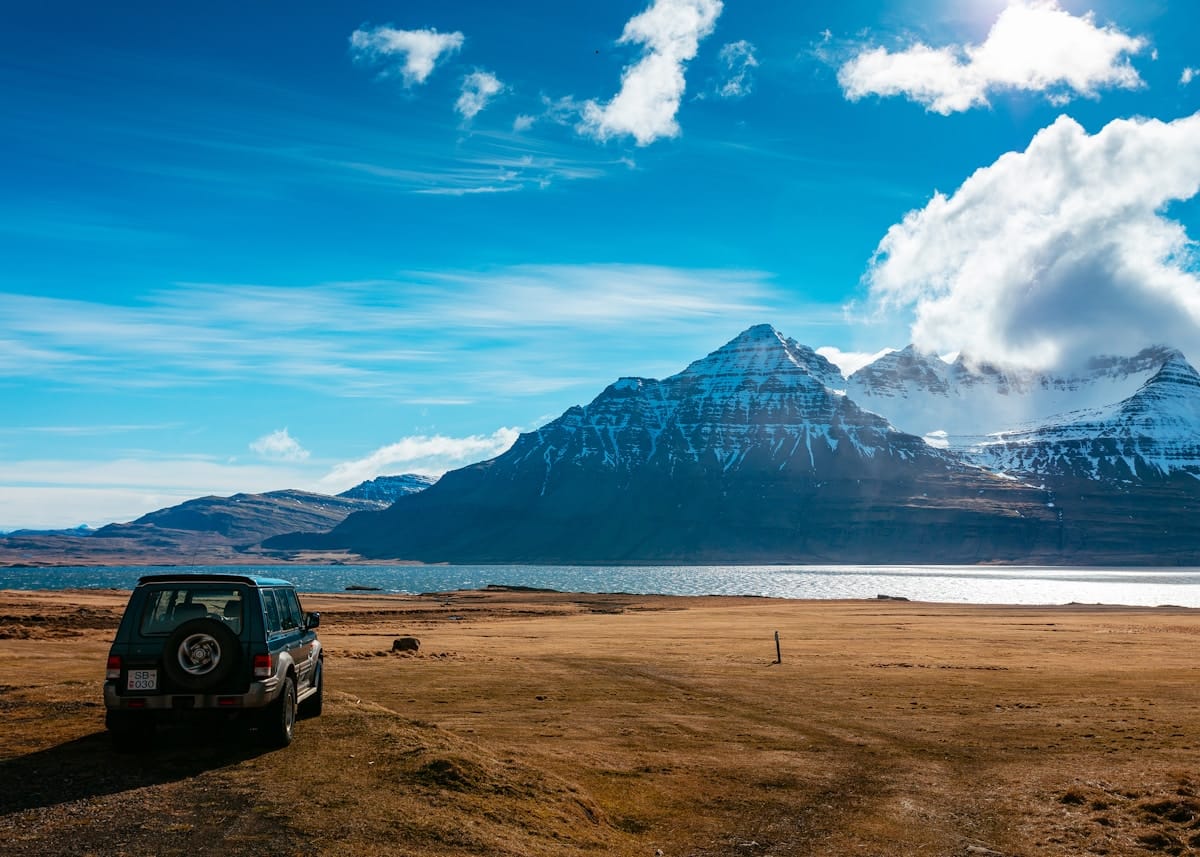
Renting a car is the only practical way to see the best of Iceland. Book your Iceland car hire in advance - especially in summer, when 4WD vehicles sell out weeks ahead. Public transport barely exists outside Reykjavík, and the country’s most famous landscapes - Jökulsárlón glacier lagoon, the East Fjords, the Snæfellsnes Peninsula, Þórsmörk - are unreachable without a vehicle.
This guide covers everything from choosing the right rental company to understanding Iceland-specific insurance and navigating F-roads safely.
Choosing a Rental Company
Iceland has a mix of international brands and local companies. Prices and service quality vary considerably.
Hertz Iceland (hertz.is) - The largest international brand in Iceland. Multiple locations including Keflavík Airport, Reykjavík city, and Akureyri. Fleet is modern and well-maintained. If you have a Hertz Gold membership or corporate discount, this is often the best-value international option. Approximate daily rates from ISK 12,000 (compact 2WD) to ISK 35,000+ (4WD SUV) in summer.
Europcar Iceland (europcar.is) - Another international brand with a reliable fleet and Keflavík Airport pickup. Often competitive on compact and economy vehicles. Good for travellers who want familiar customer service terms and consistent insurance language. Summer rates are broadly comparable to Hertz.
Blue Car Rental (bluecarrental.is) - One of Iceland’s largest independent companies. Strong choice for 4WD vehicles, particularly for Ring Road trips and highland access. Competitive on price and transparent about insurance options. Located at Keflavík Airport and Reykjavík.
Lagoon Car Rental (lagooncarrental.is) - An Icelandic-owned budget option that has grown significantly. Popular with budget travellers looking to avoid the premium pricing of international brands. Fleet condition varies, but vehicles are generally fit for purpose. Rates typically 15–25% below Hertz/Europcar on equivalent categories.
SADcars (sadcars.com) - The budget floor. Older vehicles, higher mileage, but genuinely cheaper - sometimes 40–50% below international brands. Adequate for Ring Road driving in good conditions. Not recommended for highland F-roads or winter driving.
Budget Iceland (budget.is) - Competitive pricing on compact and mid-size vehicles. Keflavík Airport and Reykjavík locations. Popular with budget-conscious visitors who want a recognisable international brand at lower rates than Hertz or Europcar.
Lotus Car Rental (lotuscarrental.is) - Icelandic-owned with a strong reputation for highland-capable vehicles and clear insurance policies. A good choice if F-road access is part of your plan.
Approximate Price Ranges (Summer 2026)
| Car type | Typical use | Cost per day |
|---|---|---|
| Small compact (2WD) | Ring Road, paved roads | ISK 8,000–14,000 |
| Mid-size 4WD SUV | Ring Road + gravel roads | ISK 18,000–28,000 |
| Large 4WD SUV | F-roads, larger groups | ISK 28,000–40,000 |
| Super Jeep | Extreme highland routes | ISK 50,000–90,000 |
| Campervan (2WD) | Ring Road camping | ISK 25,000–45,000 |
| Campervan (4WD) | F-roads + camping | ISK 40,000–65,000 |
Winter rates are lower than summer by 20–40%. Book summer vehicles - especially 4WD SUVs - at least six weeks in advance.
Insurance: CDW, SCDW, and SAAP Explained
Iceland’s rental insurance structure is more complex than most countries. Getting this wrong is expensive.
CDW (Collision Damage Waiver)
Reduces your liability for damage to the rental car. Typically included in the base rate or offered as a standard add-on. Check the excess (your financial liability if you damage the car) - on a basic CDW policy in Iceland it is typically ISK 150,000–350,000. That is the amount you pay upfront from your deposit if you have an accident.
SCDW / Gravel Protection (Super CDW)
Reduces or eliminates the excess for damage caused by gravel - loose stones thrown up by passing vehicles. Windscreen chips and paint scratches from gravel are extremely common on Icelandic roads, including the Ring Road. Gravel protection is strongly recommended for any trip that leaves Reykjavík. Daily cost: approximately ISK 1,500–3,000.
SAAP (Sand and Ash Protection)
This is Iceland-specific. The South Coast between Vík and Skaftafell is prone to sandstorms, particularly from the Mýrdalssandur and Skeiðarársandur black sand deserts. A single sandstorm can cause thousands of ISK worth of paint damage. Without SAAP, that cost is yours. If you are driving the South Coast - which most Ring Road itineraries do - SAAP is not optional. Daily cost: approximately ISK 500–1,500.
Practical recommendation: For a standard Ring Road trip, take CDW + SCDW + SAAP. Combined daily cost is approximately ISK 2,500–5,000 extra - cheap relative to the potential excess on a claim.
A note on credit card coverage: Some credit cards offer rental car insurance. Read the policy carefully before relying on it - most card policies explicitly exclude Iceland due to the volcanic ash and gravel conditions. Do not assume it applies.
F-Road Regulations
F-roads (highland roads) are marked with an F prefix - F35, F26, F208, and others. They connect the interior highlands, including Landmannalaugar, Þórsmörk, Askja, and the Kjölur route between north and south Iceland.
Key rules:
- 4WD mandatory. Driving an F-road in a 2WD vehicle is illegal and immediately voids your rental insurance. Rental companies track GPS data and can identify F-road use.
- F-roads typically open from early to mid-June. Some high-altitude routes (F26 Sprengisandur, F88 to Askja) may not open until late June or early July in heavy snow years.
- River crossings (fords) are common. Many F-roads require driving through rivers. Assess depth before entering - water deeper than the axle height of your vehicle can cause serious damage. When in doubt, wait for a more experienced driver to cross first.
- Check before you go. Road status at road.is is updated daily. Text 1777 for real-time conditions. If a road shows red or closed, do not attempt it.
For full F-road guidance including specific routes, see our Iceland F-roads guide.
Ring Road Self-Drive Logistics
The Ring Road (Route 1) is Iceland’s primary highway, circling the island for approximately 1,332 km. Most travellers complete it in 7–10 days.
Clockwise or counterclockwise? Most visitors drive clockwise from Keflavík - south through the South Coast, then east, north, and west. This front-loads the most scenic sections (South Coast, Jökulsárlón) while you are fresh. Both directions are equally valid.
Key segments and distances:
| Segment | Distance | Driving time |
|---|---|---|
| Keflavík Airport → Vík | 186 km | 2.5 hrs |
| Vík → Jökulsárlón | 204 km | 2.5 hrs |
| Jökulsárlón → Höfn | 80 km | 1 hr |
| Höfn → Egilsstaðir | 260 km | 3 hrs |
| Egilsstaðir → Akureyri | 260 km | 3 hrs |
| Akureyri → Borgarnes | 345 km | 4 hrs |
| Borgarnes → Keflavík | 75 km | 1 hr |
Allow extra time for stops. Distances look short on a map but road conditions, single-lane bridges, and animal crossings add time.
One-way rentals: Some companies allow picking up at Keflavík and dropping off in Akureyri (or vice versa). This typically carries an additional fee - ask when booking if a one-way arrangement suits your itinerary.
Keflavík Airport pickup: Most rental desks are either at the terminal or a short shuttle ride away. Confirm pickup location when booking - some budget companies require a taxi to an off-airport depot.
Traffic Rules and Speed Cameras
Speed limits:
- 50 km/h in all towns and populated areas
- 90 km/h on paved rural roads (most of the Ring Road)
- 80 km/h on gravel roads
Iceland has fixed speed cameras on major routes - particularly between Reykjavík and Selfoss, and around Akureyri. Mobile radar vans also operate throughout the country. Fines are substantial: a 20 km/h overspeed costs approximately ISK 50,000 or more.
Single-lane bridges (einbreiðar brýr): Common on the Ring Road. Yellow diamond warning signs alert you to upcoming bridges. Right-of-way goes to the vehicle closer to the bridge - if in doubt, pull in and let oncoming traffic pass first.
Headlights: Mandatory at all times, day and night, year-round.
Off-road driving: Strictly prohibited everywhere in Iceland. Driving on moss, grass, or untracked lava fields causes irreversible ecosystem damage and carries fines of ISK 100,000 or more. Stay on marked roads and tracks at all times.
Right-hand traffic: Iceland drives on the right. Overtake on the left. Priorité à droite does not apply - major roads always have right of way over side roads unless otherwise signed.
Winter Driving Tips
Iceland driving in winter (approximately November through March) requires specific preparation.
Snow tyres: Icelandic law requires winter tyres from 1 November to 15 April. All rental vehicles will have them fitted during this period - confirm when booking.
Black ice (svart ís): Invisible sheet ice forms especially on bridges (which freeze before road surfaces) and during temperature fluctuations around 0°C. Reduce speed significantly and avoid sudden braking.
Wind: The Suðurland coast and Reykjanes Peninsula are exposed to severe lateral gusts, particularly for high-sided vehicles. If conditions reach warning level (yellow or above on vedur.is), reconsider driving. Car park closures due to wind are common at exposed viewpoints.
Road closures: Winter storms close roads quickly. Check road.is before each day’s drive. Major routes including parts of the Ring Road can close for 24+ hours. Build flexibility into your itinerary.
Never push through a blizzard. The Icelandic Search and Rescue Association (ICE-SAR) responds to an average of several hundred incidents per year involving tourists who drove into conditions beyond their ability. If visibility drops below safe levels, find a safe pull-off and wait.
For detailed winter-specific guidance, see our Iceland winter driving guide.
Fuel Costs and Station Gaps
Current prices (as of 2026): Petrol approximately ISK 290–320 per litre. Diesel similar. Iceland has no road tolls - fuel is your primary driving cost.
Fill up at every opportunity. Petrol station gaps on the Ring Road can reach 80–120 km on less-trafficked sections. In the Highlands, gaps are far larger - the F26 Sprengisandur route has no fuel for over 200 km. Carry a spare fuel can if driving any extended highland route.
Key stops on the Ring Road: Hella, Vík, Kirkjubæjarklaustur, Höfn (South Coast); Egilsstaðir (East); Akureyri (North); Borgarnes (West). These towns all have full-service N1 or Orkan stations.
Unmanned stations: Common in rural areas. Payment is card-only and some PIN-only (no contactless). Have a PIN-enabled card with you at all times. Shell, N1, Orkan, and ÓB are the main chains.
Age Restrictions
Most companies set the minimum age at 20–23 years old. Young driver surcharges - typically ISK 2,500–4,000 per day - apply to drivers aged 20–24 at most companies. A minimum of one year of driving licence experience is a common additional requirement alongside the age threshold.
Drivers over 75 may face restrictions at certain companies - check directly before booking.
What to Do If You Damage the Car
- Document the damage with photos immediately - before and after driving
- Report to the rental company as soon as possible; most have 24/7 emergency lines
- File a police report if another vehicle is involved
- Contact your travel insurance provider if you have separate cover
Do not attempt to repair or conceal damage. Rental companies inspect vehicles on return and will charge from the security deposit you provided.
Related Guides
- Iceland car rental costs - Full price breakdown including insurance, fuel, and extras
- Iceland driving guide - Rules of the road, single-lane bridges, and what to know before you drive
- Iceland winter driving guide - Winter-specific advice on studded tyres, road closures, and emergency procedures
- Iceland F-roads guide - Which highland roads require 4WD and when they open
- Ring Road Iceland - The complete 1,332 km self-drive route: stops, timing, and planning
Plan Your Trip
✈️ Flights to Iceland 🛡️ Travel insurance 📱 Iceland eSIM 🚗 Book your rental car