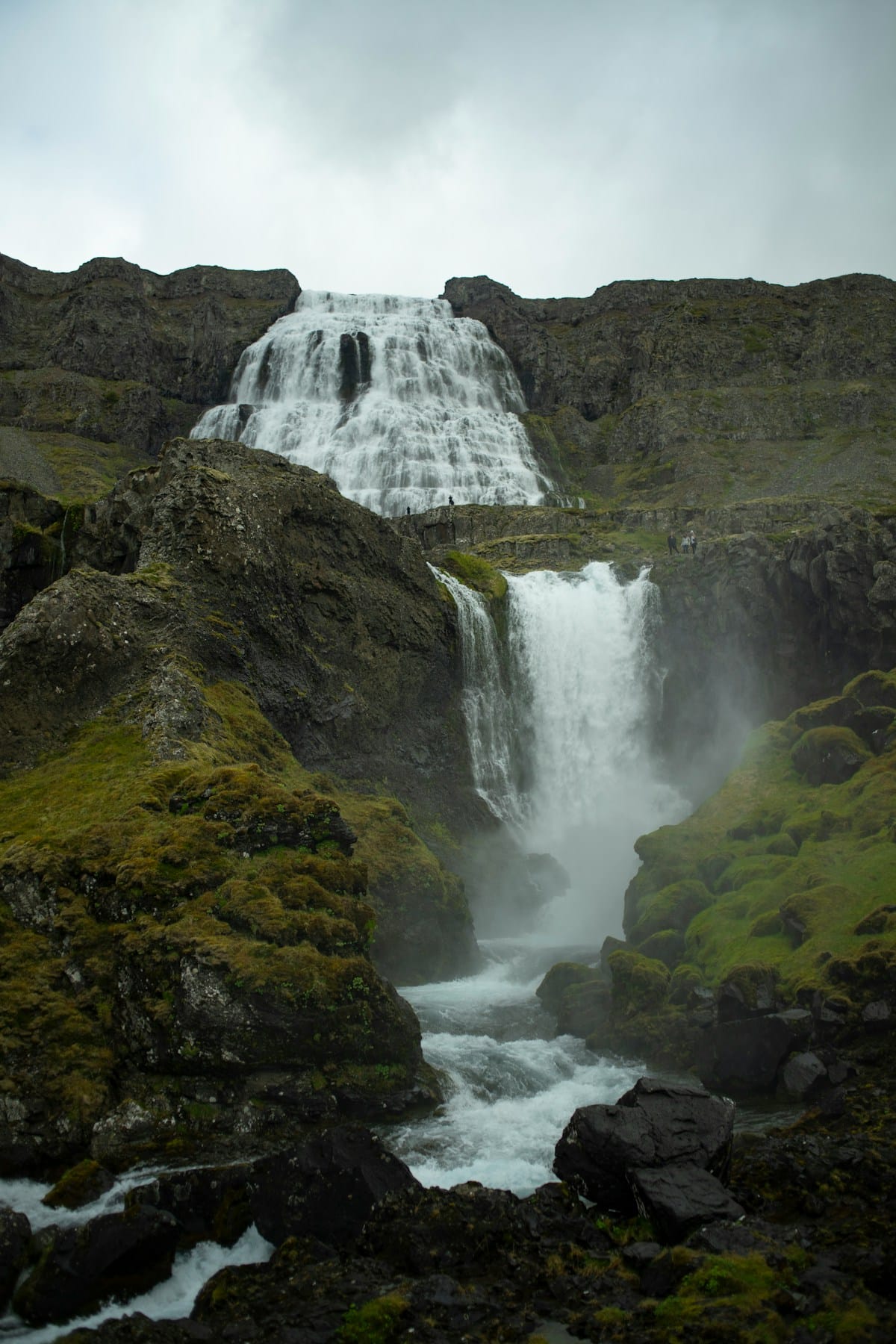
The Westfjords are a peninsula jutting from Iceland’s northwest corner, attached to the mainland by an 8km isthmus. They contain Iceland’s oldest landscape, glacially carved over millions of years into a dense network of fjords. They also receive fewer tourists per square kilometre than anywhere else in the country. The roads are long, winding, and in places still gravel. The reward is a version of Iceland that feels largely undiscovered: the densest puffin cliffs in the country, the most accessible arctic fox encounters, a waterfall so dramatic it has no peer in the region, and a small town with genuine character rather than tourist infrastructure.
This guide covers everything needed to plan a Westfjords trip: where to stay, what it costs, when to go, and how to reach Dynjandi, Hornstrandir, and Latrabjarg without burning two days just on logistics.
Getting There from Reykjavik
The Westfjords require a deliberate decision to visit. They are not on the way to anywhere.
By car: Approximately 450km from Reykjavik to Isafjordur via Route 1 north and Route 60 through the Westfjords. Allow 6 to 7 hours minimum. Route 60 is paved but winds through several mountain passes that accumulate snow from October to May. Check road.is before setting out, particularly in spring and autumn. The route itself is scenic, passing deep fjords and small fishing villages.
By air: Eagle Air (eagleair.is) flies from Reykjavik Domestic Airport to Isafjordur Airport (IFJ) in approximately 45 minutes. Fares from approximately ISK 12,000 to ISK 22,000 one way as of 2026, depending on availability and how far in advance you book. Several flights weekly in summer. Note: Isafjordur airport sits between steep mountains on a short runway, and flights are cancelled more frequently than elsewhere due to weather. Build flexibility into your schedule.
By ferry: The Baldur ferry (seatours.is) runs from Stykkisholmur on the Snaefellsnes peninsula across Breidafjordur bay to Brjanslaekur in the southern Westfjords, a 2.5-hour crossing. From Brjanslaekur, Latrabjarg is 45 minutes south and Dynjandi is 1.5 hours north. Ferry fares approximately ISK 4,000 to ISK 5,000 per person, ISK 14,000 to ISK 18,000 per car as of 2026. This is the classic approach route for travellers combining Snaefellsnes and the Westfjords in one loop.
Isafjordur: The Westfjords Capital
Isafjordur (population approximately 3,000) is built on a spit of land projecting into Isafjardardju fjord, giving it water views on three sides. It is a functioning town rather than a tourist construction: a proper supermarket (Bonus, on the main road), a fuel station (N1), a hospital, and a handful of restaurants. The airport is 7 minutes by car from the centre.
What to do in town: The historic harbour quarter, Nedstikaupstadur, contains several timber buildings from the 18th and 19th centuries among Iceland’s oldest surviving wooden structures. The Westfjords Heritage Museum (Byggdasafn Vestfjarda) covers local history and the fishing industry era. Entry approximately ISK 1,800 adult as of 2026. The adjacent outdoor swimming pool has mountain views, hot tubs, and a water slide; entry approximately ISK 1,200 adult as of 2026.
Hotels and guesthouses in Isafjordur:
- Hotel Isafjordur is the main hotel in town, with fjord-view rooms in the upper floors, a restaurant, and reliable facilities. Doubles from approximately ISK 32,000 to ISK 55,000 per night as of 2026.
- Gamla Guesthouse (Managata 5) is a smaller central option with private rooms and kitchen access. From approximately ISK 20,000 to ISK 30,000 per night as of 2026.
- Isafjordur HI Hostel offers dorm beds from approximately ISK 7,500 and private rooms from approximately ISK 22,000 as of 2026. Good value for solo travellers or those on tighter budgets.
Restaurants:
- Tjoruhusid is one of Iceland’s most celebrated fish restaurants, housed in an 18th-century harbour building. The format is an all-you-can-eat buffet of the day’s catch, cooked simply and served communally. Approximately ISK 7,000 adult as of 2026. Reservations essential (tjoruhusid.is). Summer only, approximately June to August.
- Vid Pollinn is the year-round alternative. Lamb, fish, and burgers. Mains approximately ISK 2,800 to ISK 5,000 as of 2026.
- Thai Koon is a Thai restaurant that locals recommend for weekday dinners. Mains approximately ISK 2,200 to ISK 3,500 as of 2026.
- Husid, on Adalstraeti, serves burgers, pizza, and beer with consistent evening hours. Mains approximately ISK 2,500 to ISK 4,200 as of 2026.
Stock up at the Bonus supermarket before heading south toward Dynjandi or west toward Latrabjarg. The next comparable food shop is in Borgarnes, three hours away.
Dynjandi Waterfall
Dynjandi is the Westfjords’ signature attraction and one of Iceland’s most spectacular waterfalls. The main fall drops approximately 100m in a broad fan-shaped cascade that widens from 7m at the top to 30m at the base, creating a bridal-veil shape unlike the narrow drops found elsewhere. Below the main fall, seven smaller named waterfalls descend in sequence down the gorge.
Access: Dynjandi sits approximately 100km south of Isafjordur on Route 60, around 1.5 to 2 hours driving on the winding fjord road. A parking area sits at the base. From the car park, a well-marked path climbs past all seven smaller falls before reaching the base of the main cascade. The walk to the top takes approximately 20 to 25 minutes one way, with steep sections near the summit. Allow 1.5 to 2 hours total for the car park walk, viewing, and descent.
Parking: A parking fee of approximately ISK 1,000 per car applies as of 2026, collected via a kiosk at the car park. Verify current fees at visitwestfjords.is before your visit. There is no entry fee for the waterfall itself.
Season: Accessible June through September without difficulty. The road can close in winter, and the path becomes icy and requires ice cleats from October onward. A basic campsite at the car park allows overnight stays for approximately ISK 1,500 per person.
Hornstrandir Nature Reserve
Hornstrandir is Iceland’s most remote protected area, a peninsula at the very top of the Westfjords with no roads, no permanent residents since the 1950s, and no tourist infrastructure beyond a handful of marked trails and emergency huts. It is accessible only by boat from Isafjordur.
Ferry access: West Tours (westtours.is) operates the primary ferry service from Isafjordur harbour to the main landing points in Hornstrandir, including Hornvik bay (the most dramatic section) and Hesteyri (a former whaling station with a summer café). Day trip return fares to Hornvik: approximately ISK 14,000 to ISK 18,000 adult as of 2026. Multi-day drop-off and pick-up packages for hikers planning two to five nights are also available through the same operator. Book well ahead for July departures.
Permits and registration: No hiking permit is required to enter Hornstrandir. However, all visitors are strongly advised to register their itinerary on safetravel.is before departure. The coast guard monitors the reserve and weather can change rapidly. Emergency rescue in Hornstrandir is a serious operation given the remoteness.
What to expect: Arctic fox are the main wildlife draw. They have had no hunting pressure for decades and approach walkers to within a few metres, particularly around old farm sites where they scavenge. Seabird colonies line the coastal cliffs. The terrain is demanding: trails are unmarked in places, river crossings are common in early summer, and the weather is notoriously changeable even in July. A day trip to Hornvik gives a genuine taste; multi-day hiking requires navigation experience, proper gear, and emergency food reserves. Difficulty: moderate to strenuous depending on route.
Latrabjarg Bird Cliffs
Latrabjarg is the westernmost point of Europe and one of the largest seabird colonies in Iceland. The cliffs run 14km and reach up to 440m. Millions of razorbills, guillemots, fulmars, gannets, and puffins nest here. The puffins are the primary draw for most visitors: they burrow in the cliff-top turf immediately behind the walking path and are famously indifferent to human presence, allowing close approach during nesting season.
Puffin season: Late May through mid-August. Peak numbers and nesting activity occur in June and July. After approximately 15 August, puffin numbers drop sharply as birds begin to move offshore. Visit before the second week of August for reliable puffin viewing.
Distance from Isafjordur: Approximately 200km, or 3 to 4 hours driving via Patreksfjordur. The final 12km to the cliff tip is gravel and narrow in places but passable in a standard 2WD in summer at reduced speed. No entry fee. No facilities at the cliff tip itself.
Practical note: The drive from Isafjordur to Latrabjarg and back in a single day is possible but very long (6 to 8 hours driving total). Patreksfjordur is the practical overnight base, approximately 1.5 hours from the cliffs. Guesthouses and small hotels in Patreksfjordur from approximately ISK 22,000 to ISK 45,000 per room as of 2026. If combining Latrabjarg with Raudisandur red sand beach (an extraordinary expanse of shell-sand in reddish orange on the south coast), allow a full two days based in Patreksfjordur.
Best Time to Visit
June and July are the peak months: Dynjandi is fully flowing, Latrabjarg puffins are nesting, Hornstrandir ferry services run daily, and the midnight sun means essentially unlimited daylight. Accommodation is at its scarcest in July.
Late May and August offer most of the same attractions with slightly lower visitor numbers. Puffins begin to leave from mid-August.
September is viable for road travel and Dynjandi visits but Hornstrandir ferry services wind down, and puffins have departed Latrabjarg. Mountain passes begin to snow over in late September.
Winter (October to April) requires winter driving experience, 4WD, and careful pass monitoring via road.is. Eagle Air operates year-round if passes close. Several Westfjords guesthouses close for winter.
Daily Budget: What to Expect
Westfjords costs are higher than the Ring Road average because supply is limited and resupply is expensive for operators. These are approximate figures as of 2026.
| Budget tier | Per person per night | What it covers |
|---|---|---|
| Budget | ISK 9,000 to ISK 14,000 | HI hostel dorm, self-catering, Bonus supermarket meals |
| Mid-range | ISK 22,000 to ISK 38,000 | Guesthouse double, one restaurant meal, fuel for day trip |
| Comfortable | ISK 45,000 to ISK 70,000 | Hotel Isafjordur double, Tjoruhusid dinner, guided activity |
Specific costs to factor in:
- Hornstrandir day trip ferry: approximately ISK 14,000 to ISK 18,000 adult
- Dynjandi parking: approximately ISK 1,000 per car
- Heritage Museum: approximately ISK 1,800 adult
- Swimming pool: approximately ISK 1,200 adult
- Fuel surcharge: the Westfjords road network is long. A Dynjandi and Latrabjarg loop from Isafjordur is approximately 500km of driving. Budget ISK 8,000 to ISK 15,000 extra depending on vehicle.
A realistic minimum for two nights in Isafjordur (guesthouse double, Hornstrandir day trip, one Tjoruhusid dinner, fuel, and Dynjandi visit) is approximately ISK 130,000 to ISK 160,000 per couple as of 2026.
Browse Iceland tours including guided Westfjords day trips and multi-day packages operating from Isafjordur.
Compare car hire in Iceland and filter for vehicles with unlimited mileage if driving the full Westfjords loop.
Plan Your Trip
✈️ Book your flights to Iceland 🛡️ Get travel insurance 📱 Stay connected with an eSIM 🚗 Rent a car