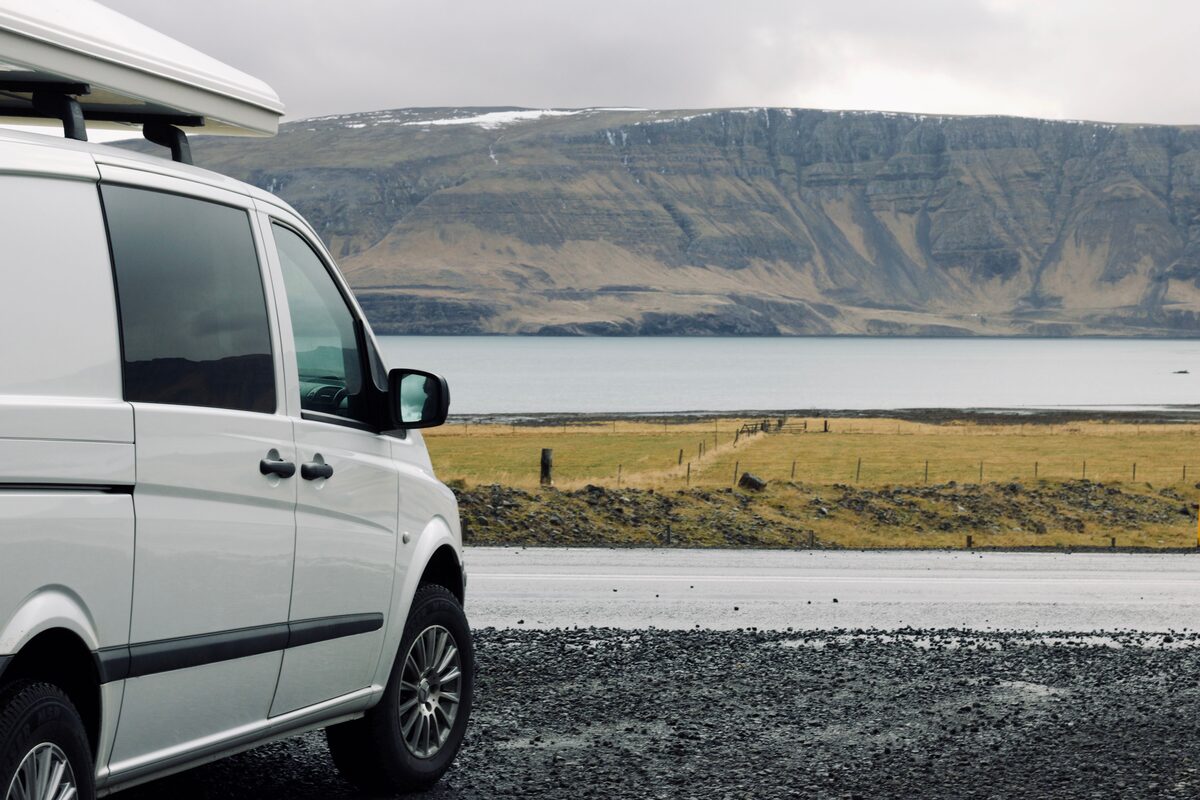
Both options get you around Iceland independently. The question is which fits your itinerary, budget, and tolerance for camping. Here is an honest comparison.
The Quick Verdict
Choose a campervan if: you’re travelling as a couple or small group, doing a Ring Road of 7+ days, prioritise flexibility over comfort, and want to avoid the nightly accommodation booking cycle.
Choose a rental car if: you’re on a short trip of 1–4 days, travelling solo or as two people who value a proper bed, sticking to Reykjavík and the Golden Circle, or visiting in winter when campsites are sparse.
For most first-timers doing a 7–10 day Ring Road in summer, the choice is genuinely close. Below is the full breakdown.
Cost Comparison
Prices approximate as of 2026. All ISK figures.
Campervan Route (Summer, 2 People, 7 Days)
| Item | Daily | 7-Day Total |
|---|---|---|
| Mid-range 2-person campervan | ISK 22,000–35,000 | ISK 154,000–245,000 |
| Campsite fees (2 people) | ISK 5,000–7,000 | ISK 35,000–49,000 |
| Fuel (approx. 400km/day) | ISK 4,500–5,500 | ISK 31,500–38,500 |
| Total | ISK 31,500–47,500 | ISK 220,500–332,500 |
Car + Accommodation Route (Summer, 2 People, 7 Days)
| Item | Daily | 7-Day Total |
|---|---|---|
| Small 2WD rental car | ISK 10,000–16,000 | ISK 70,000–112,000 |
| Guesthouse / budget hotel (double room) | ISK 20,000–38,000 | ISK 140,000–266,000 |
| Fuel (approx. 400km/day) | ISK 4,500–5,500 | ISK 31,500–38,500 |
| Total | ISK 34,500–59,500 | ISK 241,500–416,500 |
The campervan is cheaper at the budget end once you factor in accommodation, and significantly cheaper if you would otherwise be in mid-range hotels. For hostel dorms (ISK 5,000–8,000 per person), a rental car can compete on price — but comfort swings firmly toward the campervan.
Compare Iceland rental car prices — rates vary significantly by provider and pickup date, and summer 4WDs sell out weeks ahead.
Flexibility
Campervans have a structural advantage on the Ring Road: you are not committed to the nightly accommodation sequence. If you arrive at Jökulsárlón two hours behind schedule, you camp at the nearest site rather than scrambling to phone ahead. If you wake up and decide to spend an extra day on the Snæfellsnes Peninsula, you do it — no rebooking, no cancellation fees.
With a rental car, this flexibility exists to some degree with last-minute accommodation apps (Booking.com often shows same-day availability outside peak summer). But from mid-June to mid-August, guesthouses on the Ring Road fill up. Showing up without a booking to Vík, Höfn, or Egilsstaðir in July is a risk. Campervans have a genuine edge during peak season.
Comfort
On a Ring Road, you will spend multiple nights in remote locations. The tradeoff is honest:
Campervan advantages:
- Always have your bed — no packing/unpacking each day
- Kitchen unit reduces food costs significantly (supermarkets are 30–50% cheaper than restaurants)
- No check-in deadlines or early checkout pressure
- Wake up wherever you parked — directly at Jökulsárlón, Reynisfjara, or Þórsmörk with no commute to the site
Car + accommodation advantages:
- A real shower and bathroom every night
- A proper bed with linen (not a sleeping bag on a foam mattress)
- Less physical setup each evening — park, walk in, sleep
- More practical in storms — campervans can be cold and cramped in bad weather
If you are used to camping and value morning coffee next to a glacier lagoon before anyone else arrives, the campervan experience is genuinely hard to replicate. If you want reliably warm, private, and dry each night, a car and hotels wins.
F-Road Access
Standard rental cars cannot legally drive F-roads. Standard campervans also cannot — most 2WD campervans are not cleared for highland routes. If your itinerary includes Landmannalaugar, Þórsmörk, Askja, or other F-road destinations, you need a 4WD — whether that’s a 4WD rental car or a specifically listed F-road campervan.
For most Ring Road itineraries, F-roads are not required. The South Coast, Golden Circle, Snæfellsnes, East Fjords, and North Iceland are all on paved or well-graded gravel roads.
Short Trips (1–4 Days)
For a 1–3 day Reykjavík stopover or a short trip focused on the Golden Circle and South Coast, a rental car makes more sense. Campervans come into their own over longer distances — the setup costs (hiring, familiarising yourself with the layout, campsite routines) are less worthwhile on a short trip. For short trips, stay centrally in Reykjavík and drive out for day trips.
Travelling Solo
Solo travellers almost always choose a rental car. Campervans are priced per vehicle — a solo traveller pays the same as a couple for the van itself, plus full campsite fees alone. The cost structure only makes sense with at least two people splitting the van cost. Solo travellers doing the Ring Road typically use a mix of rental car, hostels, and guesthouses, or join a guided tour.
Which Companies to Book With
Rental Cars
The main international companies at Keflavík Airport include Hertz, Europcar, Avis, and Budget. Local companies like Lagoon Car Rental, SADcars, and Blue Car Rental typically undercut the international brands at the lower end.
Compare and book Iceland car hire — comparing directly saves ISK 3,000–8,000/day versus booking through aggregators.
Campervans
Happy Campers, KuKu Campers, and CampEasy are the three largest Iceland-focused rental companies. All three offer year-round hire, winterised vans, and a range of van sizes. Book 8–12 weeks ahead for summer. Motorhomes (4+ berths) from Iceland Motorhome Rentals are a good option for families.
Winter Considerations
Winter campervan hire is possible but harder. Rental rates drop 30–50% from October to April, which looks attractive. The practical challenges: around 30–40 campsites are open (versus 170+ in summer), storms can close roads and pin you down for days, and you will spend most daylight hours driving with little time at stops. Guesthouses and farms along the Ring Road stay open year-round, making a rental car + accommodation a more reliable winter option. For winter, we lean toward the car route unless you have genuine cold-weather camping experience.
Bottom Line
For a 7–10 day summer Ring Road with two or more people: a mid-range campervan is the most Iceland-native experience and is cost-competitive with anything above budget accommodation.
For short trips, solo travellers, winter visits, or anyone who needs a proper bed: rent a car and book accommodation as you plan the route.
Related Guides
- Iceland car rental guide — Company comparisons, insurance explained, and booking strategy
- Iceland campervan guide — Costs, companies, camping laws, and what a campervan trip actually looks like
- Iceland car rental costs — Breakdown of daily rates, insurance add-ons, and what doubles the price
- Ring Road campervan itinerary — A full Ring Road route in a campervan, day by day
- Iceland driving guide — Speed limits, F-roads, weather closures, and road conditions
Book Your Vehicle
🚗 Compare rental cars in Iceland — 2WD from ISK 8,000/day, 4WD SUV from ISK 22,000/day
🏨 Search hotels and guesthouses in Iceland — for the car + accommodation route