Iceland has more active geothermal zones than anywhere else in Europe, and two regions account for most of what travellers actually visit: the Reykjanes Peninsula in the southwest, and the Mývatn area in the north. Both have volcanic landscapes, hot springs, and the kind of terrain that looks as though it arrived from another planet. But they are genuinely different in character, price, accessibility, and what surrounds them.
This comparison helps you decide where to allocate your time if you’re choosing between them - or helps you understand what you’d be gaining by including both.
Overview
The Reykjanes Peninsula juts southwest from the Reykjavik area into the Atlantic. It’s where Keflavik International Airport sits, which means it’s the first piece of Icelandic geology most visitors encounter. The peninsula is part of the Mid-Atlantic Ridge - the tectonic boundary between the North American and Eurasian plates - and the geothermal activity here is intense and ongoing. The Blue Lagoon is the anchor attraction. The landscape is dominated by lava fields, younger than many you’ll see elsewhere in Iceland, and the ocean is never far away. As of 2024–2025, the Reykjanes Peninsula has also seen significant eruption activity near the town of Grindavík, which has affected access in the area repeatedly.
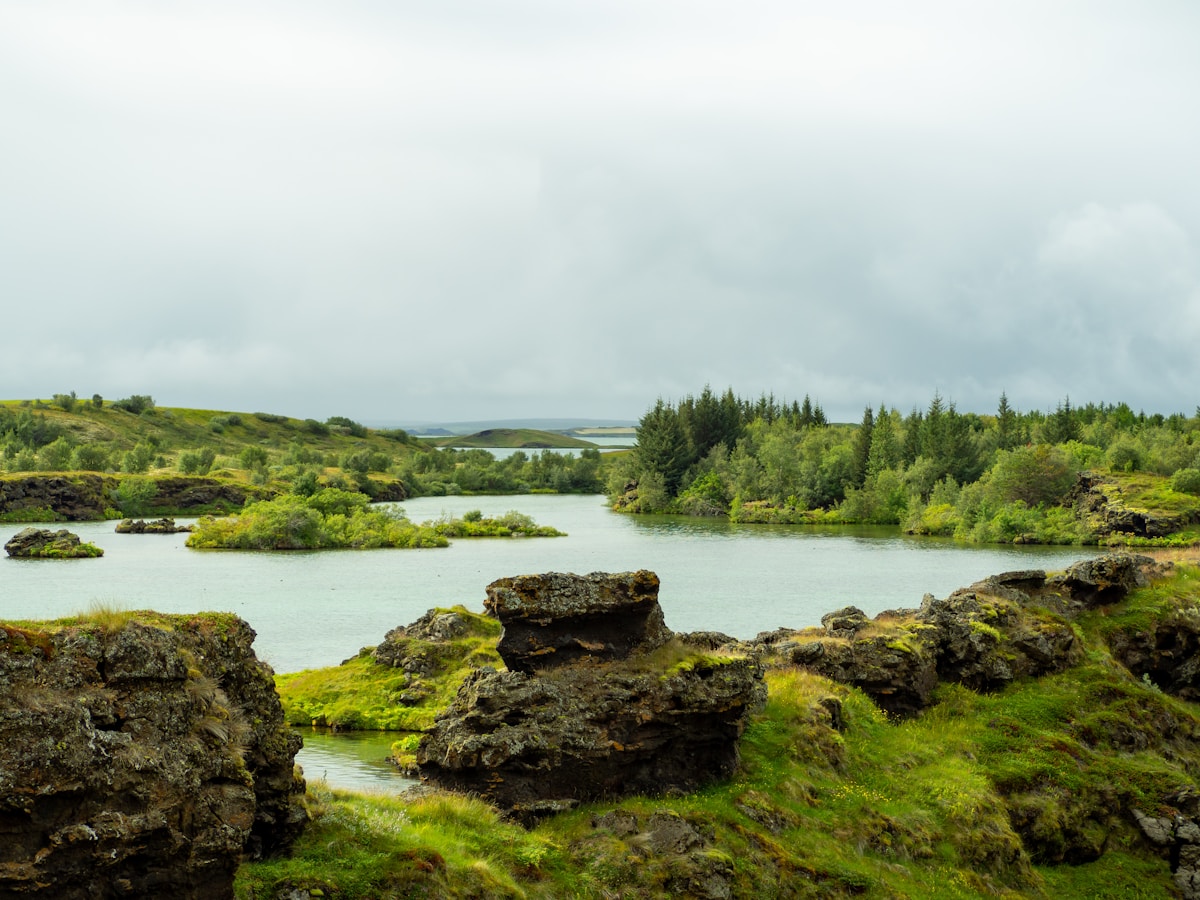
Mývatn is a shallow lake in northeast Iceland, roughly 100km east of Akureyri on Route 1. The lake and the terrain surrounding it are the product of successive lava flows, volcanic vents, and sustained geothermal heat below the surface. The area is rich in birdlife - it’s one of the most important duck nesting areas in Europe - and the combination of pseudocraters, boiling mud pools, lava formations, and geothermal pools in a single compact area is extraordinary. Mývatn is significantly quieter than Reykjanes, primarily because it takes more effort to reach. That effort is worth making.
Getting There and Around
Reykjanes is the easier destination to reach by a wide margin. From Reykjavik, it’s a 45–50 minute drive southwest via Route 41. Blue Lagoon shuttle buses run from BSÍ bus terminal in Reykjavik for approximately 3,500 ISK one-way. Because Keflavik Airport sits on the peninsula itself, Reykjanes is also uniquely well-positioned as an arrival or departure day add-on - visiting the Blue Lagoon on the way out to the airport is a common itinerary move, though the timing requires attention (the lagoon is crowded, and you need to budget for the full entry experience before catching a flight).
Reaching Mývatn requires more planning. From Reykjavik, the options are: fly to Akureyri (40 minutes from Reykjavik domestic airport, from approximately 15,000 ISK one-way on Air Iceland Connect) and then drive the 100km east on Route 1, taking about an hour; or drive the entire way from Reykjavik - approximately 490km, around 5.5 hours in good conditions. There is no direct bus service from Reykjavik to Mývatn. If you’re already travelling the Ring Road east from Reykjavik, Mývatn falls naturally on the route - it’s reached on day four or five of a standard 7-day Ring Road drive. Car rental is essentially mandatory for exploring the Mývatn area; the volcanic sites are spread over 10–15km of road and are not walkable between each other without significant time.
Geothermal Highlights
Reykjanes is anchored by the Blue Lagoon - a geothermal spa that has become one of the most recognisable images in Icelandic tourism. The milky blue water is genuinely striking, and the experience of bathing in 38°C geothermal water surrounded by lava rock is unlike most other hot spring experiences in Iceland. However, it is also expensive: entry prices range from approximately 45,000 ISK for the basic Comfort package to around 90,000 ISK for the premium tier, and the facility is crowded enough that advance booking of several weeks (or months in summer) is necessary. The Blue Lagoon has closed temporarily multiple times since late 2023 due to eruption proximity - always check the official website before planning a visit.
Beyond the lagoon, Reykjanes has other worthwhile stops. Gunnuhver mud pools on the western tip of the peninsula are free to visit and genuinely dramatic - large, bubbling grey mud pools in an area of intense steam activity. The Reykjanes Geopark covers the lava fields and coastal scenery around the peninsula, and the Fagradalsfjall volcano area (active with eruptions in 2021, 2022, and 2023) has become a significant visitor destination, though access depends on current eruption status. For the Reykjavik area’s alternative hot spring option, Sky Lagoon sits on the coast west of the capital at around 10,990–16,990 ISK entry - more affordable than the Blue Lagoon and architecturally interesting.
Mývatn’s geothermal offerings are more diverse and, for most visitors, better value. The Mývatn Nature Baths - the area’s equivalent of the Blue Lagoon - charge approximately 6,500 ISK for entry and offer a comparable outdoor geothermal soaking experience with far fewer crowds. The water is a different colour (more milky jade than blue), the setting is quieter, and the evening hours (after 7pm) are particularly peaceful. Námaskarð, also called Hverir, is a geothermal area of fumaroles, sulphur vents, and boiling mud pools about 5km east of the lake - it’s free to visit and one of the most atmospherically strange landscapes in Iceland. Krafla caldera, a volcanic complex about 7km north of Námaskarð, includes the Víti explosion crater (a turquoise lake in a former volcanic caldera) and the Leirhnjúkur lava field, where the ground is still warm underfoot from the Krafla Fires eruptions of 1975–1984. Entry to both is free. Dimmuborgir, a field of unusually shaped lava pillars and arches near the lake’s eastern shore, is free to walk through and excellent for photography. Grjótagjá, a small thermal cave with a stunning blue pool inside, is accessible and free - but swimming is not permitted due to temperature and conservation concerns. All of these are covered in more detail in our Mývatn things to do guide and Mývatn day trips guide.
Where to Stay
Search hotels in Mývatn on Booking.com
There is no meaningful accommodation directly on the Reykjanes Peninsula outside of Keflavik town. Visitors almost universally access the peninsula as a day trip from Reykjavik, or as a stop between the airport and the capital. Hotel Keflavik and Alex Guesthouse in Keflavik offer rooms from approximately 20,000–25,000 ISK per night, and there are a handful of guesthouses, but the peninsula is not set up as a multi-night destination.
Search hotels near Reykjanes on Booking.com
Mývatn, by contrast, is a place where staying overnight dramatically improves the experience. Evening visits to the Nature Baths when crowds have thinned, early morning light over the pseudocraters before tours arrive, and access to Námaskarð at dawn - these are possible only if you’re based locally. Hotel Gigur sits on the lakeside and starts from approximately 35,000 ISK per night - the views justify the premium. Vogafjós is a working dairy farm guesthouse at around 28,000 ISK per night, with an attached restaurant that serves its own products. Various apartment-style accommodation near the Nature Baths runs from around 32,000 ISK per night. We cover the full options in our Mývatn where to stay guide.
Food and Drink
Reykjanes has limited independent dining. Keflavik town has a handful of restaurants - Café Duus near the harbour is a reliable option, with mains around 3,500 ISK - but most visitors eat in Reykjavik before or after visiting the peninsula. The Blue Lagoon itself has a restaurant, but prices there are high even by Icelandic standards, and the restaurant is really a secondary attraction to the bathing experience.
Mývatn’s food scene is small but has a genuine standout. Vogafjós Restaurant - connected to the guesthouse of the same name - is one of the better restaurants in rural Iceland. It specialises in dairy products from the farm (the skyr cheesecake is referenced in almost every visitor review), freshwater trout from the lake, and Icelandic beef. Mains typically run around 4,500 ISK. Gamli Bærinn is a café offering lighter meals and soup, useful for a quick stop between sites. The range is limited, and if you’re spending multiple nights in the area, you’ll cover the options by night two. Stocking up in Akureyri before driving to Mývatn is practical if you’re self-catering. Our Mývatn best restaurants guide has current recommendations.
Budget Comparison
This is where the two regions diverge most clearly. The Blue Lagoon’s entry cost - 45,000 ISK to 90,000 ISK per person - is the defining budget factor on Reykjanes. Even if you add accommodation and a meal in Keflavik, the lagoon alone sets a high floor for the day’s spending.
Mývatn Nature Baths at approximately 6,500 ISK offer a comparable outdoor geothermal soaking experience. Add in a full day visiting Námaskarð, Krafla, Dimmuborgir, and the pseudocraters - all of which are free - and you can spend a rich, full day in the Mývatn region for under 15,000 ISK excluding accommodation and food. The geothermal experience per krona is significantly better at Mývatn.
Active Eruption Note
The Reykjanes Peninsula has experienced repeated eruption events near the town of Grindavík beginning in late 2023, with further eruptions in 2024 and into 2025. The Blue Lagoon has closed and reopened multiple times as a result. Access restrictions around the eruption sites can change within 24 hours when new activity begins. Before visiting Reykjanes, always check vedur.is (Icelandic Meteorological Office) and safetravel.is for current conditions and any road or area closures. This is not a deterrent from visiting - eruption viewing has itself become an attraction, with guided hikes to safe observation points during eruptive periods - but it does require flexibility in planning.
Mývatn’s volcanic system is also active - Krafla last erupted in 1984 - but there have been no eruption events affecting visitor access in the current period.
Season Considerations
Reykjanes is accessible year-round with no F-roads involved. The Blue Lagoon operates in all seasons, and the lava field landscapes are arguably more dramatic in winter under low light or snow. The lack of a meaningful agriculture or wildlife layer means Reykjanes looks fairly similar throughout the year.
Mývatn has stronger seasonal variation. The lake and surrounding area are most alive between May and August, when birdlife peaks - the lake is home to 15 species of duck and significant populations of other waterfowl. Midges (Chironomid flies, locally called mý, which is also where the lake gets its name) are active June through August. They are completely harmless but exist in dense clouds. A head net is genuinely useful, not just a precaution. Route 1 through the Mývatn area remains paved and open year-round, and the Nature Baths operate in winter - the experience of bathing in outdoor geothermal water while snow covers the surrounding landscape is a strong argument for a winter visit.
The Verdict
These are not directly competing destinations, and the decision is less about which is better and more about what kind of trip you’re building.
Choose Reykjanes if you’re arriving or departing via Keflavik, have one or two nights in Iceland and want the signature geothermal experience without driving far, or if the Blue Lagoon is on your list as a specific must-do.
Choose Mývatn if you’re doing a Ring Road trip or spending time in north Iceland, want to spend a full two or three days in a volcanic region, prefer better value hot springs, are interested in birdwatching and biodiversity alongside geology, or want to experience Iceland’s geothermal landscape without the infrastructure of a major tourist facility around it.
If your itinerary allows for both - which most Ring Road routes do, since Reykjanes is near the airport and Mývatn sits naturally on the northern route - there’s no reason to choose. They complement each other well: Reykjanes on arrival or departure, Mývatn as a multi-day destination mid-trip.
More detail on each: Mývatn area guide and Reykjanes area guide.
Browse Lake Mývatn tours - guided tours covering the geothermal area, Dimmuborgir, and Grjótagjá cave.
Compare car hire in Iceland - a 4WD or campervan gives the flexibility to explore at your own pace.
See Also
- Lake Mývatn city guide - The northern geothermal region in full: geology, attractions, and visitor logistics
- Reykjanes Peninsula guide - The southern geothermal region: Blue Lagoon, volcanoes, and Keflavík airport proximity
- Geothermal pools in Iceland - The full spectrum of bathing options, from the Blue Lagoon to wild natural springs
- Blue Lagoon Iceland - Reykjanes’s signature attraction: full guide to booking and what to expect
- Iceland volcanoes guide - Understanding the volcanic systems driving geothermal activity at both locations
More Iceland Comparisons
- Blue Lagoon vs Sky Lagoon — Iceland’s two famous geothermal spas side by side
- Húsavík vs Akureyri — Two north Iceland bases: whale watching town versus regional hub
- Reykjavík vs Akureyri — Iceland’s capital versus the north Iceland hub
- Seyðisfjörður vs Siglufjörður — Two scenic small towns off the main tourist track