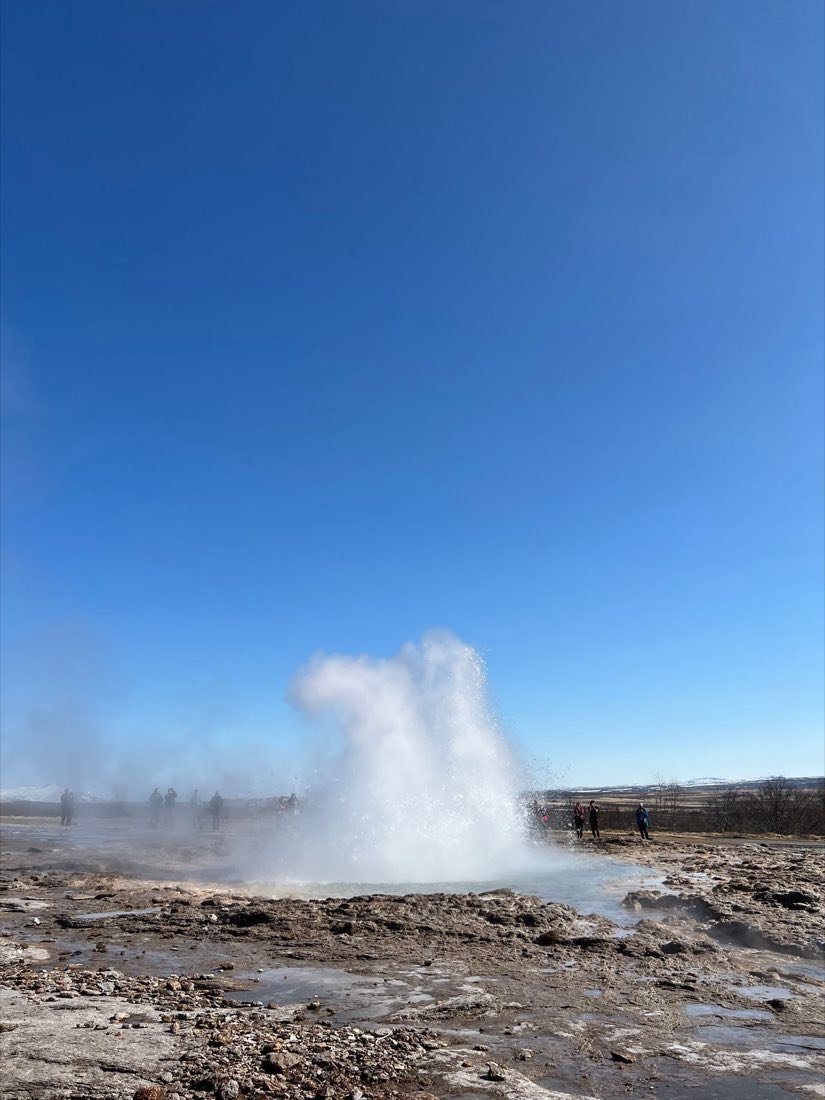
Geysir is the second stop on the Golden Circle and the only place on the route where the show runs on a timer. The original Great Geysir gave every other geyser in the world its name, but it is largely dormant. Strokkur, a short walk away, erupts every few minutes and keeps the area on every itinerary.
Getting There
The Haukadalur geothermal area is about 100 km from Reykjavík and 10 km from Gullfoss, roughly 1 hour 30 minutes by car. You can reach it on Route 35 via Selfoss or Route 37 from Þingvellir. The car park is directly across from the geothermal field. Guided tours from the capital usually include Geysir with Þingvellir and Gullfoss, so compare Golden Circle tours if you prefer not to drive.
Strokkur: What to Expect
Strokkur is the star. The water pool bulges into a blue dome, bursts, and shoots a column of water roughly 15 to 20 metres high, occasionally 30 metres or more. The cycle repeats every 5 to 10 minutes, so you can wait for a second go with a better camera angle. Stand upwind where possible, because the spray drifts, and keep your phone ready: the dome appears a second or two before the eruption.
The Great Geysir and Smaller Pools
The Great Geysir sits about 50 metres south. Its activity depends on seismic events, and in most years it is quiet. Along the path you will also see Smiður, Konungshver, Blesi and smaller bubbling pools, with the twin pools of Blesi showing a clear blue and a cloudy green side. The soil is hot and the water is near boiling. Stay on the paths.
Facilities and Costs
The geothermal area is free to enter. As of 2025, parking at Geysir has been free, but arrangements change, so check the signs on arrival. The Geysir Center across the road has a restaurant, a large gift shop and toilets. The Geysir Center site lists current opening hours. Allow 45 to 60 minutes for the field itself.
Why the Geysers Erupt
The Haukadalur field sits above a hot geothermal system. Groundwater seeps into narrow channels, heats under pressure and flashes into steam, pushing the column of water above it out of the vent. Strokkur has a short, narrow conduit, which is why it recharges in minutes rather than hours.
Best Time to Visit
- Summer: The most visitors and the easiest access. Early morning or evening keeps the viewing rope less crowded.
- Autumn and spring: Cooler, quieter, sometimes with snow on the surrounding hills.
- Winter: Steam is dramatic in cold air, and eruptions against snow look spectacular. The paths can be icy, so wear spikes and check road.is on the way.
The Rest of the Golden Circle
Geysir sits between Þingvellir and Gullfoss on the standard loop. For the full route, including optional stops such as Kerið crater and Friðheimar tomato farm, read our Golden Circle road trip guide. Our Golden Circle tours page compares operators.
Where to Stay
A night near the Golden Circle lets you visit before the buses arrive. Search hotels in Selfoss for the widest choice, or read our where to stay in Selfoss guide. If you are heading to the South Coast the next morning, hotels in Hella save time.
Tips
- Bring a hat and gloves in any season; the geothermal field is exposed.
- Do not touch the water. It can scald.
- Keep children close to the paths.
- Have a snack in the Geysir Center cafe or eat in Flúðir or Selfoss for better value.
A Realistic Timing Plan
Strokkur is the only reason most people stop, but 45 minutes is a better target than 15. Watch two or three eruptions from different spots: the first to understand the rhythm, the second to get your camera ready for the dome, the third from the upwind side for a cleaner shot. Then walk the loop past the smaller pools, and finish at the Geysir Center for a coffee. If the wind blows towards the viewing rope, the first row gets wet, so stand a few metres back or upwind. In winter, steam can hide the eruption in very cold air, so watch for the blue dome rather than the plume, and keep gloves on to avoid frozen fingers.
Browse Golden Circle tours for guided options that include Geysir.