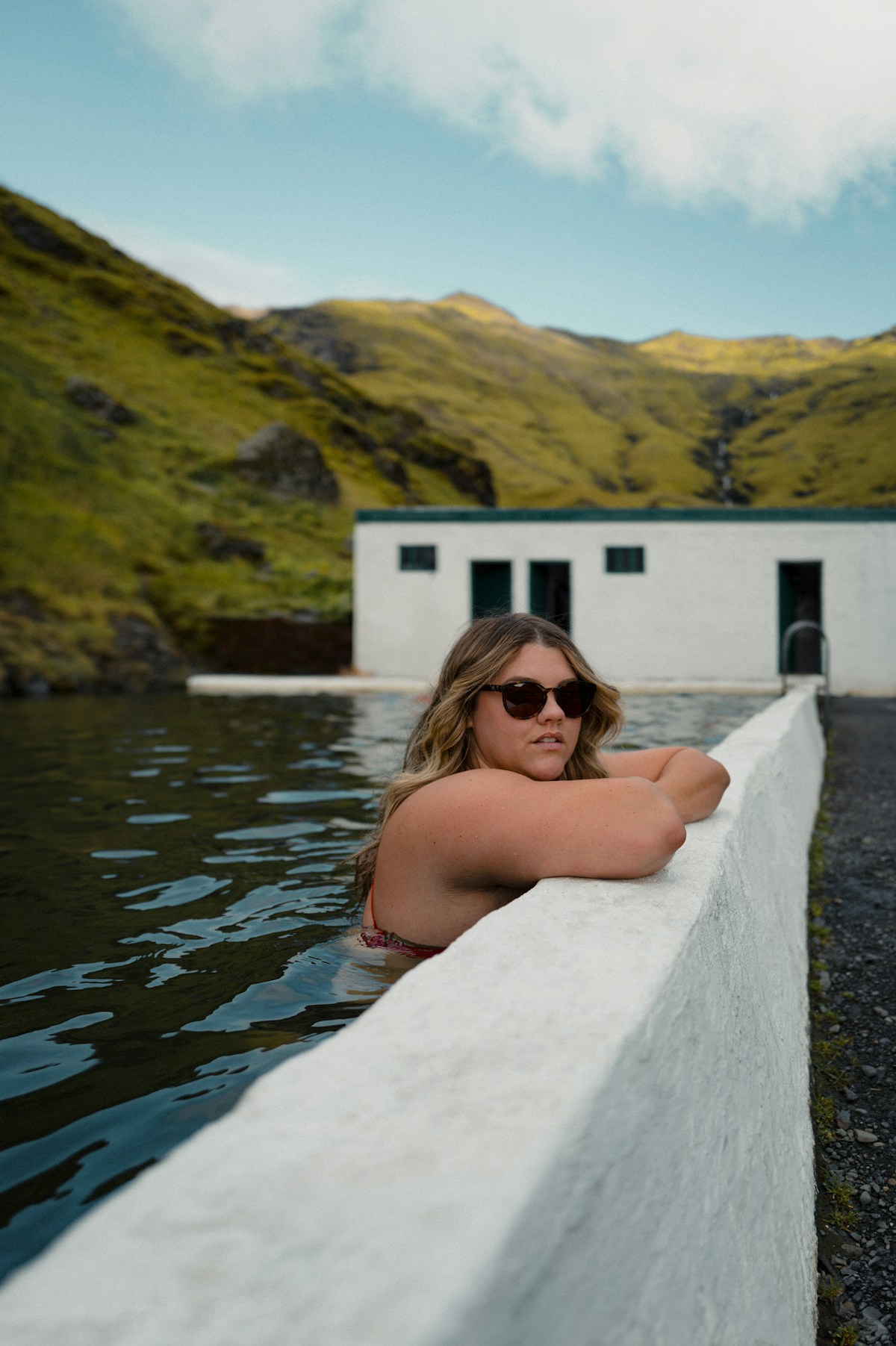
Iceland’s commercial lagoons get the marketing budgets - we cover the Blue Lagoon, Sky Lagoon, and the other big spas in our geothermal pools guide. This guide is about the rest: the hot rivers, hillside pots, and farm pools where the water is wild, the entry is free or nearly free, and you change behind a rock. Here’s the country’s best natural bathing, region by region. All prices approximate as of 2026.
Southwest & Golden Circle Area
Reykjadalur hot river - the famous one. From the car park in Hveragerði (45 minutes from Reykjavík; parking ISK 250/hour), hike 3 km up the steaming valley to a river warm enough to lie in. Wooden boardwalks and wind screens line the bathing stretch; the higher upstream, the hotter. Free. Year-round, but the trail needs microspikes November–March. Go before 10:00 or after 17:00 in summer to avoid the crowd.
Secret Lagoon (Gamla Laugin), Flúðir - Iceland’s oldest swimming pool (1891), a large natural-bottomed pool with a tiny erupting geyser beside it. Entry approximately ISK 3,800; open year-round. The most “natural-feeling” of the paid options near the Golden Circle.
Hrunalaug - a tiny stone-lined farm pool near Flúðir holding maybe six people, with an old sheep shed as a changing hut. The landowners ask approximately ISK 2,500 via an honesty box/QR code. Fragile and frequently overwhelmed - if it’s busy, come back later rather than crowding it.
South Coast
Seljavallalaug - a 25-metre pool built into a mountainside in 1923, fed by a warm trickle from the slopes above Eyjafjallajökull. A 15–20 minute walk from the car park off Route 242. Free; basic derelict changing rooms. The water is warm rather than hot (typically 20–30°C) and algae-green - you come for the setting, which is extraordinary.
Landmannalaugar pool - at the highland camp where the hot and cold streams merge, “the people’s pools” gave the place its name. Free; summer access only (F-roads or highland bus). Bathing after a day on the trails here is the full Icelandic experience - see our Landmannalaugar guide.
West & Snæfellsnes
Landbrotalaug - a famous hidden pot on the southern edge of Snæfellsnes: one tiny spring fits two people at ~38°C, with a slightly larger, cooler pool nearby. Free; rough track off Route 54, then a short walk. Zero facilities. Its size is the point and the problem - in summer you may queue.
Guðrúnarlaug, Dalir - a reconstructed saga-era turf-lined pool near Laugar, free, beside a hotel with a short walk in. An easy stop on the Route 60 drive toward the Westfjords.
Krauma, Borgarfjörður - small modern baths fed by Deildartunguhver, Europe’s most powerful hot spring. Approximately ISK 6,950. The polished option in the west.
Westfjords
The Westfjords have Iceland’s best density of free roadside pools:
- Hellulaug - a rock pool at ~38°C right by the shore near Flókalundur, ten metres from Route 62. Free, no facilities, view over Vatnsfjörður.
- Pollurinn, Tálknafjörður - three concrete pots on a hillside maintained by locals, free/donation, with simple changing sheds and fjord views.
- Reykjafjarðarlaug - a 1975 concrete pool plus a hotter natural turf pot behind it, beside Route 63 in Reykjarfjörður. Donation box.
- Drangsnes hot pots - three sea-wall hot tubs on the village shorefront in Drangsnes, free, with a changing house across the road. Open all year.
- Krossneslaug - the end-of-the-world one: a warm pool on a wild beach at the edge of Strandir, facing the open Arctic-bound sea. Approximately ISK 1,000 honesty box. The gravel road there (Route 643) is an adventure in itself.
North
Fosslaug - a small natural pool beside the Reykjafoss waterfall near Varmahlíð, free, a 10-minute walk from parking. One of the north’s best-kept simple pleasures.
Mývatn Nature Baths - the north’s Blue Lagoon equivalent at approximately ISK 6,990, smaller crowds, milky alkaline water. Covered fully in our geothermal pools guide. Note that wild bathing options around Mývatn itself have closed over the years (Grjótagjá cave is no longer permitted for bathing - look, don’t soak).
GeoSea, Húsavík - sea-water infinity baths over Skjálfandi bay, approximately ISK 6,590. Whales have been spotted from the water.
East
Vök Baths - floating pools in Lake Urriðavatn near Egilsstaðir, approximately ISK 6,990, with a cold-plunge hole into the lake itself. Pairs perfectly with Stuðlagil Canyon for the east’s best day.
Laugarvellir hot waterfall - a warm waterfall and pool in the highlands off the Kárahnjúkar road, free, summer only, high-clearance vehicle needed. For the committed.
Wild Bathing Rules
The unwritten code that keeps these places open: leave no trace (several springs have been closed by landowners over litter and human waste), pay the honesty boxes, don’t use soap in natural water, keep groups small and quiet, and never drive off marked tracks to get closer. Shower-before-bathing culture applies everywhere there’s a facility. And test before you commit - a spring that was 38°C in the guidebook can run hotter after a dry spell.
Browse Iceland tours - day trips, activity bookings, and multi-day packages across the country in one place.
Get travel insurance for Iceland - policies covering glacier hikes, F-road driving, and volcanic disruption.
Related Guides
- Geothermal pools in Iceland - Municipal sundlaugar, paid lagoons, and the full spectrum of geothermal bathing in Iceland
- Blue Lagoon Iceland - Iceland’s most famous geothermal spa: full guide to prices, booking, and what to expect
- Sky Lagoon Reykjavík - The modern alternative to the Blue Lagoon, 10 minutes from central Reykjavík
- Selfoss travel guide - Base town for Reykjadalur, the most accessible natural hot river from Reykjavík
- Lake Mývatn guide - Home of the Mývatn Nature Baths and the geothermal landscape of North Iceland
- Landmannalaugar guide - The highland hot spring camp: free geothermal pool set among rhyolite mountains