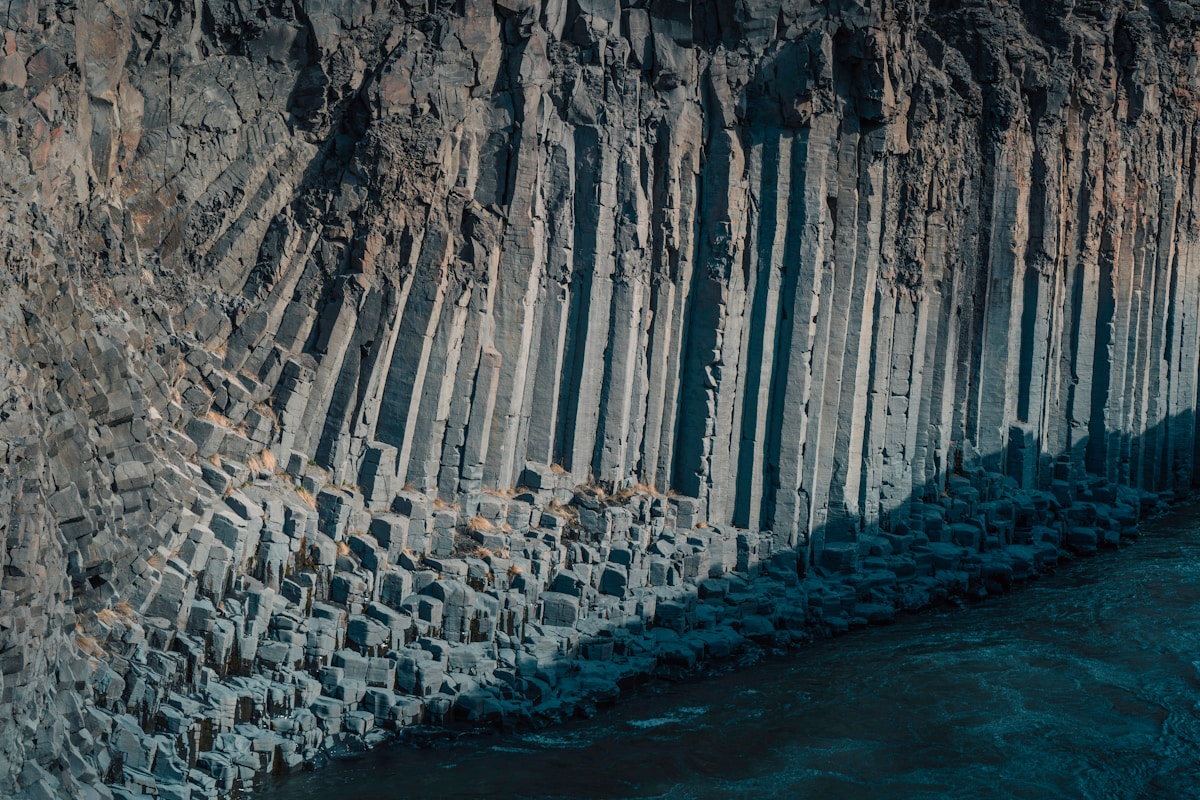
Stuðlagil is a gorge of hexagonal basalt columns - some over 20 metres tall - lining both banks of the Jökla river in Jökuldalur valley, East Iceland. Until the Kárahnjúkar hydro dam came online in 2007-2009, the Jökla was one of Iceland’s most powerful glacial rivers and the columns sat underwater, unknown. The reduced flow revealed the canyon, photos spread from 2016 onward, and it’s now one of the most photographed places in the country. We have zero hesitation calling it the single best stop in inland East Iceland.
Where It Is
Stuðlagil sits in Jökuldalur valley, off Route 923, which leaves the Ring Road about 40 km west of Egilsstaðir. From Egilsstaðir the drive to the west side car park takes approximately 50 minutes (70 km); from Mývatn, about 1 hour 45 minutes. Route 923 is gravel for much of its length but fine for any rental car in summer.
East Side vs West Side
This is the decision that defines your visit.
West side - the viewing platform at Grund. Drive Route 923 to the marked Stuðlagil car park at Grund farm. From there it’s a 5-minute walk and a descent of 239 metal steps to a platform looking into the canyon from above. Total time: 30–40 minutes. It’s free, fast, and fine if you’re tight on time - but you’re looking at the columns from across the river, and the platform angle flattens the scale.
East side - the river-level hike. Continue on Route 923 past the Klaustursel signs and cross the bridge over the Jökla. Two car parks serve the trail: from the first (before the bridge) the round trip is approximately 9.6 km; from the second it’s approximately 5.6 km. The track is broad, flat gravel - allow 1.5 to 2 hours of walking plus however long you spend at the canyon, which will be longer than you plan. You pass Stuðlafoss, a basalt-column waterfall that would be a destination in its own right anywhere else, before descending to the canyon rim and down among the columns themselves. This is where every famous Stuðlagil photo is taken.
If you only do one, do the east side. If you have a spare 40 minutes on top, the west platform makes a decent appetiser since you drive past it anyway.
When to Go: The Water Colour Question
The turquoise water is seasonal, and the mechanism is worth understanding so you’re not disappointed:
- June to early August - the Jökla runs clear blue-green, fed by spring water rather than glacial melt. This is peak Stuðlagil.
- Early August to October - the Hálslón reservoir upstream at Kárahnjúkar usually overflows, sending sediment-heavy glacial water down the valley. The river turns grey-brown. The columns are unchanged, but the postcard contrast is gone.
- Winter - the water clears again, but access becomes the problem: Route 923 can be icy or closed and the east trail is unmaintained. Check road.is and stick to the west platform unless conditions are unusually good.
The overflow timing varies year to year - in a heavy melt year it can start in late July. If the colour matters to you, June and July are the safe window.
Practical Details
- Cost: free. Parking at all three car parks is free as of 2026.
- Facilities: toilets at the Grund (west) car park in summer; nothing on the east side. No food - the nearest services are in Egilsstaðir or at the Skjödólfsstaðir farm shop on the Ring Road.
- Footing: the descent from the canyon rim to the columns on the east side is on rough rock and can be slippery when wet. The basalt by the water is smooth and the river is cold and fast - keep well back from the edge. People have needed rescue here.
- Drones: permitted under general Icelandic drone rules, but the canyon funnels wind unpredictably.
- Crowds: mid-morning to mid-afternoon in July sees a steady stream on the east trail. Before 09:00 or after 18:00 you may have the columns nearly to yourself - and summer evening light in the canyon is better anyway, since the gorge runs roughly east-west and midday sun flattens it.
Fitting It Into a Trip
Stuðlagil is a natural half-day from Egilsstaðir, pairing well with Vök Baths (floating geothermal pools on Lake Urriðavatn, approximately ISK 6,990 as of 2026) for the classic hike-then-soak day. Ring Road drivers heading between Mývatn and the east coast pass the Route 923 junction anyway - budget 3 to 4 hours total for the detour with the east side hike. For the wider region, see our East Fjords guide.
Browse Iceland tours - day trips, activity bookings, and multi-day packages across the country in one place.
Get travel insurance for Iceland - policies covering glacier hikes, F-road driving, and volcanic disruption.
Related Guides
- Egilsstaðir travel guide - The East Fjords’ main town - 50km from Stuðlagil and the best base for the area
- Things to Do in Egilsstaðir - Stuðlagil, Borgarfjörður Eystri puffins, and the full East Fjords circuit
- Ring Road Iceland road trip - Where Stuðlagil fits into a Ring Road circuit between Mývatn and Höfn
- Waterfalls guide Iceland - Iceland’s other major waterfall and canyon sites for context
- Lake Mývatn travel guide - 1 hour 45 minutes northwest - combining with Stuðlagil on a 2-day East Iceland loop