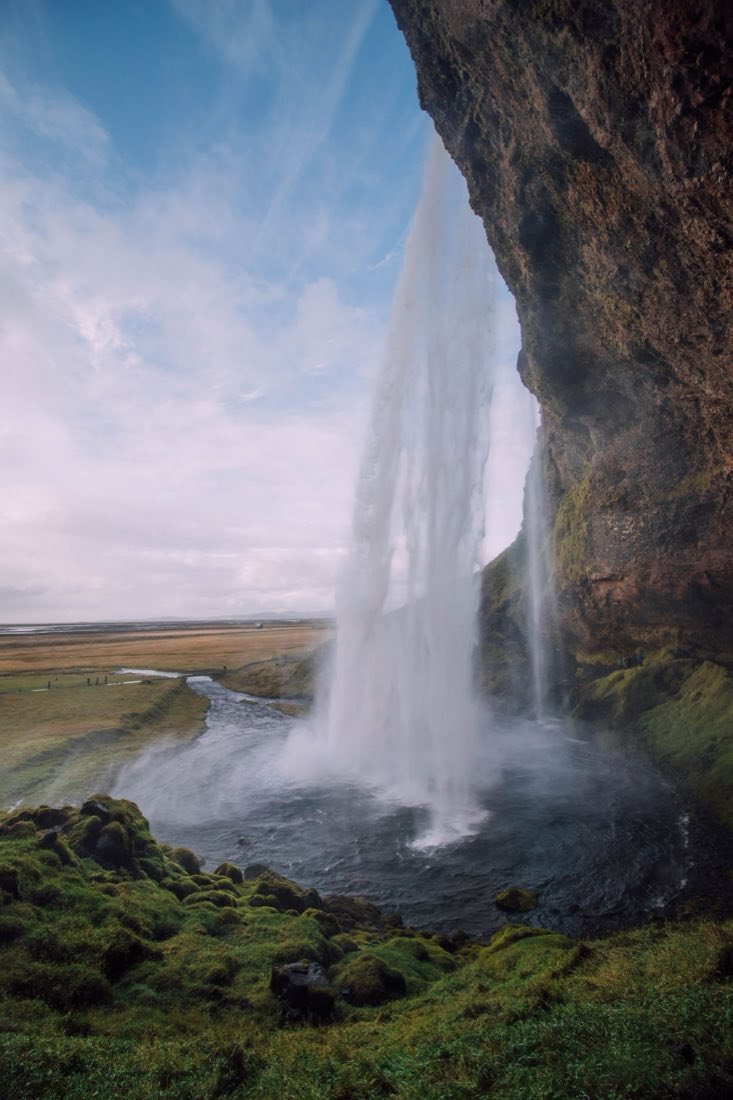
Seljalandsfoss is the waterfall most people picture when they think of south Iceland. The Seljalandsá river drops about 60 metres over an old sea cliff, and the overhang is deep enough that a path runs right behind the falling water. That single detail is why it ranks as one of the most photographed sights on the South Coast, and why it is crowded from mid-morning in summer.
Getting to Seljalandsfoss
The falls sit directly beside Route 1, roughly 130 km from Reykjavík, which is about 1 hour 45 minutes of driving. There is no need for a 4x4: the turn-off is on tarmac and the car park is a few hundred metres from the cliff. If you do not have a car, the falls are a standard stop on guided South Coast days, and you can compare South Coast tours from Reykjavík before picking one. If you are driving yourself, hire a car in Iceland and plan for a full day.
Parking and Costs
As of 2025, parking at Seljalandsfoss costs 1,000 ISK per car, payable through the Parka app or by following the checkit payment link at the car park. The lot is camera-monitored, so pay on the day. Entry to the falls themselves is free. There are toilets and a small food kiosk near the car park, and prices there run higher than in Hvolsvöllur, about 25 km west.
Walking Behind the Falls
A gravel path loops from the car park to the base of the cliff and continues around behind the water. The walk takes a few minutes, but the footing is wet, uneven and sometimes icy. You will be sprayed heavily, particularly when the river is high after rain or snowmelt, so keep camera gear in a dry bag. The reward is a view out through the water towards the lowlands, which is at its best in late-evening summer light, when the sun sits low enough to light the curtain from behind.
In winter the path is regularly closed because of ice build-up. Treat the closure as final: the rock is steep and slippery, and rescue is slow. Check road and conditions updates at Safetravel before you leave.
Gljúfrabúi: The Hidden Waterfall Next Door
A short walk north along the cliff base brings you to Gljúfrabúi, a second waterfall that falls inside a narrow cleft. From the path you can see only a thin ribbon of water. To see the whole thing you wade a few steps up the stream into the gorge, where the falls drop from above in a roughly 40 metre curtain. Waterproof boots help. Most visitors skip it, which makes it a calmer stop than the main falls.
Best Time to Visit
- Summer (June to August): The longest light and the most people. Aim for before 9am or after 6pm. The midnight-sun evenings are the best time for photographs.
- Spring and autumn: Fewer visitors, a high river and good rainbows on bright days.
- Winter: Ice builds around the pool and the path behind the falls is usually closed, but the view from the front, with snow on the surrounding fields, is striking. Daylight is short, so combine it with a sunrise start.
Nearby Stops and Where to Stay
Skógafoss is about 30 km east and makes the obvious pair, and Reynisfjara black sand beach follows another 60 km on. See Skógafoss for the next stop. If you want a slower trip, search hotels around Hella, hotels in Selfoss or stays in Vík and split the South Coast across two days.
For the route in full, read our South Coast drive and the Iceland waterfalls guide. Parking-payment details are on Parka.
Practical Tips
- Wear waterproof layers and shoes with real tread, not trainers.
- Bring a microfibre cloth for lenses.
- Stay on the marked path and do not climb the cliff.
- Combine the falls with the Golden Circle only if you start early; the two routes pull in opposite directions.
- Fuel up in Hvolsvöllur or Selfoss, because services thin out east of Skógar.
A Realistic Timing Plan
Most visitors lose time by treating Seljalandsfoss as a photo stop. A better plan is to arrive before 9am, walk the loop behind the falls first while the path is quiet, and then add Gljúfrabúi before the tour buses arrive. That takes about 75 minutes in total and leaves you ahead of the crowds at Skógafoss. If you arrive in the evening in summer, reverse the order: go to Skógafoss first, then finish here for the low sun shining through the water. In either case, check the wind direction on the day. A westerly pushes spray across the path and makes the walk behind the falls much wetter than a calm day, so pack an extra layer if the forecast shows strong wind.
Browse South Coast tours for guided days that include Seljalandsfoss, Skógafoss and Reynisfjara.