Iceland’s geology produces waterfalls in almost absurd abundance. Glacial meltwater, heavy rainfall, and the country’s steep-sided valleys mean water finds its way over ledges at practically every turn. On the South Coast alone, you can visit five significant waterfalls in a single day’s drive. In the north, Dettifoss is the most powerful waterfall in Europe. In the Westfjords, Dynjandi is perhaps the most beautiful.
This guide covers the major waterfalls in detail - what makes each one distinctive, practical logistics, photography notes, and how to combine them into a sensible route.
South Coast Waterfalls
Seljalandsfoss
Height: 60m | Entry: Free | Parking: ISK 800 as of 2026
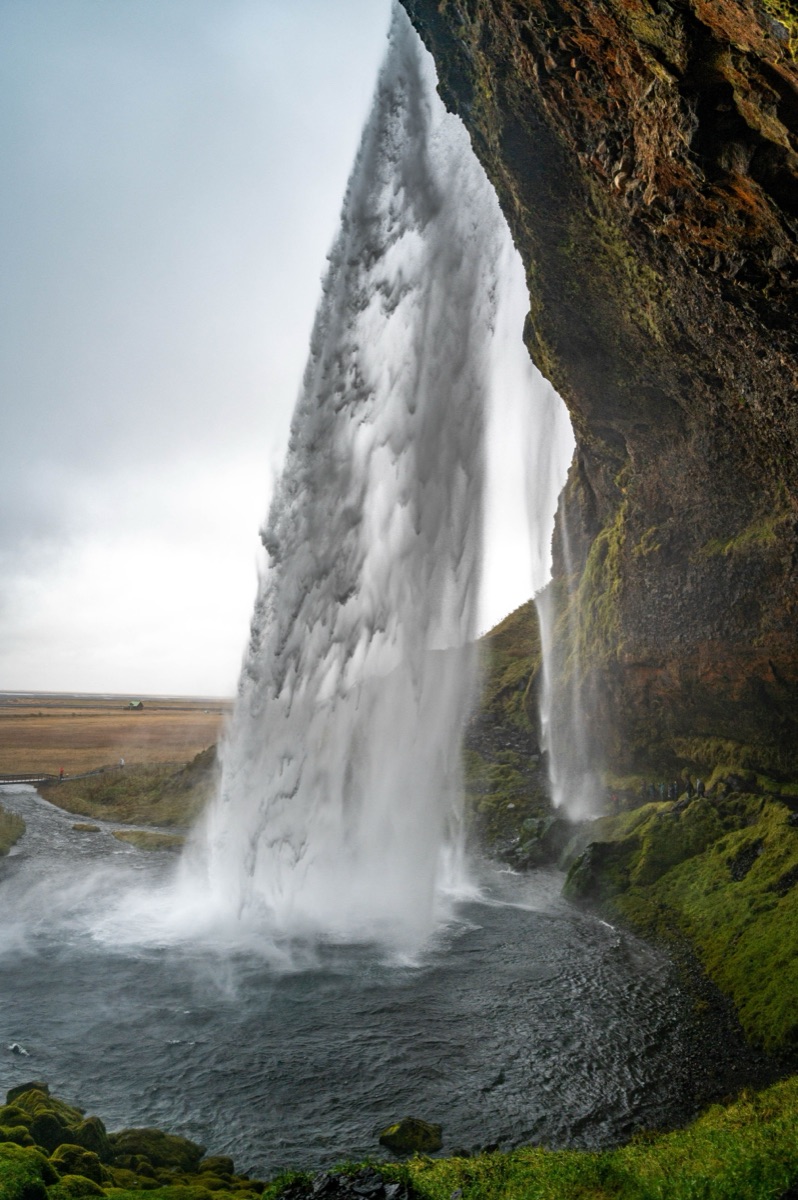
The most famous waterfall in Iceland for a reason: a path leads behind the curtain of water, allowing you to stand inside the waterfall and look out through it. The view from behind - the South Coast plain framed by white water - is unlike anything else in Iceland. The path is wet and slippery; waterproof footwear is non-negotiable.
Practical: Located just south of Route 1, clearly signposted. Open year-round, but the walk-behind path closes in icy conditions (typically December–February). Arrive before 9am or after 6pm in July–August to avoid crowds. The parking fee is paid at a machine in the car park.
Photography: The waterfall faces east, making morning light ideal. Shoot from inside the cave behind the falls for a natural frame, or from the base with a wide-angle to include the full height.
Don’t miss Gljúfrabúi: A 10-minute walk south from Seljalandsfoss leads to a hidden waterfall inside a gorge. You can peer in through a crack in the rock or wade into the gorge through the stream. Most visitors skip it. Worth the detour every time.
Skógafoss
Height: 62m | Width: 25m | Entry: Free | Parking: Free
A wide curtain of water that thunders into a pool at the base. On sunny mornings - especially from 9am to noon - rainbows form consistently in the spray. The waterfall is visible from the Ring Road, which tells you everything about its scale.
From the base, 527 steps (a signed staircase on the left side) lead to the top of the cliffs. The climb takes 10–15 minutes and reaches an observation platform with views back over the South Coast towards the sea and ahead along the river as it continues upstream. The view from the top is one of the best in Iceland on a clear day.
Practical: At the village of Skógar, approximately 30km east of Seljalandsfoss. The Skógar Folk Museum (approximately ISK 2,200 entry as of 2026) is adjacent - worth an hour for the turf house reconstruction and collection of Icelandic artefacts.
Kvernufoss addon: A 30-minute walk upstream from the Skógar car park reaches Kvernufoss - another walk-behind waterfall, usually empty. Same type of experience as Seljalandsfoss but quieter.
Gullfoss
Height: 32m total (two drops) | Entry: Free | Parking: ISK 750 as of 2026
Gullfoss sits at the end of the Golden Circle route and is a different type of spectacle from the South Coast falls: here, a massive volume of glacial water pours over two steps into a narrow canyon. The first drop (11m) leads immediately into a larger second drop (21m) that disappears into a gorge obscured by spray. Walking paths circle the top of the canyon with multiple viewpoints.
The key photography angle is from the lower viewing platform on the north side - you can get close to the roaring edge with spray covering your lens and jacket within seconds. Pack a microfibre cloth and a camera rain cover.
Context: Gullfoss was nearly converted into a hydroelectric dam in the early 20th century. A local farmer’s daughter, Sigríður Tómasdóttir, campaigned actively against the project and is credited with saving the falls. A statue of her stands at the site.
Öxará at Þingvellir
Height: ~10m | Entry: Free (national park parking ISK 750)
Modest by Icelandic standards but set in one of the country’s most significant landscapes - Þingvellir National Park, where Iceland’s parliament met for nine centuries and where the North American and Eurasian tectonic plates are visibly diverging. The Öxará river crosses the rift valley and drops over a small falls near the historic assembly site. The waterfall itself isn’t the main attraction; the context makes it worth including.
North Iceland Waterfalls
Godafoss
Height: 12m | Width: 30m | Entry: Free | Parking: Free
“Waterfall of the gods.” The name comes from the year 1000 AD, when the law-speaker Þorgeir Þorkelsson threw his pagan idols into the falls after Iceland converted to Christianity.
Godafoss sits directly on the Ring Road between Akureyri and Mývatn, making it an inevitable stop on any Ring Road itinerary. The horseshoe shape and double-tiered flow make it more impressive than its modest height suggests. The west bank viewpoint is generally considered the better composition; the east bank allows you to get close to the falls with a different angle.
Photography: A polarising filter intensifies the teal water colour dramatically. Early morning or late evening light comes from the west - ideal for the main viewpoint. Overcast days are excellent here.
Dettifoss
Height: 44m | Width: 100m | Entry: Free | Parking: Free
Europe’s most powerful waterfall by volume - 193 cubic metres of water per second on average, considerably more in spring snowmelt. Dettifoss is raw force. The spray cloud is visible from several kilometres away, and the sound is audible from the car park.
Unlike the aesthetically pretty South Coast falls, Dettifoss impresses through power and scale rather than elegance. The approach from the west bank (Route 862, sealed) gives the head-on view; the east bank (Route 864, unsealed - 4WD recommended) gives a slightly different angle.
Upstream: Selfoss (a different waterfall, 1km upstream from Dettifoss) is 10m tall and 70m wide - wide and relatively gentle. A 15-minute walk upstream. Below Dettifoss, Hafragilsfoss (2km downstream) is smaller but set in a narrow, dramatic canyon.
Getting there: From Mývatn, take Route 1 east then Route 862 north to Dettifoss - approximately 1 hour from Reykjahlíð.
West Iceland Waterfalls
Hraunfossar and Barnafoss
Entry: Free | Parking: Free
Two waterfalls side by side near Reykholt in the Borgarfjörður valley, each completely unlike anything else in Iceland.
Hraunfossar (“lava waterfalls”) consists of hundreds of small springs emerging from the base of a lava field along 900m of riverbank - the water seeps under the lava for kilometres and emerges here in a continuous, multi-streamed cascade. The effect is surreal: water appearing from solid rock across nearly a kilometre of river frontage.
Barnafoss is a more conventional falls 300m upstream - a narrow, rushing gorge waterfall. The name (“children’s falls”) comes from a local legend about two children who fell from a natural stone arch into the river, which has since been removed.
Both are accessible from the same car park near Húsafell, approximately 100km from Reykjavík. Worth combining with a visit to the Langjökull glacier (Húsafell is the departure point for glacier tours).
Glymur - Iceland’s Tallest Waterfall
Height: 198m | Entry: Free
Iceland’s highest waterfall sits at the head of Hvalfjörður fjord, roughly 45 minutes north of Reykjavík. Reaching it requires a 3–4 hour round-trip hike with a river crossing - a log bridge in summer (usually in place June–September), or a ford at low water. The trail is well-marked but includes steep sections and some scrambling.
The payoff is outstanding: the canyon is narrow and dramatic, the falls are twice as tall as Skógafoss, and crowds are a fraction of the South Coast sites.
Season: Best June–September when the log bridge is in place and the trail is manageable. In winter, the hike becomes a technical mountaineering route in places.
Westfjords Waterfalls
Dynjandi
Height: 100m | Width: 60m at base | Entry: Free | Parking: Free
Dynjandi is consistently described as Iceland’s most beautiful waterfall - and it’s hard to argue. The main fall fans out as it descends from 30m wide at the top to 60m wide at the base, creating a distinctive triangular curtain. Below the main drop, six smaller waterfalls cascade down the same hillside to the fjord.
There is no crowd problem here. The Westfjords are remote; Dynjandi requires 450km of driving from Reykjavík, with the last 50km on an unsealed road. Those who make the journey often describe the waterfall as their favourite thing they saw in Iceland.
Practical: Walk from the car park up past each smaller fall to the base of Dynjandi - 15 minutes, no fee, well-marked. Allow 45 minutes for the full stop. The Westfjords road trip covers the full regional itinerary.
Combining Waterfalls into a Route
South Coast Day Trip from Reykjavík: Seljalandsfoss → Gljúfrabúi → Skógafoss → Kvernufoss → (return or continue to Vík) Approximately 5–6 hours driving + stops. Works as a long day trip.
Golden Circle + Gullfoss: Þingvellir → Geysir → Gullfoss → (return to Reykjavík) 3–4 hours driving + stops. Natural half-day or full day.
North Iceland Waterfall Loop (from Akureyri): Godafoss → Route 862 → Dettifoss → Selfoss → Hafragilsfoss → return Approximately 3–4 hours with stops.
Multi-Day Waterfall Focus: Day 1: South Coast (Seljalandsfoss, Skógafoss, Gullfoss via inland route back) Day 2: West Iceland (Hraunfossar, Barnafoss, Glymur hike) Day 3: Westfjords (Dynjandi) - requires overnight Day 4–5: North (Godafoss, Dettifoss via Ring Road north)
Photography Tips
Polarising filter: Essential for waterfall photography. Reduces surface glare from water and rocks, deepens sky colour, and allows longer exposures in bright conditions.
Shutter speed: A slow shutter speed (1/4 to 2 seconds) creates the silky water effect commonly seen in waterfall photography. Use a tripod and neutral density filter in daylight. A faster shutter (1/500s+) freezes individual water droplets - effective at close range.
Protection: The spray radius at Skógafoss, Gullfoss, and Dettifoss extends 20–50m. Camera rain covers are strongly recommended. Bring lens cloths.
Timing: Most South Coast waterfalls face east or southeast - morning light (8–11am in summer) gives the best angle. Overcast days reduce harsh shadows and often produce better overall waterfall photography than direct sun.
Plan a Waterfall Road Trip
Ready to build an itinerary around Iceland’s waterfalls? See our dedicated Iceland waterfalls road trip for a day-by-day routing guide covering the South Coast, West Iceland, and the North in sequence.
Browse Golden Circle tours - guided day trips covering Þingvellir, Geysir, and Gullfoss with hotel pickup.
Compare car hire in Iceland - a 4WD or campervan gives the flexibility to explore at your own pace.
Browse Iceland tours - day trips, activity bookings, and multi-day packages across the country in one place.
Related Guides
- South Coast drive - Seljalandsfoss, Skógafoss, and Reynisfjara in one route guide
- Westfjords road trip - Dynjandi waterfall - the Westfjords’ most dramatic cascade
- Glymur waterfall hike - Iceland’s second-highest waterfall: hiking to the top via rope crossing and canyon trail
- Dettifoss - Europe’s most powerful waterfall by volume - on the Diamond Circle in North Iceland
- 7 days in Iceland itinerary - A week-long itinerary that covers the major South Coast and North Iceland waterfalls