North Iceland’s two most visited towns are only 90km apart, but they serve very different functions for travellers. Húsavík is a small fishing harbour that has built an international reputation around one thing: whale watching. Akureyri is a proper city - small by most standards, but by far the largest urban centre in north Iceland - with an airport, a range of restaurants, and the transport connections to explore the wider region. Choosing between them isn’t always an either/or decision, but understanding what each does well helps you allocate your nights in the north more effectively.
Overview
Húsavík (population around 2,300) sits on the western shore of Skjálfandi Bay, a cold, nutrient-rich body of water in northeast Iceland. The bay consistently attracts large numbers of humpback, minke, and blue whales, and the town has leaned fully into that reputation. The Húsavík Whale Museum is one of the best cetacean museums in Europe, the harbour is lined with wooden whale-watching vessels, and the surrounding landscape - mountains rising behind a cluster of brightly coloured buildings - is frequently photographed. Húsavík is also a logical step on the Diamond Circle, the north Iceland touring route that takes in Goðafoss, Mývatn, Ásbyrgi canyon, and Dettifoss.
Akureyri (population around 20,000) is north Iceland’s capital in all but name. It has an airport with multiple daily flights from Reykjavik, a pedestrian shopping street, Iceland’s second-largest botanical garden, and a ski resort. It sits at the head of Eyjafjörður, Iceland’s longest fjord, and is the natural base for anyone wanting to explore north Iceland without committing to a particular town for every night. Car rental agencies operate here, organised tours depart from here, and the accommodation options range from backpacker hostels to mid-range hotels.
Getting There and Around
Getting to Húsavík without a car is possible but not easy. There is no regular bus between Reykjavik and Húsavík, and the town’s own airport handles only limited charter traffic rather than regular scheduled services. The most practical approach from Reykjavik is to fly to Akureyri (40–60 minutes, from approximately 15,000 ISK one-way on Air Iceland Connect from Reykjavik domestic airport) and then drive the 90km to Húsavík in about an hour via Route 85. Alternatively, the full Ring Road drive from Reykjavik to Akureyri takes approximately 5 hours, and you could continue northeast from there the same day.
The drive between Húsavík and Akureyri is one of the more pleasant short drives in north Iceland - Route 85 follows the fjord coast before cutting inland, and the road is paved and straightforward in good conditions. There is no regular direct bus between the two towns, which means that, in practice, most visitors travelling between them independently use a hire car.
Akureyri itself is compact enough to explore on foot, but having a car makes the wider region accessible - Goðafoss is 40km east, Mývatn is about an hour’s drive, and Húsavík is 90km northeast.
Things to Do
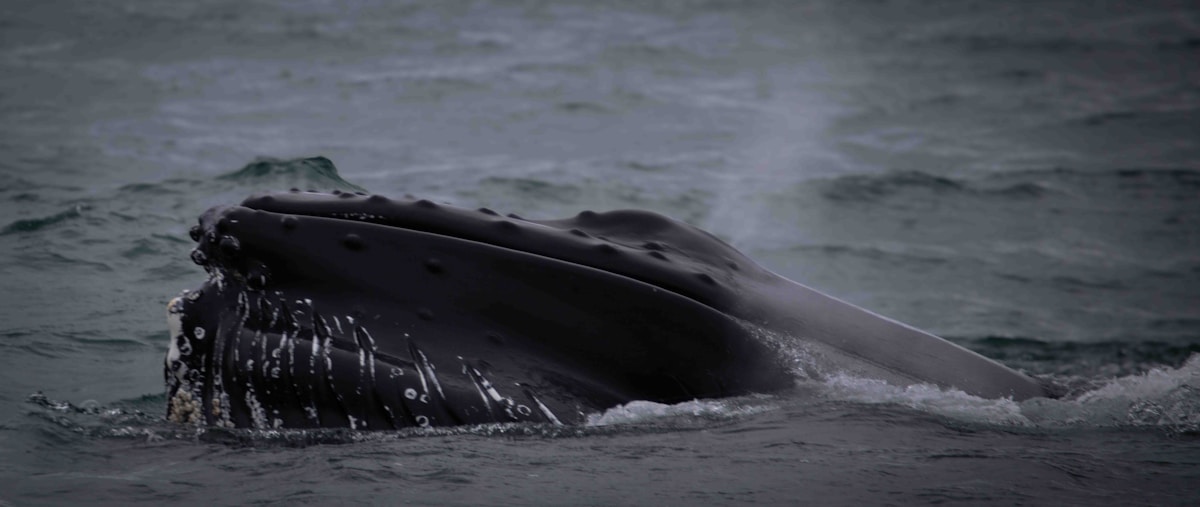
Húsavík’s primary reason for existing on most itineraries is whale watching, and the town does it very well. Skjálfandi Bay is one of the most reliable locations in Iceland for humpback whale sightings, particularly between May and September. Minke whales are also common, and blue whales - the largest animals on earth - are occasionally spotted here, which is rarer than at many other whale-watching locations. Tours operate on wooden schooners and modern RIB speedboats; prices start from around 10,500 ISK per adult for a RIB tour, rising to approximately 14,500 ISK for the traditional schooner option. The schooner tours are slower but offer more deck space and feel less rushed.
The Húsavík Whale Museum (entry approximately 2,500 ISK) is genuinely worth the time regardless of whether you’re doing a boat tour - the reconstructed skeletons are impressive, and the biology exhibits are more detailed than you might expect. GeoSea geothermal sea baths sit on the headland above the town, with entry around 5,500 ISK; the baths are smaller and quieter than the Mývatn Nature Baths but offer good views over the bay. The Tjörnes Peninsula, just north of Húsavík, has fossil cliffs with marine deposits that are accessible on a short walk. More to do around the area is covered in our Húsavík things to do guide and Húsavík day trips guide.
Akureyri’s offer is broader but perhaps less immediately dramatic. The city’s Botanical Garden (free entry) grows an unexpectedly large number of species given the latitude. The Akureyri Church - the landmark building visible from most of the town - offers free entry and a good view over the fjord. Goðafoss, 40km east on Route 1, is one of Iceland’s most accessible major waterfalls and costs nothing to visit. The Mývatn region (around an hour’s drive) is accessible as a day trip from Akureyri and rewards a full day. Whale watching tours also depart from Akureyri harbour, with prices around 11,000 ISK, though the bay here produces lower sighting rates than Skjálfandi. In winter, the Hlíðarfjall ski resort on the edge of Akureyri opens from December through April, with day passes from approximately 7,500 ISK. Our Akureyri things to do guide covers the full list.
Where to Stay
Search hotels in Húsavík on Booking.com
Húsavík has a modest but functional accommodation scene for a town of its size. North Iceland Guesthouse is a well-regarded option from around 22,000 ISK per night ($160). Fosshotel Húsavík is the main hotel, sitting above the town with bay views, starting from approximately 30,000 ISK per night ($218). A range of smaller guesthouses and apartments is also available from around 18,000 ISK per night. Availability is tight in July and early August - the town’s accommodation pool is small enough that even a single large tour group arriving simultaneously can affect availability. Book ahead if you’re visiting in peak season. Our Húsavík where to stay guide has the latest options.
Akureyri’s accommodation selection is considerably broader. Akureyri Backpackers offers dorm beds from approximately 5,500 ISK per night ($40) - a meaningful budget option in a country where accommodation costs add up quickly. Icelandair Hotel Akureyri is the main mid-range choice, starting from around 28,000 ISK per night ($204). A range of guesthouses and apartments rounds out the market from around 22,000 ISK upward. The city fills up in summer but not as quickly as Húsavík on a per-bed basis - there’s more supply relative to demand. See our Akureyri where to stay guide for full coverage.
Search hotels in Akureyri on Booking.com
Food and Drink
Húsavík has a limited restaurant scene, which is worth knowing in advance. The town has around five restaurants at most, and not all are open outside the peak summer season. Naustið is the seafood-focused option, with mains ranging from approximately 4,500 to 6,000 ISK and a strong fish soup on most days. Gamli Baukur is the classic Húsavík choice - a harbourside spot with a reliable menu and views over the whale-watching vessels at around 4,000 ISK for mains. If you’re spending two or more nights in Húsavík, you’ll cover the options fairly quickly. Our Húsavík best restaurants guide has current listings.
Akureyri’s restaurant scene is appreciably more varied. Rub23 - a sushi and grill hybrid that works better than the combination suggests - is the most consistently recommended restaurant in town, with mains around 4,500 ISK. Strikið occupies a harbour-view position and covers a broad menu at similar prices. Bautinn is a long-running Akureyri institution for meat dishes, and Greifinn serves pizza and grills at more casual prices. The city also has bakeries, cafés, a well-stocked Nettó supermarket for self-catering, and Iceland’s only geothermal heated open-air swimming pool at the Sundlaug Akureyrar (Akureyri swimming pool, entry approximately 1,200 ISK). The full restaurant rundown is in our Akureyri restaurants guide.
Budget Comparison
Akureyri offers more budget flexibility overall. The presence of a backpacker hostel, a supermarket, and a range of mid-range restaurants means you can control daily costs more effectively. Húsavík’s limited options mean less competition and slightly higher average prices for comparable meals and rooms.
The more significant budget line in Húsavík is the whale watching itself - a schooner tour at 14,500 ISK per adult, combined with GeoSea entry at 5,500 ISK, adds around 20,000 ISK per person to your day before accommodation or food. If whale watching is your primary reason for coming north, that cost is what you’re budgeting around, and Húsavík is simply where it’s done best. If whale watching is a secondary interest, the Akureyri harbour tours at 11,000 ISK are a cheaper option, with the understanding that sighting rates are lower.
Season Consideration
The whale watching season in Húsavík runs year-round, but the window that matters is May through September. During these months, the success rate for humpback and minke whale sightings is high - operators typically quote rates above 95% for May through August. Outside that window, humpback sightings drop off significantly, and tour frequency reduces. If whale watching is the reason you’re coming to Húsavík, visiting between May and late August gives you the best odds.
Akureyri is a year-round destination. The ski season at Hlíðarfjall runs December through April, making winter a legitimate reason to visit rather than simply tolerating it. Northern lights viewing is good here from October through March - the surrounding mountains and fjord create a more dramatic backdrop than flat lowland terrain. The midnight sun in June sees the sun above the horizon for essentially the full 24-hour period, with the sky never truly darkening between late May and mid-July.
The Verdict
These two towns work well together rather than as substitutes for each other, and many travellers in north Iceland visit both on the same trip - Húsavík is 90km from Akureyri, which is a reasonable day excursion in either direction.
Choose Húsavík as your primary base if whale watching is one of your main reasons for coming to Iceland, if you want a quieter and more focused experience than a city offers, or if you’re building an itinerary around the Diamond Circle that passes through the northeast.
Choose Akureyri as your primary base if you want north Iceland’s transport connections and airport access, more restaurant and accommodation options, easier access to Goðafoss and the Mývatn region, or if skiing in winter is on the agenda.
If you have four or more nights in north Iceland, splitting your time between both towns is a sensible approach. Fly into Akureyri, spend a day or two in the city and at Goðafoss, then drive to Húsavík for a whale watching tour and a night or two before continuing the Diamond Circle.
More on each: Húsavík city guide and Akureyri city guide.
Book Húsavík whale watching tours - traditional oak boat and high-speed RIB options from the harbour.
Compare car hire in Iceland - a 4WD or campervan gives the flexibility to explore at your own pace.
See Also
- Húsavík city guide - Full guide to the whale watching capital: logistics, tours, and what else to do
- Akureyri city guide - North Iceland’s main hub: skiing, Botanical Garden, and day trips
- Whale watching in Iceland - Húsavík vs Reykjavík vs Dalvík: which whale watching port is right for you
- Lake Mývatn guide - Equally accessible from both Húsavík and Akureyri
- 7 days in Iceland itinerary - A sample itinerary showing how north Iceland fits into a week-long trip
More Iceland Comparisons
- Reykjavík vs Akureyri — Iceland’s capital versus the north Iceland hub
- Mývatn vs Reykjanes — Northern geothermal region versus the Blue Lagoon peninsula
- Seyðisfjörður vs Siglufjörður — Two scenic small towns off the main tourist track
- Vík vs Höfn — Two south coast Ring Road overnight bases