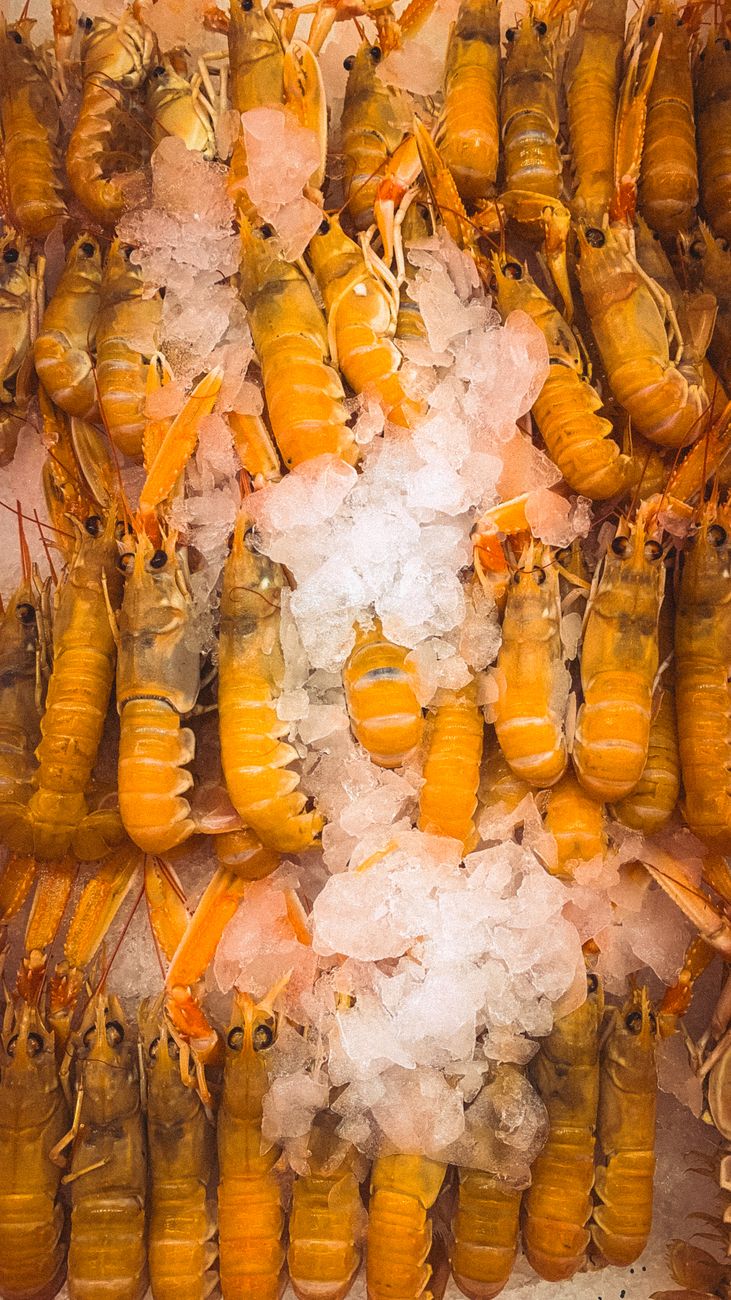
Iceland is a fishing nation with one of the most productive marine areas in the world. The combination of cold, nutrient-rich North Atlantic water and responsible fishing practices makes Icelandic seafood a centrepiece of the cuisine. When you eat fish and seafood in Iceland, you’re often eating what was caught the same day.
Langoustines — Iceland’s Jewel
Icelandic langoustines (humar in Icelandic, often marketed as “Icelandic lobster”) are the most prized seafood product in the country. They are caught mainly in the Suðurlón fjord near Höfn in southeast Iceland and are known for their sweet, delicate flavour.
Höfn — the langoustine capital: This small town on the edge of Vatnajökull is the hub of Iceland’s langoustine cuisine. Restaurants like Pakkhús serve langoustines in every form — grilled, in soup, with garlic butter, as tapas.
- Price in Höfn: ISK 4,000–7,000 for a langoustine main course (as of 2026)
- Price in Reykjavík: ISK 5,500–9,000 — significantly higher due to transport costs
The Langoustine Festival (Humarhátíð) in Höfn takes place each year in late June — a local event built around the catch, with concerts, tastings and boat tours.
Cod — the Classic Icelandic Fish
Icelandic cod (þorskur) is sought after worldwide. Iceland is one of the largest cod exporters, and local restaurants serve it in many forms:
- Fish and chips: Not traditionally Icelandic but widely available in Reykjavík as an affordable meal (ISK 2,500–3,500)
- Pan-fried cod: In better restaurants, served with Icelandic sides (ISK 4,000–6,500)
- Harðfiskur (dried fish): A traditional everyday snack — dried cod eaten plain or spread with butter. Available in supermarkets and as a travel snack at the airport.
Harðfiskur is a genuinely Icelandic product — lightweight, high in protein, intensely flavoured. Worth trying even if it sounds unappealing.
Halibut and Other White Fish
Halibut (lúða) appears regularly on Icelandic menus. Firm white fish with a mild flavour that pairs well with lemon-butter sauces. Price: approximately ISK 4,500–7,500 per portion.
Ocean perch (karfi) and redfish are less well known but available in good fish restaurants.
Salmon and Arctic Char
Wild Icelandic salmon is a delicacy — genuine wild salmon from Icelandic rivers is rare and expensive. Most restaurants serve farmed salmon, which is less distinctive. Smoked salmon (reyktur lax) is popular as a starter and in sandwiches.
Arctic char (bleikja): This fish from Icelandic mountain waters has a fine, slightly sweet flavour and is a better choice than farmed salmon where available. Found in good restaurants, particularly outside Reykjavík.
Whale — a Contested Choice
Whale meat appears on the menus of some Icelandic tourist restaurants. Icelandic whaling is internationally disputed and criticised by many conservation organisations. Whale-watching tour operators explicitly ask visitors not to eat whale, as the practice harms the tourism industry.
We note this is a personal decision but flag the wider debate.
Best Seafood Restaurants
Reykjavík:
- Messinn: Specialist in fish pans, consistently popular (ISK 4,000–6,500)
- Sægreifinn (The Sea Baron): No-frills lobster soup directly at the harbour (ISK 1,500–2,500) — one of the cheapest places for genuine Icelandic seafood
- Fiskmarkaðurinn (Fish Market): Upscale Icelandic-Asian fusion focused on seafood
Outside Reykjavík:
- Pakkhús in Höfn: The best langoustines in Iceland
- Gamla Höfnin in Húsavík: Fresh north Iceland fish at the fishing harbour
- Við Pollinn in Ísafjörður: Best seafood in the Westfjords
Markets and Supermarkets
The Kolaportið flea market in Reykjavík (weekends) has fresh and smoked fish at lower prices than restaurants. Bónus and Krónan have good fish counters for self-catering.
Take a Seafood Food Tour of Reykjavík
A guided food tour is the best way to navigate Reykjavík’s seafood scene with confidence. Tours typically include the lobster soup at Sægreifinn on the Old Harbour, a stop at the fish counter at Kolaportið, and one or two tastings at modern Icelandic restaurants — covering the full range from the traditional (harðfiskur with butter) to the contemporary (langoustine in Nordic preparations). A local guide explains why cold Atlantic water produces the flavour it does, and which preparations do justice to each species. Prices start from approximately ISK 12,000.
Browse Reykjavík food tours — guided tastings including Icelandic seafood, market visits, and Old Harbour walks.
Get travel insurance for Iceland - policies covering glacier hikes, F-road driving, and volcanic disruption.
Plan Your Stay
Find hotels in Iceland — search accommodation across all budgets in Iceland.