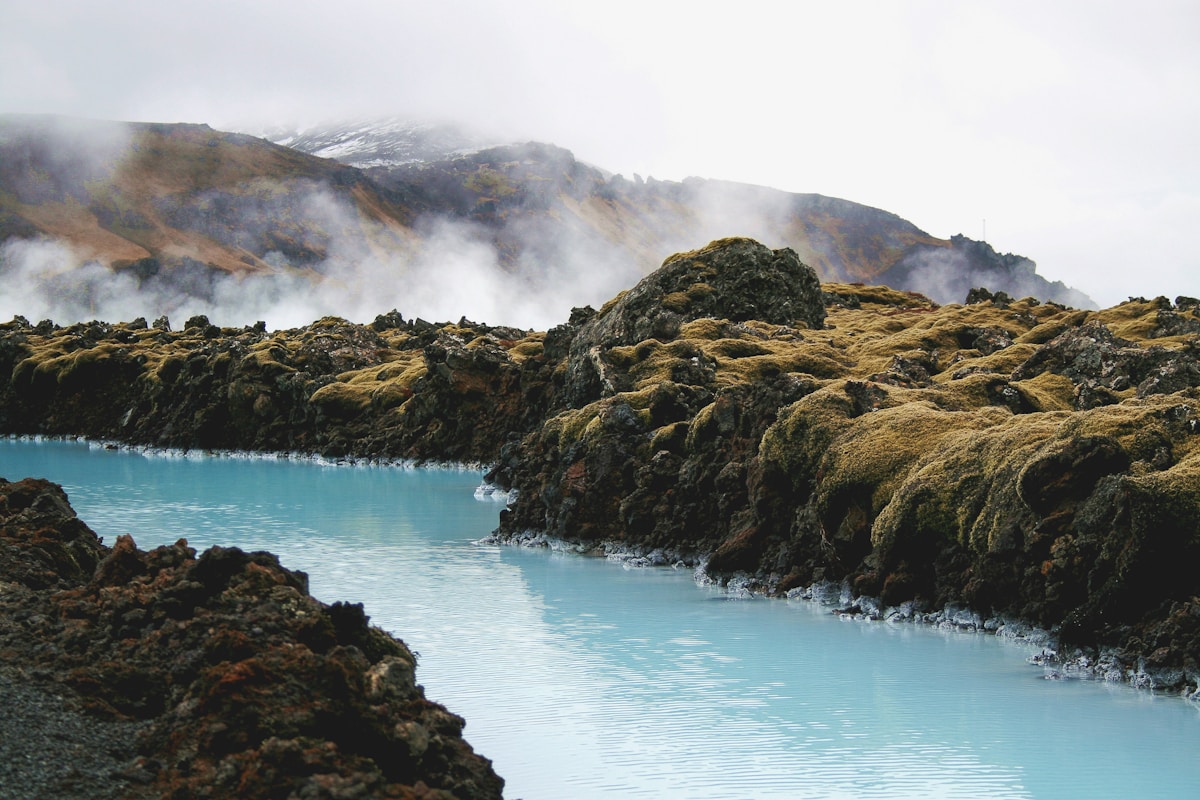
North Iceland is Iceland done differently. Where the south coast draws crowds to Skógafoss and Jökulsárlón, the north runs quieter - whale-watching boats departing wooden harbours, sulphur vents steaming over alien lava fields, and a canyon big enough to have inspired the elves’ capital in Icelandic legend. The Diamond Circle connects the region’s highlights in a roughly 250km loop from Akureyri, Iceland’s second city, through Húsavík and across the geothermal plateau around Mývatn. Three days is the right pace. Four is better.
Getting to North Iceland
Akureyri is roughly 390km from Reykjavík on Route 1 - a 4.5-hour drive direct. The Holtavörðuheiði highland section can be slow in poor weather, so add buffer time in spring or autumn.
Alternatively, Air Iceland Connect flies Reykjavík Domestic to Akureyri in 45 minutes, from around ISK 12,000–22,000 one way depending on season. Hiring a car in Akureyri rather than driving from Reykjavík saves 8 hours of transit driving if you’re focused on the north.
Book a rental car in Iceland early - Akureyri has fewer hire outlets than Reykjavík, and summer availability tightens fast.
Day 1: Akureyri
Driving: Mostly on foot. Time: full day.
Akureyri sits at the head of Eyjafjörður, Iceland’s longest fjord, with mountains rising steeply on both sides and a surprisingly mild microclimate for 65°N. The old town clusters below the landmark church - Akureyrarkirkja, designed by Guðjón Samúelsson - and is small enough to cover in a long afternoon.
Old town and harbour: The pedestrianised shopping street Hafnarstræti runs parallel to the harbour and has the best independent coffee shops in North Iceland. Bláa Kannan café (the blue tin building) is a local institution. The harbour area is lively in summer with fishing boats and the occasional whale-watching vessel departing from the pier.
Botanical Garden (Lystigarðurinn): One of the world’s northernmost botanical gardens, free to enter, and genuinely impressive for its latitude. Open daily from June–October, dawn to dusk. Roses, birch trees, and hundreds of plant species thrive in the sheltered fjord climate. Worth 45–60 minutes.
Whale watching from Dalvík: Dalvík is a small fishing village 40km north of Akureyri (35 minutes on Route 82). It’s a quieter departure point for whale-watching than Húsavík but the same species appear in Eyjafjörður - humpbacks, minkes, and white-beaked dolphins. Arctic Sea Tours operates from Dalvík, with tours from approximately ISK 12,000–15,000 per person as of 2026. The advantage over Húsavík: smaller boat numbers and a more local atmosphere.
Where to eat in Akureyri:
- Strikið - rooftop restaurant overlooking the fjord, mains approximately ISK 3,500–6,500. Reliable lamb and fresh fish.
- Rub23 - sushi and grilled meats, popular with locals, mains ISK 3,000–5,500.
- Brynja - legendary Icelandic ice cream parlour, open since 1939. Queue is normal; worth it.
Where to stay in Akureyri:
- Hótel Kea - the classic choice, central location, doubles from approximately ISK 32,000–48,000 per night.
- Icelandair Hotel Akureyri - reliable mid-range, harbour views available, doubles from approximately ISK 26,000–40,000.
Day 2: Húsavík and Ásbyrgi
Driving: Akureyri → Húsavík 90km (1 hr 10 min on Route 85). Húsavík → Ásbyrgi 60km (50 min). Return: 150km to Akureyri or continue to Mývatn (see below).
Húsavík built its reputation on whale watching and has doubled down on it. The GeoSea geothermal sea baths opened in 2018 and gave the town a second draw, and the Húsavík Whale Museum is among the best in Europe. The combination makes Húsavík a comfortable full-day destination.
Whale watching: Húsavík’s sheltered bay funnels large numbers of humpback whales close to shore through summer, making it one of the most reliable whale-spotting locations in the North Atlantic. Multiple operators depart from the wooden pier - North Sailing and Gentle Giants are the largest, with tours from approximately ISK 14,000–16,000 per person for a 3-hour trip as of 2026. Book ahead in July when demand peaks. Success rate for whale sightings is typically above 95% in June–August; operators usually offer a free follow-up trip if no whales appear.
GeoSea Geothermal Sea Baths: Situated on a headland above the harbour, the baths use naturally hot seawater (38–39°C) in two infinity pools with views over the bay toward Kinnarfjöll mountains. Entry approximately ISK 4,500–5,500 per adult as of 2026 (verify current price at geosea.is). Far less crowded than the Blue Lagoon and set in a more dramatic landscape. Towel hire available. Open daily 10:00–23:00 in summer.
Húsavík Whale Museum: Located in a renovated slaughterhouse in the harbour area, the museum displays several full whale skeletons including a rare blue whale skeleton - one of only a handful on public display globally. Entry approximately ISK 2,500 per adult as of 2026. Well worth 90 minutes.
Ásbyrgi Canyon: 60km north of Húsavík on Route 85 at the north end of Jökulsárgljúfur canyon. Ásbyrgi is a horseshoe-shaped canyon roughly 3.5km long and 500m wide, with 100m basalt walls on three sides and a forest floor carpeted with birch, willow, and wildflowers. The origin - whether from a catastrophic glacial flood or volcanic jökulhlaup - remains debated, but the scale is astonishing. A short trail (1km) leads to a viewpoint overlooking the inner forest pool (Botnstjörn). The Eyjan rock island in the centre of the canyon is accessible via a 30-minute return walk. Free access.
In Norse mythology, Ásbyrgi was said to be where Odin’s eight-legged horse Sleipnir left a giant hoofprint. The local elves’ settlement is considered one of the most significant in Iceland according to traditional belief.
Where to stay - option A: Return to Akureyri (150km, 2 hours).
Where to stay - option B: Continue south to Mývatn (115km from Ásbyrgi, 1 hr 30 min) and base there for Day 3.
Day 3: Mývatn
Driving: Húsavík/Ásbyrgi → Mývatn 115km (1 hr 30 min) or from Akureyri 100km (1 hr). Time: full day.
Mývatn (literally “Midge Lake”) is a shallow volcanic lake in one of Iceland’s most geothermally active zones. The area packs an extraordinary density of geological features into a 40km radius - sulphur fields, lava formations, pseudo-craters, and geothermal baths. Despite the midges (worst July–August - bring a head net), it’s among Iceland’s most compelling landscapes.
Námaskarð (Hverir): The sulphur field on the ridge east of Mývatn is one of Iceland’s most alien environments. Mudpots boil at temperatures above 100°C, steam vents blast through yellow and orange ground, and the entire ridge smells of sulphur. Free access, open year-round - the ground is unstable in places, stay on marked paths. 20–30 minutes is enough for most visitors, though photographers will want longer.
Dimmuborgir: A field of dramatic lava formations east of the lake, created when a lava river flowed over a wetland 2,300 years ago, leaving hollow towers, arches, and collapsed tubes. Several marked trails run through the formations - the Church Trail (1.4km loop) is the most atmospheric and passes the largest arch. Free access, open year-round.
Mývatn Nature Baths: The northern alternative to the Blue Lagoon, and preferred by most who’ve done both. The milky blue geothermal water sits at 36–40°C in a large pool with views over the surrounding lava fields. Entry approximately ISK 5,500–6,500 per adult as of 2026 (verify at myvatnnaturebaths.is). Open daily 09:00–24:00 in summer (reduced hours off-season). Quieter and more scenic than the Blue Lagoon, and a fraction of the queuing.
Grjótagjá Cave: A small lava cave with a crystal-clear geothermal pool inside, 4km east of the Mývatn Nature Baths on Route 860. Swimming is prohibited (water temperature is now too hot - around 50°C since volcanic activity increased in the 1970s and 80s), but the cave is visually spectacular - turquoise water lit by the cave entrance, surrounded by smooth lava walls. Free access, short walk from a roadside parking area.
Where to stay at Mývatn:
- Hótel Gígur - lakeside hotel, doubles from approximately ISK 35,000–55,000. The most atmospheric option, breakfast included.
- Vogafjós Guesthouse - farm guesthouse on the lake, cows visible from the restaurant, doubles from approximately ISK 28,000–40,000. Excellent farmhouse breakfast.
- Mývatn campsite - municipal site at Reykjahlíð, from approximately ISK 2,500 per person. Well-positioned for day trips.
Optional Extension: Dettifoss and Goðafoss
Dettifoss: 60km east of Mývatn on Route 1 then Route 862 (55 min). Goðafoss: 50km west of Mývatn toward Akureyri on Route 1 (45 min).
Dettifoss is Europe’s most powerful waterfall by flow rate - approximately 193 cubic metres per second on average, thundering 44m into the Jökulsárgljúfur canyon below. The scale is overwhelming at close range. Route 862 East (gravel) gives the better viewpoint on the east bank; Route 862 West (paved) is easier but the west-bank viewpoint is more distant. Free access. Allow 1.5–2 hours return from parking.
Goðafoss - the Waterfall of the Gods - is a wide, curved falls on the Skjálfandafljót river. In 1000 CE, the Law Speaker Þorgeir Ljósvetningagoði is said to have thrown his Norse idols into the falls when Iceland adopted Christianity. The twin falls are about 12m high and 30m wide, and unlike Dettifoss, you can get close to the brink on well-maintained paths on both banks. Free access, parking on Route 1.
Route Summary
| Day | Route | Approx. Driving | Key Stops |
|---|---|---|---|
| 1 | Arrive Akureyri | - | Old town, botanical garden, Dalvík whale watching |
| 2 | Akureyri → Húsavík → Ásbyrgi | 150km | Whale watching, GeoSea, Ásbyrgi canyon |
| 3 | Ásbyrgi/Húsavík → Mývatn | 115km | Námaskarð, Dimmuborgir, Nature Baths, Grjótagjá |
| +1 (opt) | Mývatn → Dettifoss → Goðafoss → Akureyri | 180km | Dettifoss, Selfoss, Goðafoss |
Driving Distances at a Glance
- Akureyri → Húsavík: 90km, 1 hr 10 min
- Húsavík → Ásbyrgi: 60km, 50 min
- Ásbyrgi → Mývatn (via Route 87/Route 1): 115km, 1 hr 30 min
- Mývatn → Dettifoss (Route 1 + 862 East): 60km, 55 min
- Mývatn → Goðafoss → Akureyri: 80km, 1 hr
Best Season and Road Conditions
June–August is the optimal window - all roads open, whale-watching season at peak, and midnight sun means you can drive and sight-see well into the evening.
May and September work well with fewer tourists. Some highland access roads may not be fully open in May. September offers autumn colour and a chance of northern lights from late August onward.
Winter (October–April): The Diamond Circle is driveable in good conditions, but Hverir and some Mývatn viewpoints can be icy, and Ásbyrgi sees limited visitor traffic. The reward: fewer people, dramatic winter light, and near-certain northern lights visibility from November through March if skies clear. Check road.is daily in winter before any driving.
Midges at Mývatn: July is peak season for the lake’s famous midges (actually non-biting chironomid midges, not the Scottish variety). A head net costs around ISK 1,000–2,000 at local petrol stations and is worth every króna.
Budget Breakdown per Day
| Expense | Budget (ISK) | Mid-range (ISK) |
|---|---|---|
| Accommodation | 5,000–8,000 (camping) | 28,000–45,000 (hotel) |
| Meals | 4,000–7,000 | 8,000–14,000 |
| Whale watching | 14,000–16,000 | 14,000–16,000 |
| GeoSea / Nature Baths | 4,500–6,500 | 4,500–6,500 |
| Fuel (per day, 100km avg) | approx. 3,500–4,500 | approx. 3,500–4,500 |
| Attractions (museums, entry) | 0–2,500 | 2,500–5,000 |
Whale watching is the big fixed cost regardless of budget tier. Most other attraction entry (Dimmuborgir, Ásbyrgi, Goðafoss, Grjótagjá, botanical garden) is free. Factor the Nature Baths or GeoSea as a per-person entry cost, not a daily cost.
Practical Notes
Fuel: Akureyri, Húsavík, and Reykjahlíð (Mývatn) all have petrol stations. Fill up in Akureyri or Húsavík before heading to Dettifoss - the road to the falls has no services.
Phone signal: Good in Akureyri and Húsavík, reasonable around Mývatn, absent in the Ásbyrgi/Dettifoss corridor. Download offline maps before leaving Húsavík.
Booking ahead: In July, Húsavík whale-watching tours and Mývatn Nature Baths slots can fill 1–2 weeks out. Book before you arrive.
Car hire: Akureyri airport has Hertz and Enterprise desks. Reykjavík operators often allow one-way drop-offs in Akureyri for a surcharge. Confirm with your hire company before booking.
Related Guides
- Ring Road Iceland - The Diamond Circle links directly to the Ring Road; northern Iceland is covered in detail as part of the full circuit
- Akureyri city guide - Restaurants, accommodation, and things to do in North Iceland’s capital
- Húsavík guide - Whale watching operators, GeoSea practical details, and where to eat
- Mývatn guide - Full breakdown of every geothermal site around the lake, with opening hours and prices