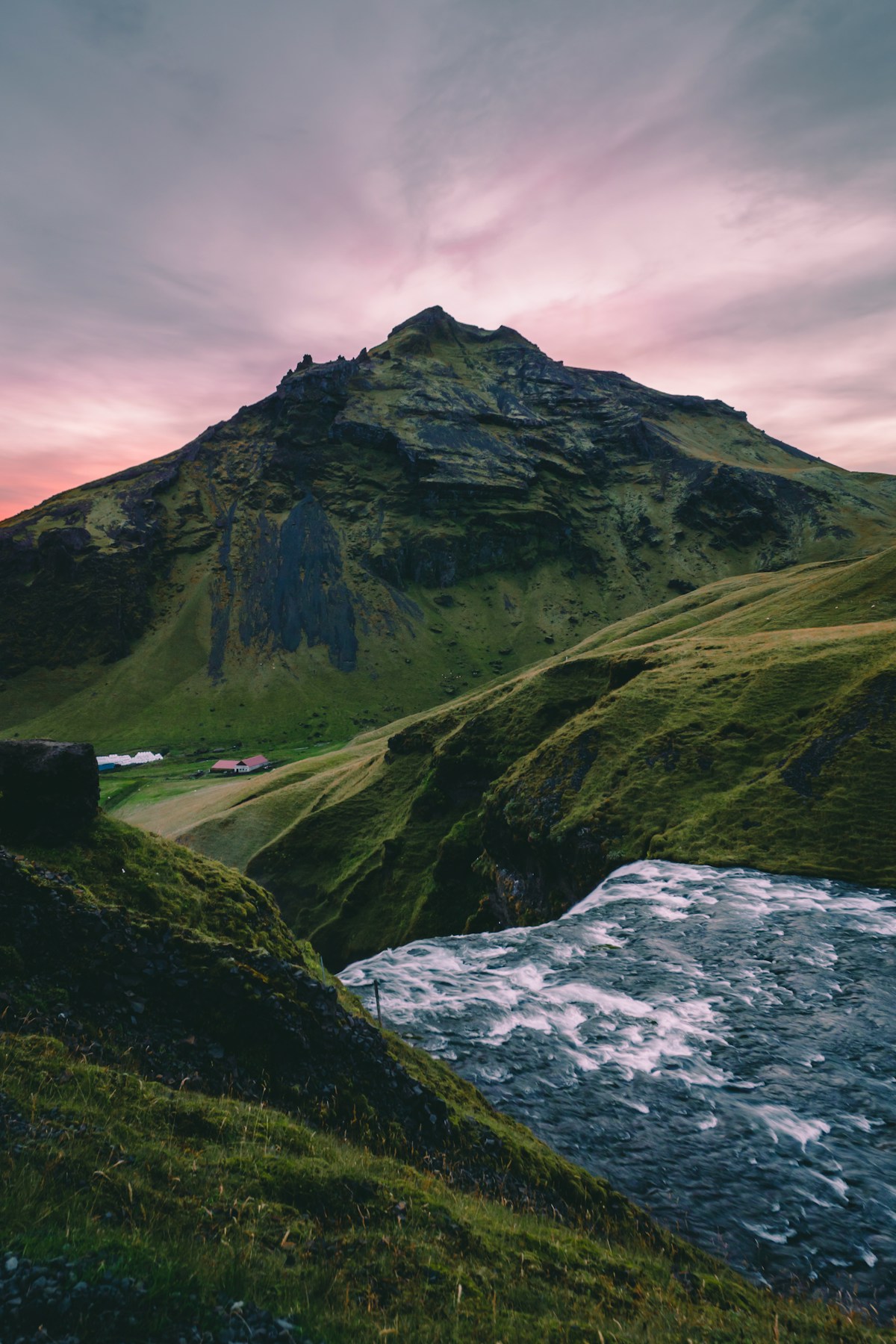
Iceland has more waterfalls per square kilometre than almost anywhere on Earth. The country’s geology - heavy precipitation, steep topography, glacial meltwater - creates constant flow even in summer. The result is a landscape where waterfalls appear around nearly every bend on the South Coast, along the Ring Road in the north, and tucked into the folds of the Westfjords.
This guide covers the best waterfalls to visit, practical logistics for each, and how to combine them into a route that makes sense.
South Coast Waterfalls (Day Trip or 2-Day Route)
Seljalandsfoss
One of Iceland’s most photographed waterfalls, Seljalandsfoss drops 60m from the cliffs above the South Coast plain. What makes it unusual is the path that circles behind the curtain - you can stand directly behind the falling water and look out through it. The experience is genuinely impressive, though expect to get wet.
Practical details: Just south of Route 1, well-signposted. Parking approximately ISK 800 as of 2026, paid via machine at the car park. The walk-behind path can be slippery - wear shoes with grip. Closed when ice forms on the path in winter.
A short walk south from Seljalandsfoss (around 10 minutes along the base of the cliffs) brings you to Gljúfrabúi, a hidden waterfall inside a gorge. You can wade into the gorge or peer in through a crack in the rock. Most visitors miss it. Worth the detour.
Skógafoss
Skógafoss is 62m high and 25m wide - a full curtain of white water that thunders into a pool at the base. On sunny mornings, a rainbow is almost guaranteed in the mist. The waterfall is visible from the Ring Road, and the car park is free.
From the base, 527 steps lead to the top of the cliffs above the falls, where the river continues upstream through a series of smaller cascades. The view from the top back over the South Coast towards the sea is one of the best in Iceland on a clear day. The climb takes around 15 minutes.
Practical details: At the village of Skógar, 30km east of Seljalandsfoss. Free parking. The Skógar Folk Museum is nearby if you want an hour of Icelandic rural history.
Kvernufoss
Largely unknown to first-time visitors, Kvernufoss is a 30-minute walk from the Skógar car park. It also has a walk-behind path, with no charge and usually very few people. If you’re already at Skógafoss, it’s an easy addition.
Golden Circle: Öxará at Þingvellir
The Öxará river flows through Þingvellir National Park, dropping over a small falls near the historic assembly site. It’s modest by Icelandic standards - perhaps 10m - but the setting is exceptional. Þingvellir sits in the rift valley between the North American and Eurasian tectonic plates, and the combination of geology, history (Iceland’s parliament met here for nine centuries), and the river make it worth the visit regardless of the waterfall.
Þingvellir is a free national park, with paid parking (approximately ISK 750 as of 2026). It’s the natural first stop on the Golden Circle route.
Glymur - Iceland’s Tallest Waterfall
At 198m, Glymur is Iceland’s highest waterfall. It sits at the head of Hvalfjörður fjord, about 45 minutes from Reykjavík. Reaching it requires a 3–4 hour round-trip hike that includes crossing the river on a log (or fording it). The trail is well-marked but moderately challenging, with some steep sections above the falls.
The payoff is significant: the canyon is dramatic and the falls themselves are rarely crowded compared to the South Coast spots. Best visited June through September when the log is in place. More detail in our trekking guide.
Westfjords: Dynjandi
Dynjandi is frequently described as the most beautiful waterfall in Iceland. It falls 100m in a tiered fan formation - the main drop spreads wider as it falls, creating a shape unlike any other waterfall in the country. Below the main drop, six smaller waterfalls cascade down the same hillside before the water reaches the fjord.
There is no entry fee. The car park is at the base, with a 15-minute walk up to the main falls (passing the smaller cascades en route).
Getting there: Dynjandi is in the Westfjords, roughly 450km from Reykjavík by road - about 5.5 to 6 hours depending on the route. This is not a day trip. Allow at least one night in the Westfjords, and ideally two or three to make the journey worthwhile. You’ll need to hire a car - no public transport reaches Dynjandi. The Westfjords road trip guide covers the full region.
North Iceland: Godafoss
Godafoss (“waterfall of the gods”) sits on the Ring Road in North Iceland, between Akureyri and Mývatn. It’s roughly 12m high but 30m wide, with two curved tiers that create a horseshoe shape. The name comes from a story that when Iceland adopted Christianity around 1000 AD, the law-speaker threw his pagan idols into the falls.
Practical details: Free to visit. Accessible directly from the Ring Road - park on either the east or west bank (both have viewpoints). The west bank view is generally considered better. Reachable as a stop on the Ring Road or as a day trip from Akureyri (50km west).
Planning Your Route
2-Day South Coast Focus:
- Day 1: Reykjavík → Seljalandsfoss → Gljúfrabúi → Skógafoss → Kvernufoss → Vík (overnight)
- Day 2: Continue east along South Coast or return via Þingvellir
Multi-Day Ring Road with Waterfall Stops:
- Day 1–2: South Coast (Seljalandsfoss, Skógafoss)
- Day 4–5: East Iceland / Ring Road
- Day 6–7: North Iceland - Godafoss, Dettifoss (the most powerful waterfall in Europe, near Mývatn)
- Day 8–9: Return west; add Glymur as a final day hike
Westfjords Extension: Add 2–3 days minimum after completing the South Coast or as a standalone trip, staying at Ísafjörður and making Dynjandi the centrepiece.
Practical Notes
Timing: Morning light tends to work better on south-facing falls (Seljalandsfoss, Skógafoss) for photography. Overcast days reduce harsh shadows and make wide shots easier.
Crowds: Seljalandsfoss and Skógafoss are busy from late June through August, particularly between 10am and 3pm. Arriving before 9am or after 6pm reduces the crowd significantly.
Footwear: Non-negotiable. Slippery rocks, spray-soaked paths, and muddy trails are the norm around Icelandic waterfalls. Waterproof hiking boots are the minimum sensible choice.
Weather: Iceland’s weather changes rapidly. A waterfall that looks straightforward in sunshine can be dangerous in high wind. The spray from large falls can be disorienting in gusts. Check forecasts at vedur.is before setting out.
Getting there: Nearly all of Iceland’s waterfalls require a car - most are inaccessible by public transport. Hire a car in Iceland to reach them at your own pace.
Related Guides
- Waterfalls guide Iceland - Deep-dive into every major waterfall: visitor logistics, photography tips, and which to prioritise
- South Coast drive - The waterfall-dense Reykjavík to Höfn route in full detail
- Westfjords guide - Dynjandi waterfall: the Westfjords’ defining attraction and how to reach it
- Glymur waterfall hike - Iceland’s second-highest waterfall, reachable only on foot via a river-crossing trail
- Dettifoss visitor guide - Europe’s most powerful waterfall: access routes, viewing platforms, and Diamond Circle context
- Iceland car rental guide - What car to hire for a waterfall road trip, including gravel road coverage