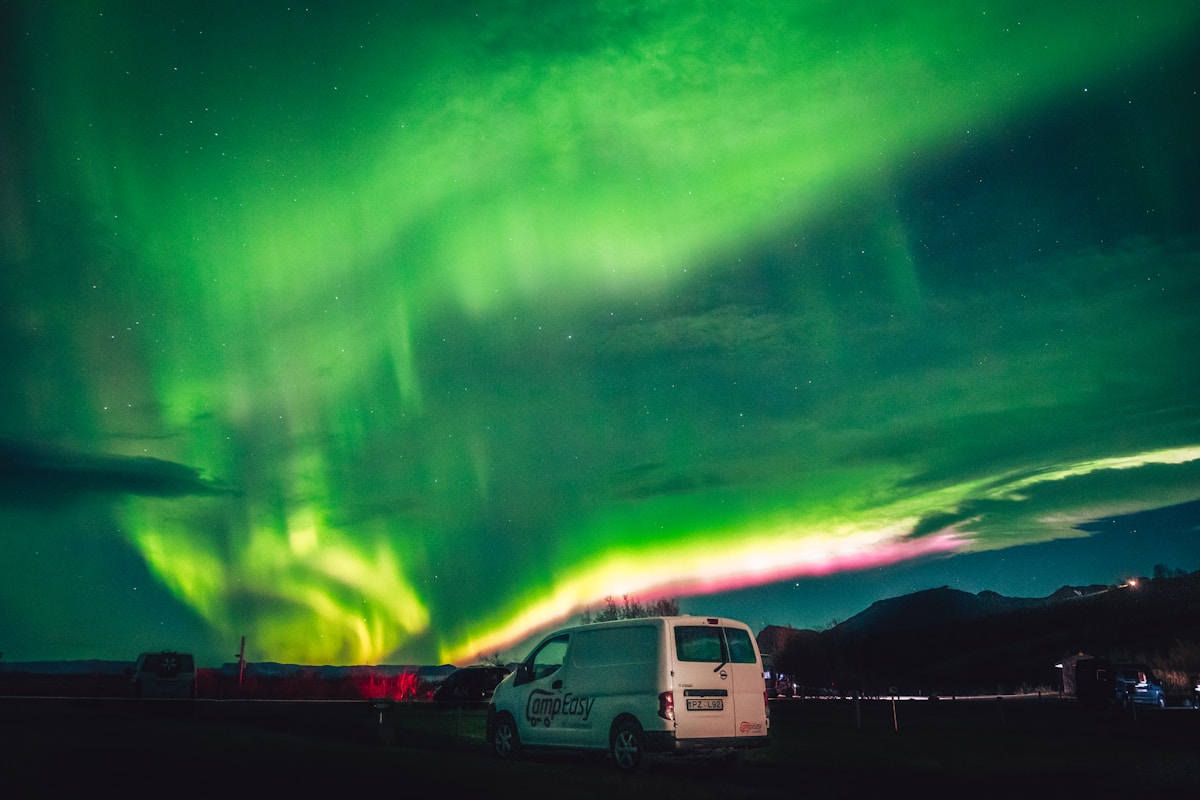
A campervan on the Ring Road is arguably the best way to travel Iceland. You set your own pace, stop when the light is right, sleep where the view is exceptional, and skip the nightly hotel shuffle that costs three times as much. The Ring Road (Route 1) circles Iceland’s perimeter in 1,332km of largely sealed road, passing every major natural attraction the country has to offer.
This itinerary covers both a 10-day and 14-day version, campsite booking logistics, realistic costs, and what first-timers consistently get wrong.
Choosing Your Campervan
Iceland’s campervan rental market is competitive - book 4–6 months ahead for peak summer (July–August). The three main categories:
Small 2-berth campervans (converted Sprinters, Ford Transits): sleeping platform, basic cooking setup, no toilet. Approximately ISK 15,000–25,000 per day as of 2026. Fuel-efficient, manoeuvrable, park anywhere. The most popular category.
Mid-size 2–3 berth (larger conversions or small factory campervans): more storage, often a small toilet. ISK 25,000–40,000 per day. Good balance of comfort and accessibility.
4WD expedition vehicles: purpose-built, often with roof tents, full kitchen, toilet. ISK 40,000–80,000+ per day. Required for serious off-road or winter travel.
For the Ring Road in summer, a small 2-berth campervan is sufficient and significantly cheaper. Key rental companies include Campervan Iceland, Happy Campers, Kúkú Campers, and Cozy Campers.
Insurance: Full collision and gravel/sand protection insurance is strongly recommended in Iceland - wind-driven sand and gravel from road surfaces can damage paint and windscreens, and standard insurance often excludes this. Budget approximately ISK 2,000–5,000 per day extra for comprehensive cover.
Campsite Booking
Iceland’s campsite network covers the Ring Road with sites typically 50–150km apart. Most charge ISK 1,500–2,500 per person per night (showers often extra, ISK 300–500). The main booking platform is Camp Easy and Tjalda (the Icelandic Camping Card).
The Camping Card (available from Tjalda at approximately ISK 22,900 for 2 adults for 28 nights as of 2026) covers two adults at 41+ campsites for a full month. It doesn’t cover all sites, but it covers most of the major ones on the Ring Road and pays for itself within 4–5 nights.
Book individual campsites for high-demand spots: Þórsmörk (accessible by 4WD or bus only), Landmannalaugar, and a few popular South Coast sites sell out in July–August. Most Ring Road campsites outside July can be arrived at without booking.
10-Day Ring Road Itinerary
Day 1–2: Reykjavík and Departure
Pick up your campervan from the airport or city and spend the first afternoon exploring Reykjavík - Hallgrímskirkja church, the old harbour, Laugavegur street. Stock up on groceries at Bónus or Krónan (cheapest supermarket chains). Leave the city on Day 2 heading east.
Night 1: Reykjavík campsite (Reykjavík Camping, ISK 2,000/person) Night 2: Selfoss area (Gesthús Selfoss or nearby campsite)
Day 3: Golden Circle
Drive the Golden Circle before heading east: Þingvellir National Park (rift valley, free national park), Geysir (Strokkur erupts every 5–10 minutes), Gullfoss (double waterfall, free entry). The loop from Reykjavík is 230km and takes a full day comfortably.
Night 3: Selfoss or Flúðir campsite (ISK 1,500–2,000/person)
Day 4: South Coast - Waterfalls and Reynisfjara
Drive east on Route 1: Seljalandsfoss (walk behind the falls; parking ISK 800), Gljúfrabúi (hidden gorge waterfall, 10 minutes’ walk south), Skógafoss (free, 527 steps to the top for panoramic views), and Reynisfjara black sand beach near Vík. Allow a full day. Vík is the midpoint of the South Coast tourist corridor.
Night 4: Vík campsite (ISK 2,000/person; showers extra)
Day 5: Skaftafell and Glacier Lagoon
Continue east past the vast Skaftafell area within Vatnajökull National Park. Svartifoss waterfall (black basalt column surroundings, 1.5-hour round-trip hike) is the highlight. Then Jökulsárlón Glacier Lagoon - icebergs calved from Breiðamerkurjökull glacier floating in a tidal lake. Adjacent Diamond Beach has ice blocks washed onto black sand.
Night 5: Jökulsárlón campsite or Höfn (approximately 75km east)
Day 6: East Fjords
The East Fjords section is slower driving - the route winds in and out of each fjord. Fewer major attractions but excellent scenery and the quietest stretch of the Ring Road. Egilsstaðir is the main service town. Seydisfjörður (30km detour north from Egilsstaðir) is a picturesque town in a fjord - worth the side trip.
Night 6: Egilsstaðir or Seydisfjörður campsite
Day 7: North Iceland - Mývatn
Drive north and west to the Mývatn area - one of the most geologically varied landscapes in Iceland. Námafjall fumaroles (sulphur vents on a ridge, free entry), Hverfjall tuff ring crater (30-minute walk around the rim), Dimmuborgir lava formations (otherworldly pillars and caves). The Mývatn Nature Baths (geothermal pool, from ISK 5,500/person) are a quieter alternative to the Blue Lagoon. Browse Lake Mývatn tours if you’d rather join an organised group for the area.
Night 7: Mývatn campsite (Hlíð campsite or Vogar campsite)
Day 8: Dettifoss and Akureyri
Make the side trip to Dettifoss (Route 862 or 864) - Europe’s most powerful waterfall. The west bank road (Route 862) is sealed; east bank (Route 864) requires a 4WD. Drive west to Akureyri, Iceland’s second city. Godafoss waterfall is directly on the Ring Road between Mývatn and Akureyri - stop both ways if timing allows.
Night 8: Akureyri campsite (ISK 2,000/person; full facilities)
Day 9: Skagafjörður or Snæfellsnes Decision
From Akureyri, drive west and south towards Reykjavík. The Skagafjörður valley and Tröllaskagi peninsula are beautiful and uncrowded. Alternatively, detour to the Snæfellsnes Peninsula (requires an extra day) or push towards Borgarnes and camp near the Snaefellsnes junction.
Night 9: Borgarnes or Bifröst campsite
Day 10: Return to Reykjavík
Final morning stop at Deildartunguhver (Europe’s highest-flow hot spring) or Hraunfossar (lava waterfalls emerging from a lava field) near Reykholt, then return to Reykjavík for van drop-off.
14-Day Version: Extensions
The 14-day version adds four more days for deeper exploration:
Days 2–3 extension: Snæfellsnes Peninsula (Kirkjufell mountain, Arnarstapi coast, Djúpalónssandur black beach, Snæfellsjökull glacier) - allow 2 full days.
Day 8 extension: Ásbyrgi canyon (horseshoe-shaped canyon, stunning from the rim) north of Dettifoss - adds 2–3 hours.
Day 9–10 extension: Westfjords detour (Dynjandi waterfall, Látrabjarg puffin cliffs in season) - adds 2 full days minimum. Note: Westfjords roads are partly unsealed; a 2WD campervan with good clearance handles them in dry conditions.
Cost Breakdown (2 People, 10 Days)
| Category | Budget estimate (ISK) | Notes |
|---|---|---|
| Campervan rental (10 days) | 200,000–350,000 | ISK 20,000–35,000/day mid-range |
| Insurance (comprehensive) | 30,000–50,000 | Gravel/sand protection critical |
| Fuel | 40,000–70,000 | ~2,500km ring road; diesel most common |
| Campsite fees | 30,000–50,000 | 2 adults × 10 nights × ISK 1,500–2,500 |
| Groceries | 40,000–60,000 | Self-catering most meals |
| Restaurant meals (4–5) | 30,000–50,000 | ISK 3,000–6,000/person per meal |
| Activities (glacier walk, Lagoon, etc.) | 30,000–80,000 | Variable by preference |
| Total estimate | 400,000–710,000 | USD 2,900–5,100 |
What First-Timers Get Wrong
Underestimating driving times. Iceland’s roads look short on a map, but stops accumulate. Seljalandsfoss to Jökulsárlón is 3 hours of pure driving with no stops. Plan for 40–50% of your intended daily driving time to be spent at stops.
Skipping the Camping Card. The ISK 22,900 Camping Card pays for itself in 5–6 nights for two people and removes the need to book most sites in advance.
Packing the first night wrong. Stock up on food before leaving Reykjavík - supermarkets are scarce on the East Fjords and expensive outside the capital. Bónus, Krónan, and Nettó are the cheapest chains.
Not having waterproof layers for every activity. Iceland’s waterfalls are extraordinarily wet at close range. Every campervan trip should include waterproof jackets and trousers that pack small.
Driving too fast when it’s beautiful. Build in time to pull over, make coffee, and just look. The campervan experience is specifically better when you’re not trying to hit a hotel check-in deadline.
Related Guides
- Ring Road Iceland guide - The full Ring Road route breakdown: distances, towns, and what to see
- Iceland campervan guide - Everything about hiring and living in a campervan in Iceland
- Camping in Iceland - Campsite booking, rules, and what to expect
- 10 days in Iceland - A hotel-based alternative to the campervan Ring Road
- Iceland driving guide - Road rules, conditions, and what to watch for on the Ring Road
Book Your Trip
Flights — search and compare on Aviasales · flights guide eSIM — stay connected with Airalo · eSIM guide Travel insurance — get covered with EKTA · insurance guide Airport transfers — book with Kiwitaxi · airport guide Car rental — compare with GetRentaCar · car hire guide Tours and activities — browse GetYourGuide