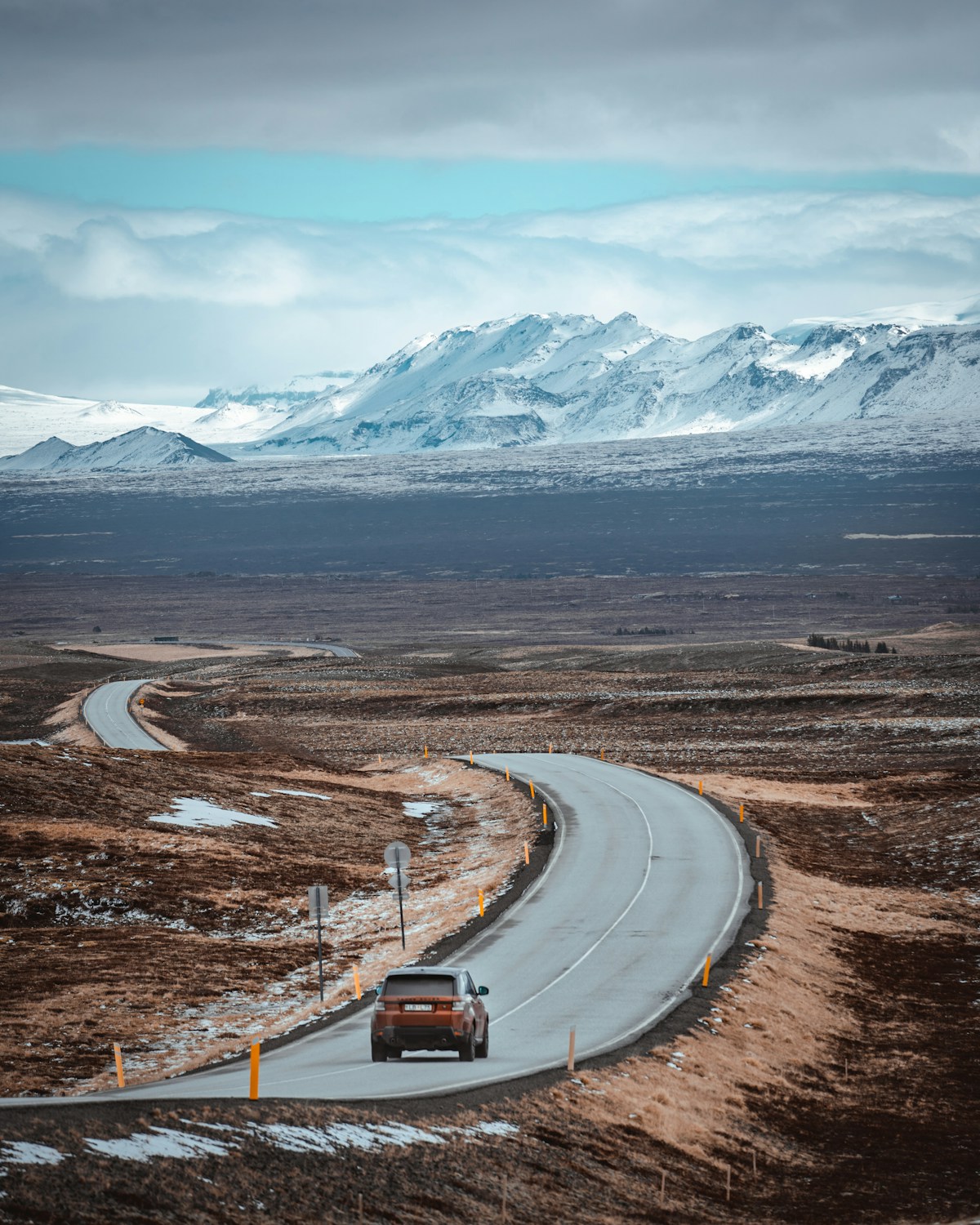
Iceland is one of the world’s great road trip destinations, with a well-maintained road network, clear signage, and extraordinary scenery. It also has specific road conditions, rules, and hazards that differ from most European countries. Read this before picking up your rental car.
Rules of the Road
Headlights: Required at all times (day and night). This is Icelandic law, not a suggestion.
Speed limits:
- 90km/h on paved rural roads (most of the Ring Road)
- 80km/h on gravel roads
- 50km/h in urban areas (reduced to 30km/h in some zones)
Seatbelts: Mandatory for all passengers.
Mobile phones: Illegal to use while driving without hands-free equipment.
Speed cameras: Fixed cameras on several major routes. Average speed cameras over some sections. Fines are high.
Alcohol limit: 0.05% blood alcohol content - effectively zero tolerance for any meaningful drink.
Winter Tyres
Mandatory by law November 1 through April 15. All rental cars are fitted with winter tyres during this period - verify at pickup. In shoulder months (October, May) conditions vary; check road.is.
Studded tyres are common and permitted in Iceland from November 1 through April 15.
F-Roads (Highland Roads)
F-roads are highland mountain tracks accessible only in summer (approximately mid-June to mid-September) and only in a 4WD with high clearance. They are marked ‘F’ on maps and signposted at the turn-off.
Critical: Driving a 2WD on an F-road voids your rental insurance entirely. If you break down or get stuck on an F-road in a 2WD, you are financially responsible for the recovery. This is not theoretical - it happens regularly.
River crossings on F-roads can be deep and fast-moving. If you’re unsure whether a crossing is safe, wait for a 4WD to cross first and observe the depth. Never cross a flooded river.
Check before driving F-roads: road.is shows current F-road status.
Single-Lane Bridges
Many bridges on the Ring Road and secondary roads are single-lane. The etiquette is simple:
- The car that arrives first (or is closest) crosses first
- The other car waits at the yellow diamond warning sign
- If in doubt, slow down and check for oncoming traffic
Approach single-lane bridges at a speed that allows you to stop.
Weather and Road Conditions
road.is is the single most important website for Iceland driving. Check it every morning. It shows:
- Road closures (red)
- Roads with difficult conditions (orange)
- Open F-roads (green)
- Live conditions reports
Download the road.is app for offline use. Mobile signal can drop in remote areas.
Conditions that affect driving:
- Sandstorms: In the highland plateau areas (particularly between Vík and Höfn), sandstorms can reduce visibility to zero. Pull off the road if a sandstorm hits.
- Black ice: Not visually obvious. Slow down on bridges, shaded roads, and anywhere temperature is near 0°C.
- Wind: Iceland’s winds can be strong enough to affect large vehicles and camper vans. Check vedur.is for wind forecasts.
Rental Car Practical Notes
Book early: Summer rental car prices increase dramatically in June–August. Book your hire car 2–3 months ahead for summer travel.
Insurance:
- CDW (Collision Damage Waiver): Included in most basic rates but check the excess/deductible
- SAAP (Sand and Ash Protection): Approximately ISK 2,000–5,000/day if driving on gravel
- GP (Gravel Protection): Windscreen chips from gravel are common - check if covered
- Check whether 4WD or F-road access is included in your policy
Fuel: Fill up whenever the opportunity arises in remote areas. Petrol stations in parts of East Iceland and the Westfjords can be 100+ km apart. Petrol (unleaded 95) approximately ISK 280–320 per litre as of 2026.
Credit card hold: Expect a hold of approximately ISK 50,000–150,000 on your card at rental pickup.
Sheep on the Road
Icelandic sheep graze on open land in summer and regularly wander onto roads. Slow down in rural areas, particularly around dusk and dawn. If a sheep is on the road, slow to a stop and wait - it will move. Do not swerve sharply.
For more on hiring a car, see our Iceland car rental guide. For winter-specific conditions, see our Iceland winter driving guide. For F-road access and rules, see our Iceland F-roads guide.
Related Guides
- Iceland car rental guide - Choosing the right car type, insurance, and the best companies to book through
- Iceland winter driving guide - October–April conditions: studded tyres, closures, and how to interpret road.is
- Iceland F-roads guide - Which highland roads need a 4WD, river crossing rules, and when F-roads open
- Ring Road Iceland - The most commonly driven route in Iceland: distances, conditions, and key stops
- Iceland campervan guide - Driving a campervan in Iceland: additional size and wind considerations
- Iceland car rental costs - What car hire actually costs in 2026: compact vs 4WD, low vs peak season
Plan Your Trip
✈️ Book your flights to Iceland 🛡️ Get travel insurance 📱 Stay connected with an eSIM 🚗 Rent a car