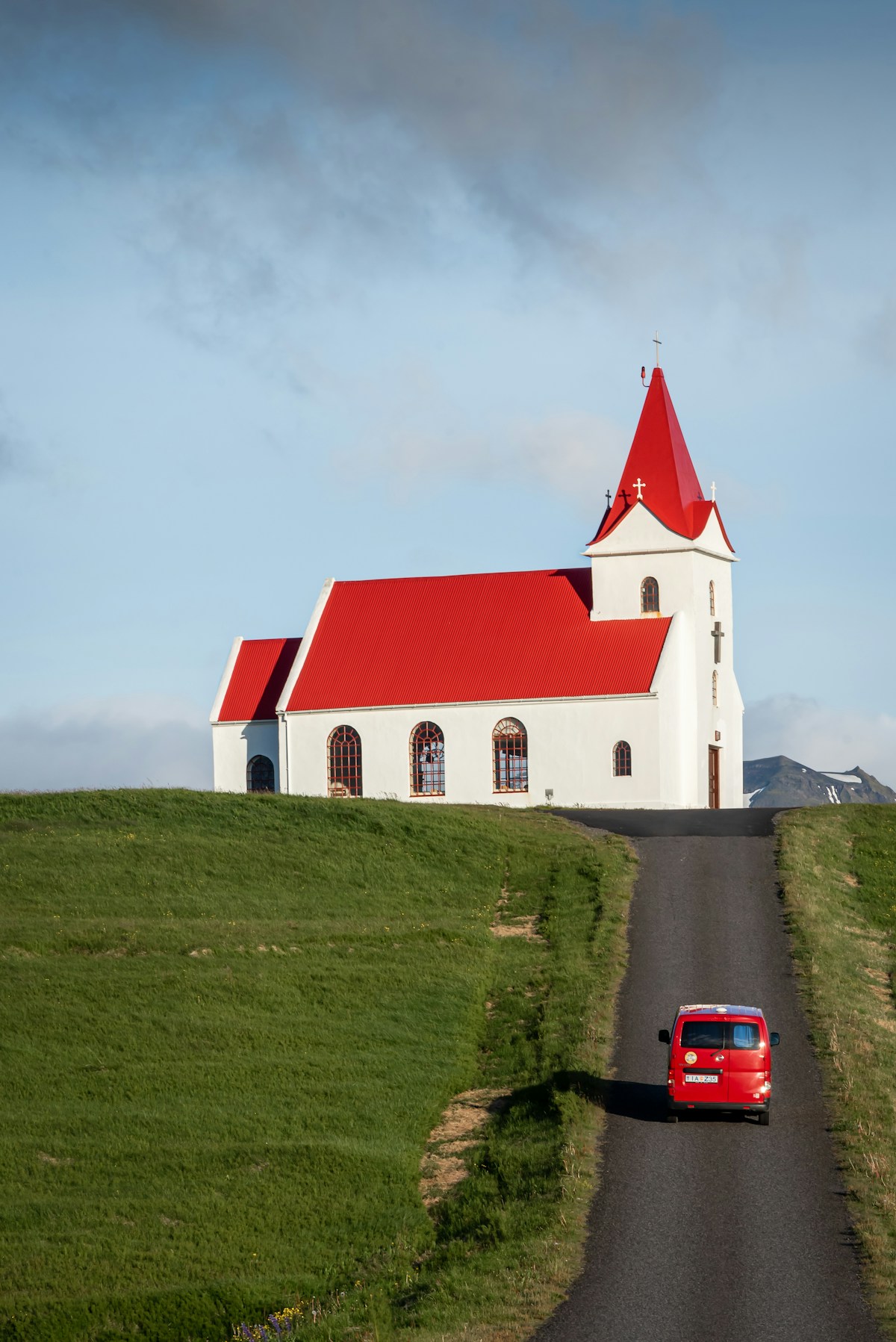
A campervan collapses Iceland’s two biggest costs - accommodation and transport - into one booking, and frees you from the hotel-to-hotel schedule that makes Ring Road trips rigid. It’s the most popular way to see the country for good reason. It’s also not automatically cheaper or better, and the rules are stricter than the Instagram version suggests. Here’s the honest picture, with prices approximate as of 2026.
What It Costs
Summer (June–August) daily rates:
| Type | Sleeps | Approx. per day |
|---|---|---|
| Basic camper (converted small van) | 2 | ISK 14,000–22,000 |
| Mid-range with heater & kitchen unit | 2–3 | ISK 22,000–35,000 |
| 4x4 camper (F-road legal) | 2–4 | ISK 35,000–55,000 |
| Motorhome | 4–6 | ISK 45,000–75,000 |
On top of that: campsites at approximately ISK 2,500–3,500 per person per night, fuel at roughly ISK 320–350 per litre (a Ring Road circuit burns ISK 45,000–60,000 in a small van), and insurance upgrades. Shoulder season (May, September) runs 20–30% below these rates; winter 30–50% below. Book summer vans 3–6 months ahead - the fleet sells out.
The Main Rental Companies
- Happy Campers - the longest-running specialist, based by Keflavík airport. Well-winterised vans, strong service reputation, 24/7 assistance. Mid-price.
- KuKu Campers - the budget-to-mid fleet with the painted vans. Largest variety, including manual-transmission cheapies that knock real money off.
- Go Campers - solid mid-range fleet, frequent discounts on older vans.
- CampEasy - newer fleet with the best heating and insulation tech, app-based extras; slightly pricier.
- Cozy Campers - small Reykjavík-based outfit, good for two-person trips.
- McRent / Motorhome Iceland - the motorhome end of the market for families.
All cluster around Keflavík airport or Reykjavík with shuttle pickup. Compare total price including insurance and the extras you actually need (bedding, table/chairs, gas) - headline rates hide a lot. You can compare camper and 4x4 options alongside regular cars via our car hire comparison.
The Camping Rules (Read This Part)
Since 2015, sleeping in a vehicle outside registered campsites is illegal without written landowner permission - laybys, car parks, and that perfect fjord-side gravel pad all count. Rangers and police do issue fines, particularly in the south and at popular sights. In practice this is no hardship: Iceland has more than 170 campsites, you rarely need to book (eclipse week and Þjóðhátíð weekend excepted), and they’re where the showers are anyway.
- Campsite fees: approximately ISK 2,500–3,500 per adult per night; electricity hookup ISK 1,000–1,500 extra.
- The Camping Card (approximately ISK 27,900 as of 2026) covers 2 adults + children at ~35 participating sites for up to 28 nights - it pays off in about five nights, but check the site list matches your route before buying.
- Tent camping follows the same registered-site rule in practice for most travellers - our camping guide covers the tent-specific detail.
- Empty toilet cassettes only at designated service points, never in nature or regular drains.
Insurance and Driving Realities
Campervans are tall, light, and side-on to Iceland’s wind - they’re the vehicle class most often damaged and most often blown off the road. Gravel protection (GP) and sand-and-ash protection (SAAP) are worth taking on any Ring Road trip; check whether wind damage to doors is covered, because at many companies it isn’t, and door-hinge repairs run into hundreds of thousands of ISK. Standard campers are banned from F-roads - only marked 4x4 campers may drive them, and river crossings void insurance in almost every contract. Wind above ~15 m/s in a high-sided van means slow right down or stop; check road.is each morning. If you’re going October–April, read our winter driving guide first - all of it applies double in a camper.
Campervan vs Car + Guesthouses
The camper wins when: there are two of you, it’s May–September, you want route flexibility (chasing weather windows matters in Iceland), and you’re comfortable with small-space living. Two people on a 10-day summer trip typically save ISK 100,000–200,000 versus a car-and-guesthouse trip of the same route.
The car + beds combo wins when: you’re travelling solo (one person carries the whole van cost), it’s deep winter, you value showers and dinner tables after long hiking days, or you’re sensitive to sleep quality. It also wins for couples who’d quietly pay anything for a real bed by day six - know yourselves.
A reasonable hybrid: camper for the summer Ring Road loop, plus a booked guesthouse night midway and a final night near Keflavík before the flight home. For route planning, our Ring Road guide maps the classic 7–10 day circuit with campsite-friendly stages.
Related Guides
- Iceland car rental guide - Standard car hire as the alternative to a campervan: costs, operators, and insurance
- Ring Road Iceland - The full Ring Road circuit: stages, distances, and key overnight stops
- 10 days in Iceland itinerary - Day-by-day Ring Road plan compatible with campervan travel
- Camping in Iceland - Camping laws, campsites, fees, and the Icelandic camping card
- Iceland driving guide - Speed limits, single-lane bridges, F-road rules for campervans
- Iceland budget guide - How campervan self-catering compares to hotels and restaurants on cost
Plan Your Trip
✈️ Book your flights to Iceland 🛡️ Get travel insurance 📱 Stay connected with an eSIM 🚗 Rent a car