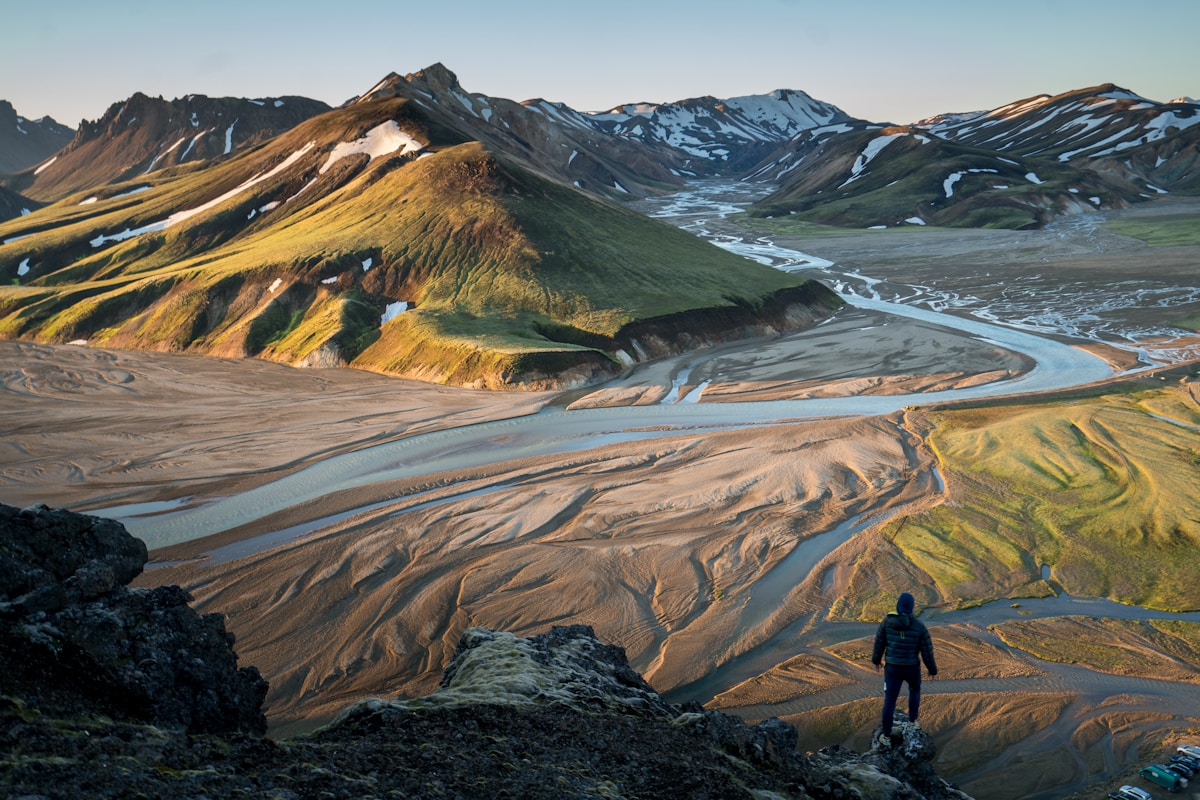
August is the last month of Iceland’s high summer - and one of the most rewarding for timing. Early in the month you still have near-endless light and all activities running; by late August, darkness returns and the first Northern Lights of the year become possible. The Bank Holiday Weekend (first weekend of August) is Iceland’s biggest party - expect full campsite occupancy across the country. Prices stay high through August, with a modest dip in the final week.
Days Shortening Fast: Golden Evenings Return as Darkness Comes Back
| Region | Avg High | Avg Low | Daylight | Notes |
|---|---|---|---|---|
| Reykjavík | 11 to 14°C | 7 to 10°C | 16–18 hrs | Noticeably shorter than July; golden evenings by late month |
| Akureyri | 13 to 17°C | 7 to 10°C | 17–19 hrs | Warm afternoons; cooler evenings; aurora possible from late Aug |
| South Coast | 10 to 13°C | 7 to 9°C | 16–18 hrs | Persistent winds; waterfalls still dramatic from summer rainfall |
| East (Egilsstaðir) | 12 to 16°C | 6 to 9°C | 17–19 hrs | Drier than the south; good hiking in the East Fjords mountains |
Approximate averages as of 2026. Iceland’s weather is highly variable - check vedur.is for current forecasts.
Laugavegur Trail in Prime Condition and Rhyolite Highlands at Landmannalaugar
Laugavegur Trail - August is the most popular month for this 55 km Highland traverse from Landmannalaugar to Þórsmörk. Hut season runs until mid-September. Hut permits through the Icelandic Touring Association (fi.is) from approximately ISK 8,500 per night as of 2026; camping slightly less. Book months ahead for August weekends.
Highland drives - Landmannalaugar, Kjölur route, and Þórsmörk are all accessible in August. The colourful rhyolite mountains at Landmannalaugar are at their most vibrant with summer greenery. A 4WD vehicle is required for all F-roads.
Whale watching - Strong encounter rates continue through August. North Sailing in Húsavík and Classic Whale Watching in Reykjavík both operate daily. Adult tickets from approximately ISK 12,900 to ISK 13,900 as of 2026.
Puffin watching - Puffins depart the cliffs between mid-August and early September. Visit Dyrhólaey or Ingólfshöfði in the first two weeks of August for your best chance. By late August, most have left.
Glacier walks - Sólheimajökull glacier is in good condition through August. Guided walks from approximately ISK 9,900 per person for 3 hours as of 2026 with operators including Extreme Iceland.
Jökulsárlón Glacier Lagoon - August crowds ease slightly from July peak. The amphibious boat tours onto the lagoon run daily from approximately ISK 7,900 per adult as of 2026; book online.
Bank Holiday Verslunarmannahelgi and Reykjavík Culture Night Fireworks
Verslunarmannahelgi (Bank Holiday Weekend) - First Monday of August is a national holiday. The preceding weekend (Friday through Monday) is Iceland’s biggest social event of the year. The Þjóðhátíð festival in the Westman Islands (Vestmannaeyjar) is the centrepiece: held in a natural volcanic amphitheatre, it runs over 3 days with music, bonfires, and fireworks. Ferry from Landeyjahöfn south coast; festival tickets from approximately ISK 20,000 to ISK 30,000 per person as of 2026.
Reykjavík Gay Pride (Hinsegin Dagar) - Pride parade and week of events in early August. The parade itself (usually first Saturday of August) draws over 100,000 spectators in a city of 130,000. Free to attend along the route through central Reykjavík.
Reykjavík Culture Night (Menningarnótt) - Held the same Saturday as Gay Pride. Museums open late, outdoor performances across the city, and fireworks over the harbour at midnight. Free entry to most venues; a full evening out with no ticket cost.
Reykjavík Marathon - Held in mid-August. Route through the city centre and harbour area. Entry from approximately ISK 8,000 for the full marathon, less for shorter distances; see marathon.is.
Bank Holiday Weekend Fills the Country: Book Months in Advance
Reykjavík: Still peak pricing but easing in the final week. Hotel Borg from approximately ISK 42,000 to ISK 55,000 per night as of 2026. 101 Hotel (Hverfisgata) from approximately ISK 38,000. Book 2–3 months ahead for the Bank Holiday Weekend - the city has no spare beds that weekend.
South Coast: Vík and surrounding guesthouses book out fast for the Bank Holiday Weekend. The campsite at Þórsmörk is an alternative for Highlands visitors. Hörgsland Guesthouse near Skógar from approximately ISK 22,000 per night as of 2026.
Vatnajökull area: Fosshotel Glacier Lagoon (near Jökulsárlón) is the most convenient option for the glacier lagoon; from approximately ISK 35,000 per night in August as of 2026. Book months ahead.
Hlemmur Mathöll for Value and Gamli Baukur After Whale Watching
Reykjavík’s Hlemmur Mathöll food hall (near Hlemmur bus terminal) remains one of the best value dinner spots in the city - multiple vendors, fish tacos to Icelandic lamb stew, from approximately ISK 2,000 to ISK 3,500 per dish as of 2026.
Grillmarkurinn (Lækjargata 2a) for a sit-down dinner featuring quality Icelandic lamb - mains from approximately ISK 5,500 as of 2026.
In Húsavík, Gamli Baukur (Hafnarstétt 9) is the most popular waterfront option; fish dishes from approximately ISK 3,500 as of 2026 - reliably good before or after whale watching.
First Aurora of the Season: Darkness Returns from Around 20 August
The first Northern Lights of the season can appear from mid-to-late August as darkness returns. Nights must be properly dark (past twilight) for aurora to be visible - this happens from around August 20 in Reykjavík. Akureyri gets darkness back slightly earlier. Check vedur.is aurora forecast for cloud cover and KP index predictions simultaneously.
Tour operators typically begin their Northern Lights tours from around August 20–25. Arctic Adventures and Reykjavik Excursions run evening departures with resail guarantees from approximately ISK 9,900 as of 2026.
August Road Conditions: All F-Roads Open, River Crossings Still Require Assessment
Check road.is before every drive. August notes:
- Highland F-roads: All open; conditions can deteriorate after heavy rain - check road.is daily
- River crossings: Assessment still required on wilder F-roads; 4WD essential
- Ring Road: Fully open; campervans are at peak density
- Most highland routes will close for the season starting September or October
What to Pack for August in Iceland
- Waterproof jacket and trousers - showers come without warning
- Warm mid-layer - late August evenings cool significantly compared to July
- Sturdy waterproof hiking boots for Highland and glacier terrain
- Hat and light gloves for exposed locations and late-evening walks
- Eye mask for sleeping - still needed until mid-August
- Sunscreen for glacier days and long outdoor hours
- Swimwear for hot springs
- Insect repellent for the Mývatn area in early August
Browse Iceland tours - day trips, activity bookings, and multi-day packages across the country in one place.
Compare car hire in Iceland - a 4WD or campervan gives the flexibility to explore at your own pace.
Get travel insurance for Iceland - policies covering glacier hikes, F-road driving, and volcanic disruption.
Related Guides
- Iceland in July - The month before: peak summer, busiest period, longest daylight
- Iceland in September - The month after: shoulder season with aurora returning
- Northern lights in Iceland - Aurora season begins in late August - what you need to see it
- Best time to visit Iceland - Full year comparison of weather, crowds, and activities
- Puffin watching in Iceland - August marks the end of puffin season; time viewing carefully
Plan Your Trip
August is the last hurrah of summer before darkness returns. The Laugavegur trail from Landmannalaugar to Þórsmörk is in prime condition — rhyolite colour at its most vivid in late August. The Verslunarmannahelgi bank holiday weekend (first weekend of August) is the busiest travel weekend of the year; if your dates overlap, book accommodation months ahead or the country is effectively sold out. Reykjavík Culture Night (Menningarnótt) in late August brings free concerts and fireworks over the harbour — a great reason to be in the capital for a night. First auroras of the season are possible from mid-August when nights finally darken again.
✈️ Book your flights to Iceland 🛡️ Get travel insurance 📱 Stay connected with an eSIM 🚗 Rent a car