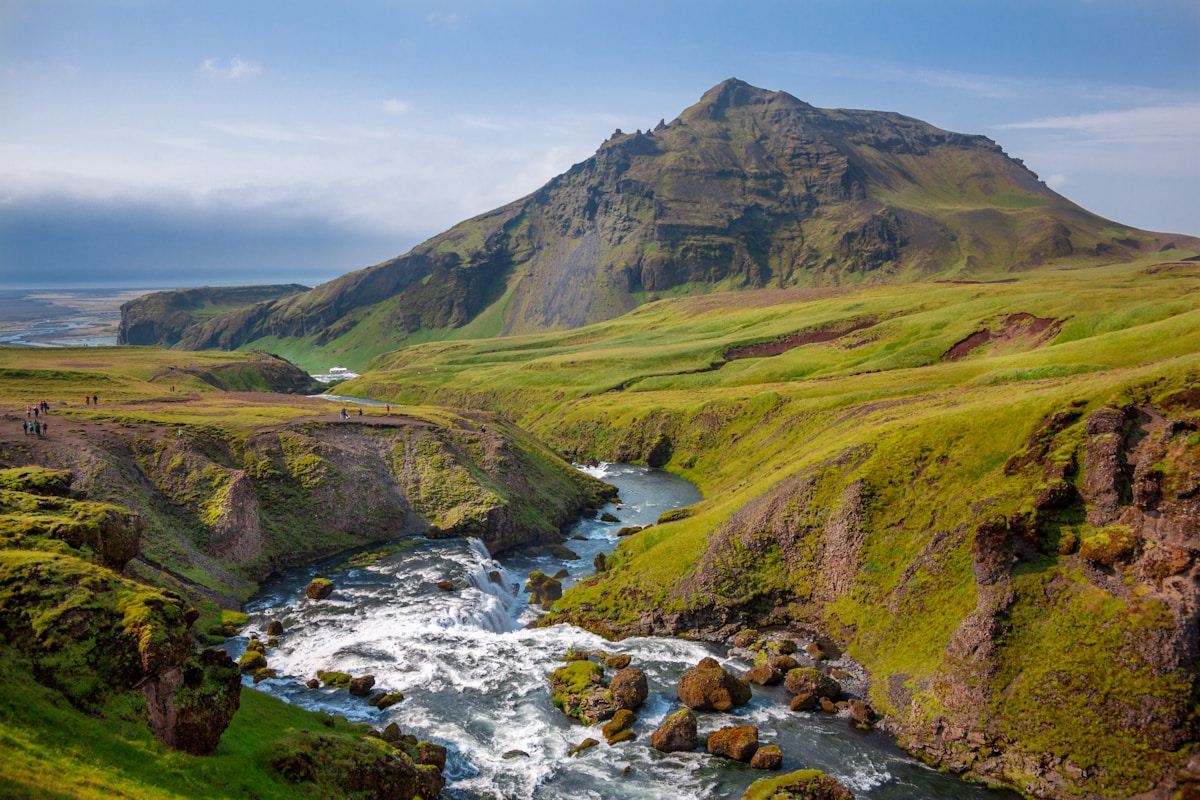
July is Iceland’s most popular month - and for good reason. It’s the warmest, all Highland routes are open, whale watching is at peak, and every activity the country offers is available simultaneously. The downside is the crowds: Jökulsárlón, Seljalandsfoss, and Kirkjufell are genuinely busy between 10am and 5pm. Arriving at popular spots before 8am or after 9pm makes a significant difference. Book accommodation 2–3 months ahead.
Iceland’s Warmest Month: Akureyri Reaches 20°C in the Sheltered Valley
| Region | Avg High | Avg Low | Daylight | Notes |
|---|---|---|---|---|
| Reykjavík | 12 to 15°C | 8 to 11°C | ~20 hrs | Never truly dark; midnight sky remains pale grey-blue |
| Akureyri | 16 to 20°C | 8 to 11°C | ~24 hrs | Warmest town in Iceland; sheltered valley amplifies heat |
| South Coast | 11 to 14°C | 8 to 10°C | ~20 hrs | More wind and rain than inland; waterfalls at peak flow |
| East (Egilsstaðir) | 14 to 18°C | 7 to 10°C | ~21 hrs | Drier and sunnier than the south; Lagarfljót lake views |
Approximate averages as of 2026. Iceland’s weather is highly variable - check vedur.is for current forecasts.
Highland F-Roads Fully Open and Humpback Whale Watching at Peak
Hiking the Highlands - All major Highland F-roads are open in July, including Landmannalaugar (F224), Þórsmörk (F249), Kerlingarfjöll (F35/F347), and the Kjölur route (F35). A proper 4WD is required - rental cars on F-roads will void your insurance. The Laugavegur trail from Landmannalaugar to Þórsmörk remains the most popular multi-day hike; hut permits through fi.is from approximately ISK 8,500 per night as of 2026.
Whale watching - July is peak season. North Sailing in Húsavík claims some of the highest humpback success rates in Europe. Adult tickets from approximately ISK 13,900 as of 2026. Gentle Giants also operates from Húsavík with smaller boat options. From Reykjavík, Classic Whale Watching runs from the Old Harbour, from approximately ISK 12,900 per adult.
Puffin watching - Active through mid-August; July is the final month for reliable puffin sightings. Dyrhólaey (south coast, near Vík), Látrabjarg (Westfjords), and Ingólfshöfði (east coast) are the three best locations. No guided tour needed at Dyrhólaey - park and walk to the headland.
Vatnajökull National Park - The largest national park in Europe covers roughly 14% of Iceland. Skaftafell within the park has a popular glacier viewpoint and hiking trails; free to access. Guided glacier walks from Skaftafell depart daily, from approximately ISK 10,900 per person for a 3-hour walk as of 2026.
Westfjords - July is the only reliable month to visit the remote Westfjords. The Hornstrandir Nature Reserve is accessible by ferry from Ísafjörður for day hikes or multi-day camping. Ferry from approximately ISK 7,000 one-way as of 2026; reserve with West Tours.
Þjóðhátíð Westman Islands Festival and Reykjavík Gay Pride
Verslunarmannahelgi (Bank Holiday Weekend) - The first Monday of August is a public holiday, but the Bank Holiday Weekend begins the preceding Friday (late July or the final weekend of July). Thousands of Icelanders head to campsite festivals across the country. The largest is Þjóðhátíð in the Westman Islands (Vestmannaeyjar), an outdoor festival in a natural volcanic amphitheatre with live music and bonfires. Ferry from Landeyjahöfn on the south coast; festival tickets from approximately ISK 20,000 to ISK 30,000 per person as of 2026.
Reykjavík Gay Pride (Hinsegin Dagar) - Reykjavík’s Pride Week falls in early August, but events begin in late July. The main Pride parade is one of the largest per capita in Europe. Free to attend; streets close for the parade route through central Reykjavík.
Glacier Jazz Festival - Small annual festival with jazz concerts at venues in and around Húsavík in north Iceland. Intimate and worth attending if you’re in the north during July. Check husavik.is for current year dates and ticket prices.
Akureyri Summer Festival - Various outdoor concerts and cultural events in the town throughout July, centred on the pedestrian shopping street, Hafnarstræti. Many events are free.
Peak Pricing All Round: Hotel Borg at ISK 45,000–60,000 per Night
Reykjavík: Peak prices in July. Hotel Borg (Pósthússtræti) from approximately ISK 45,000 to ISK 60,000 per night as of 2026. Budget travellers should book Kex Hostel (Skúlagata) or Loft Hostel (Bankastræti) well ahead; dorm beds from approximately ISK 6,500 as of 2026.
South Coast: Accommodation at Vík, Hella, and Kirkjubæjarklaustur books up months in advance for July. Alternatives worth considering: the campsites at Skógar, Þórsmörk, and Skaftafell for self-sufficient travellers.
North Iceland / Akureyri: Icelandair Hotel Akureyri from approximately ISK 28,000 per night as of 2026. Good base for Goðafoss, Mývatn, and Húsavík day trips.
Hlemmur Mathöll Food Hall and Strikið Rooftop in Akureyri
In Reykjavík, Grillmarkurinn (Lækjargata 2a) does excellent Icelandic lamb and fish over a wood grill; mains from approximately ISK 5,500 as of 2026 - slightly quieter at lunch than dinner. Messinn (Lækjargata 6b) for fish; mains from approximately ISK 5,000.
The food hall at Hlemmur Mathöll (Lækjargata end of Hlemmur) is good for a quick, quality meal from multiple vendors - fish tacos, Icelandic lamb, chowder - from approximately ISK 2,000 to ISK 3,500 per dish as of 2026.
In Akureyri, Strikið (Skíðaból 14) is the go-to dinner option; book ahead in July. Mains from approximately ISK 4,500 as of 2026.
No Aurora in July: Prolonged Golden Twilight, No True Darkness
Not possible - nights never get dark enough. The sun sits just below the horizon at midnight, producing prolonged golden light but no darkness. Aurora season begins from late August.
July Road Conditions: All Major F-Roads Open, Campervans at Peak Density
Check road.is before every drive. July notes:
- Highland F-roads: All main Highland routes open; conditions vary after heavy rain
- River crossings on F-roads: Some require wading assessment - only attempt in a high-clearance 4WD
- Ring Road: Fully open; busy with campervans, especially Jökulsárlón to Vík section
- Parking at major sites: Arrive before 8am or after 9pm to avoid congestion
What to Pack for July in Iceland
- Waterproof jacket and trousers - showers are common even in Iceland’s warmest month
- Warm mid-layer - evenings and Highland areas cool quickly
- Sturdy waterproof hiking boots for Highland trails and glacier approaches
- Hat and light gloves for Highlands and north coast
- Eye mask or blackout sleep mask - essential for sleeping; nights don’t get dark
- Sunscreen - UV is strong, amplified by glacier and snow reflection
- Swimwear for hot springs and geothermal pools
- Insect repellent for the Mývatn lake area (midges are significant in July)
- Buff/neck gaiter for Highland wind exposure
Browse Iceland tours - day trips, activity bookings, and multi-day packages across the country in one place.
Compare car hire in Iceland - a 4WD or campervan gives the flexibility to explore at your own pace.
Get travel insurance for Iceland - policies covering glacier hikes, F-road driving, and volcanic disruption.
Related Guides
- Iceland in June - The month before: midnight sun at its longest
- Iceland in August - The month after: crowds ease and aurora returns
- Iceland summer itinerary - A full summer trip plan built around July’s best conditions
- Laugavegur trail - July is the best month for this multi-day highland trek
- Best time to visit Iceland - Full year comparison of weather, crowds, and activities
Plan Your Trip
July is Iceland’s peak month — all Highland F-roads open, humpback encounters at their highest off Húsavík, and Akureyri reaching 20°C on warm valley days. Book everything three to four months out: Laugavegur trail huts fill by February for July dates, and the Þjóðhátíð festival on the Westman Islands (first weekend of August, often booked in July) draws huge crowds to limited island accommodation. Reykjavík Gay Pride runs in late July — the city is at its most festive. If you’re doing the Highlands, hire a 4WD; passenger cars are banned on F-roads and rental insurance won’t cover damage. July is expensive — consider a campervan to cut accommodation costs.
✈️ Book your flights to Iceland 🛡️ Get travel insurance 📱 Stay connected with an eSIM 🚗 Rent a car