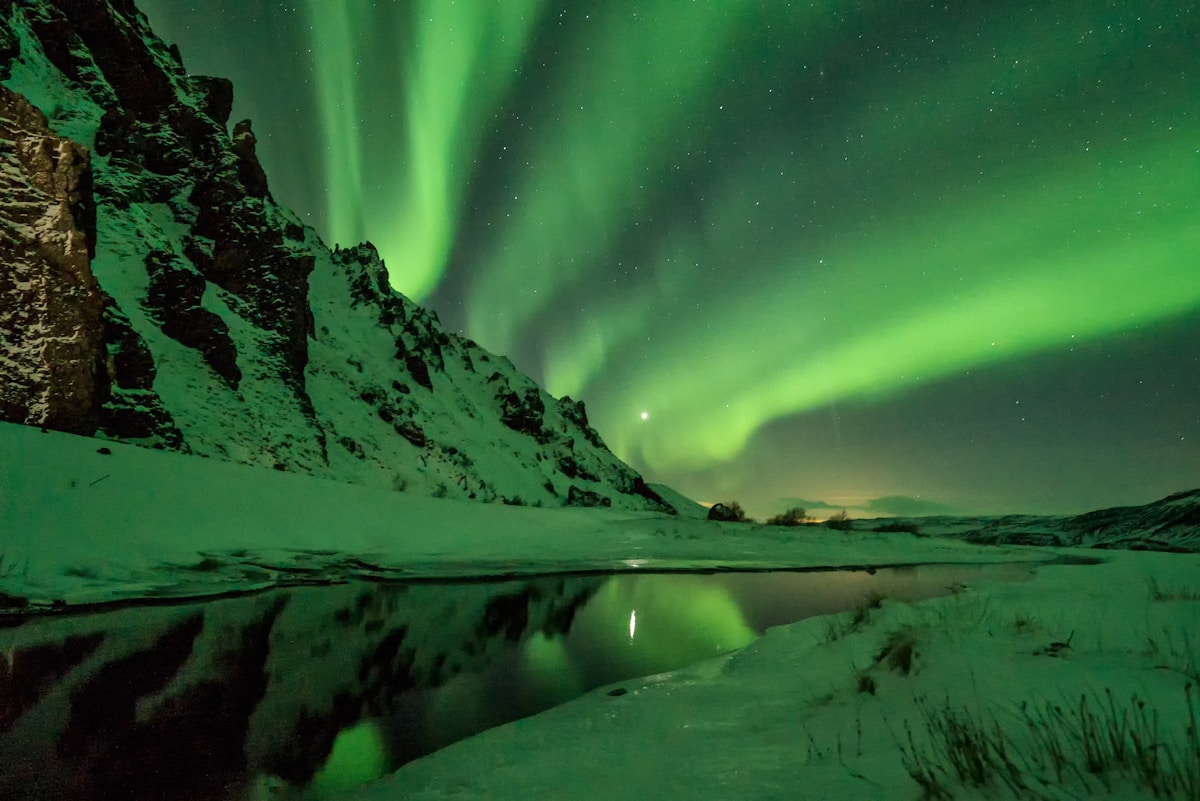
February is one of the best months to visit Iceland if you want Northern Lights without January’s extreme cold and minimal daylight. Days are noticeably longer by mid-month (9 hours of light by month’s end in Reykjavík), ice cave season is still fully open, and tourist crowds remain well below summer levels. Accommodation rates stay close to January lows.
Daylight Returning Fast: 8–10 Hours by Month’s End in Reykjavík
| Region | Avg High | Avg Low | Daylight | Notes |
|---|---|---|---|---|
| Reykjavík | 2 to 4°C | -2 to 1°C | 8–10 hrs | Snow and sleet common; wind chill significant |
| Akureyri | -1 to 2°C | -7 to -2°C | 7–9 hrs | Colder and snowier than Reykjavík; clear skies more frequent |
| South Coast | 2 to 4°C | -1 to 2°C | 8–10 hrs | Coastal winds; Vík notorious for high gusts |
| East (Egilsstaðir) | -1 to 3°C | -6 to -1°C | 8–10 hrs | Continental; heavier snowfall; cross-country skiing possible |
Approximate averages as of 2026. Iceland’s weather is highly variable - check vedur.is for current forecasts.
Ice Caves Still at Peak and Glacier Walks on Sólheimajökull
Ice caves are still in peak condition. The natural blue ice caves inside Vatnajökull glacier are only accessible with licensed guides - tours depart from near Jökulsárlón. Operators including Arctic Adventures and Local Guide of Vatnajökull charge approximately ISK 14,000 to ISK 18,000 per person as of 2026. Book before you arrive - slots sell out, especially weekends.
Whale watching begins picking up. Elding and Ambassador run daily departures from Reykjavik Old Harbour (Ægisgarður pier). February sightings often include humpback whales that overwinter in Icelandic waters; adult tickets from approximately ISK 12,900 as of 2026.
Glacier walks at Sólheimajökull (Mýrdalsjökull glacier, south Iceland) operate year-round. Extreme Iceland and Local Guide both run guided glacier walks departing from the Sólheimajökull car park, from approximately ISK 9,900 per person for a 3-hour walk as of 2026. Crampons and ice axes are provided.
Hlíðarfjall ski area above Akureyri typically has good snow depth in February. Day passes from approximately ISK 8,500 as of 2026; terrain suits beginners through intermediate skiers.
Winter Lights Festival and the Food and Fun Chef Collaborations
Þorrablót - Iceland’s traditional midwinter feast runs through January and February. Community halls (félagsheimili) around the country host evenings of traditional food: fermented shark (hákarl), cured lamb (hangikjöt), and black pudding (blóðmör). Tickets approximately ISK 5,000 to ISK 8,000 per person through local clubs; the tradition is strongest in rural areas.
Winter Lights Festival (Ljósanótt) - Held in Reykjavík each February, this free outdoor event fills the city centre with light installations, museum open nights, and evening swimming pool events. Venues include Harpa Concert Hall, the old harbour area, and various museums. Most installations are free; check straeto.is for transport options. Exact dates vary by year - check visitreykjavik.is for the current schedule.
Food and Fun Festival - Reykjavík, late February to early March. International chefs collaborate with Icelandic ingredients at restaurants across the city. Set menus run approximately ISK 8,000 to ISK 15,000 per person; reservations open weeks ahead and some restaurants sell out fast.
Hotel Rangá Aurora Wake-Up Service and Low-Season Reykjavík Rates
Reykjavík: Canopy by Hilton Reykjavik (Smiðjustígur) is well located with clean modern rooms; from approximately ISK 22,000 per night in February as of 2026. For budget travellers, Kex Hostel (Skúlagata) remains reliable from approximately ISK 5,500 per dorm bed.
South Coast for aurora hunting: Hotel Rangá (near Hella) has an aurora wake-up call service and open skies around the property. From approximately ISK 45,000 per night in low season as of 2026.
Akureyri: Icelandair Hotel Akureyri (Þingvallastræti) is the main full-service hotel in town; from approximately ISK 20,000 per night as of 2026.
Dill’s New Nordic Winter Menu and Íslenski Barinn Pub Dining
Reykjavik’s Dill (Hverfisgata 12) runs a New Nordic tasting menu using Icelandic winter ingredients - preserved fish, root vegetables, fermented dairy. Expect approximately ISK 22,000 to ISK 26,000 per person for the full menu as of 2026; book several weeks ahead.
For a more casual dinner, Íslenski Barinn (Ingólfsstræti) serves traditional Icelandic dishes in a pub setting - lamb soup, skyr cheesecake, and grilled fish from approximately ISK 3,500 to ISK 5,500 per main as of 2026.
In Akureyri, Rub 23 (Kaupvangsstræti 6) combines sushi and Icelandic steaks; popular with locals and worth the walk from the main square. Mains from approximately ISK 4,000 as of 2026.
Up to 15 Hours of Darkness: Akureyri’s Clearer Skies an Advantage
Still prime season - up to 15 hours of darkness by early February, dropping to around 14 by month’s end. Akureyri and the north often have fewer cloudy nights than Reykjavík, making it worth considering a base there for aurora chasing. The vedur.is aurora page shows both cloud cover forecasts and KP index predictions together.
Tour operators including Arctic Adventures and Reykjavik Excursions run nightly Northern Lights tours from BSÍ bus terminal, from approximately ISK 9,900 per adult as of 2026, typically including a resail guarantee.
February Road Conditions: Öxnadalsheiði Closes Several Times a Month
Check road.is before every drive. February-specific notes:
- Highland F-roads: Remain closed
- Mountain passes: Ice and snowfall closures common; the Öxnadalsheiði pass above Akureyri closes several times per month
- Winter tyres: Mandatory until April 15 (all rental cars fitted)
- Ring Road: Open but can be icy early morning - allow extra time
What to Pack for February in Iceland
- Heavy waterproof jacket and insulated trousers
- Thermal base layers (merino wool recommended for warmth-to-weight)
- Fleece and insulated down jacket for layering
- Waterproof, insulated gloves and a warm hat
- Neck gaiter for coastal and highland wind exposure
- Wool socks and ankle-height waterproof boots
- Microspikes for icy pavements in Reykjavík
- Sunscreen for glacier walks and snowy terrain
Browse Iceland tours - day trips, activity bookings, and multi-day packages across the country in one place.
Compare car hire in Iceland - a 4WD or campervan gives the flexibility to explore at your own pace.
Get travel insurance for Iceland - policies covering glacier hikes, F-road driving, and volcanic disruption.
Related Guides
- Iceland in January - The month before: similar conditions with the season’s best Northern Lights
- Iceland in March - The month after: the start of spring and longer daylight
- Northern lights tours from Reykjavík - Aurora tour options in February’s peak aurora season
- Ice caves in Iceland - February is prime ice cave season at Vatnajökull
- Best time to visit Iceland - Year-round comparison to help you decide when to go
Plan Your Trip
February combines the last reliable weeks of ice cave season with aurora windows of five hours or more — it’s arguably the best single month for both at once. Book your Vatnajökull ice cave tour before you book flights; tours depart from Jökulsárlón lagoon and sell out weeks ahead. The Winter Lights Festival in Reykjavík (usually early February) runs free outdoor light installations across the city centre — worth timing your arrival around it. Daylight climbs noticeably through the month, reaching eight to ten hours by the end of February. Reykjavík accommodation is still at low-season rates until mid-February half-term — book early if your dates fall in that window.
✈️ Book your flights to Iceland 🛡️ Get travel insurance 📱 Stay connected with an eSIM 🚗 Rent a car