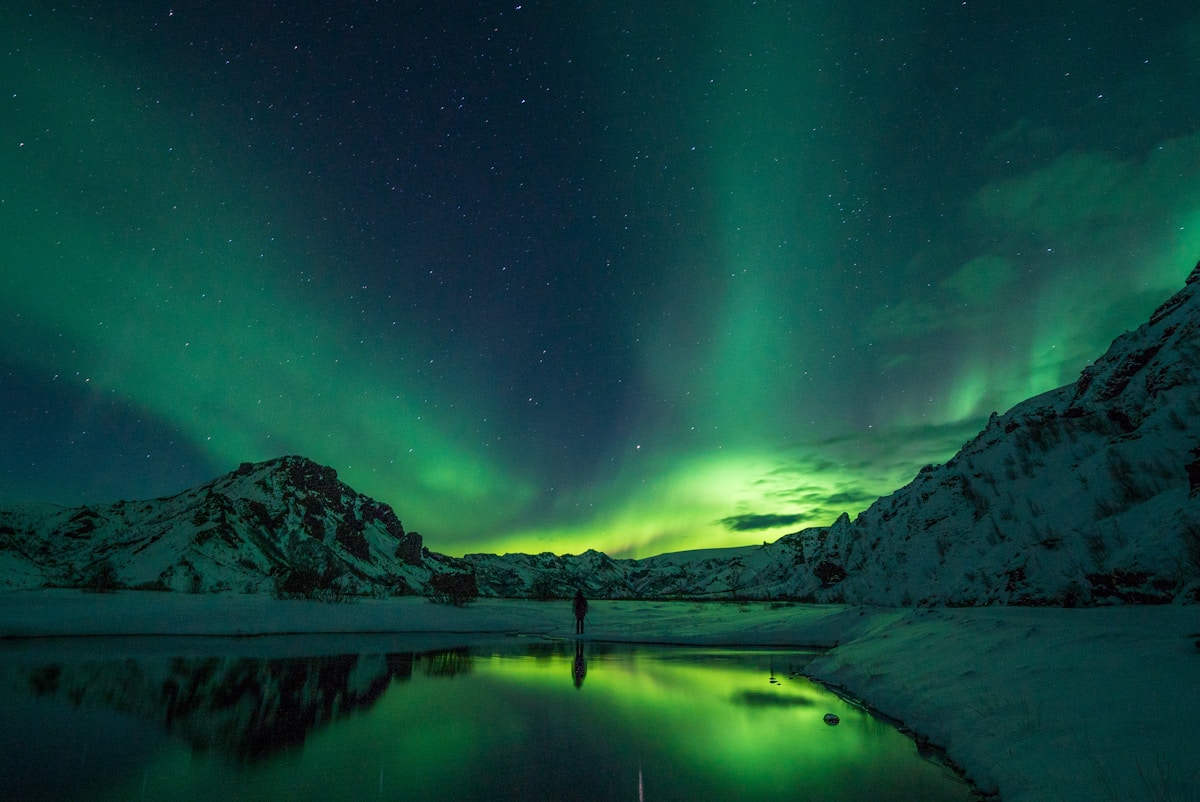
March is the last full month of Iceland’s winter season before spring begins in earnest. Days are lengthening rapidly after the winter solstice - by late March, the spring equinox brings around 12 hours of daylight. The Northern Lights are still viable in early and mid-March, the ice caves are typically still running, and Hlíðarfjall ski resort remains open. Tourism begins picking up from March after the quietest months of January and February, but numbers remain well below summer.
Spring Equinox Approaches: 12 Hours of Daylight by Late March
| Region | Avg High | Avg Low | Notes |
|---|---|---|---|
| Reykjavík | 2 to 6°C | -4 to 2°C | Mild maritime; snow and rain mix |
| Akureyri | 0 to 4°C | -5 to 0°C | Colder and more reliably snowy |
| South Coast | 2 to 5°C | -3 to 1°C | Atlantic storms still common |
| East Fjords | 0 to 4°C | -4 to 0°C | Can be cold and dry |
| Highlands | Below 0°C | -8 to -3°C | All F-roads closed; full winter |
Approximate averages. Iceland’s weather changes rapidly - check vedur.is before each drive.
March can produce true late-winter conditions - blizzards, ice storms, and ground-level visibility near zero on bad days - but also some of the most beautiful clear, cold days of the year. The equinox light in late March gives a golden tone to the landscape that photographers specifically travel for.
March Daylight Recovery: Gaining 5–7 Minutes Per Day
| Early March | Mid-March | Late March (Equinox) |
|---|---|---|
| ~10 hours | ~11 hours | ~12 hours |
Daylight increases by approximately 5–7 minutes per day through March - noticeably faster than January and February. By the spring equinox (around 20 March), day and night are equal. After the equinox, sunset moves past 20:00 by early April, which means the Northern Lights window starts shrinking in late March.
Northern Lights deadline: The Northern Lights require darkness. By late March, nights are short enough that the window for seeing aurora (roughly 22:00–02:00) is adequate but narrowing. March is the last reliable month; by April it becomes a marginal window.
Last Ice Caves of the Season and Hlíðarfjall’s Best Snow Month
Northern Lights
Early and mid-March are good for Northern Lights - nights are still long enough for 4–5 hours of genuinely dark sky. The challenge in March is weather: late-winter storms are common and can produce several consecutive overcast nights. The strategy is to book a Northern Lights tour that includes a resail guarantee (free rebook if conditions are poor) - most Reykjavík operators offer this.
Tours from Reykjavík by super-jeep or minibus from approximately ISK 8,900–12,500 per person. Operators chase clear skies by driving inland and away from coastal cloud cover.
Self-drive: Route 35 south toward Þingvellir, or the Reykjanes Peninsula roads, give dark skies within 30 minutes of Reykjavík. Dress for stationary cold - waiting outside for the lights in March temperatures requires proper insulation.
Ice Caves
The natural ice cave season inside Vatnajökull typically runs November through March. March tours are still available in most years, though the season can close early if temperatures rise. Glacier Guides and Local Guide both run ice cave tours departing from near Jökulsárlón glacier lagoon (from approximately ISK 15,000–19,000 per person). Into the Glacier at Langjökull runs year-round (from approximately ISK 16,500 per person).
Book ice cave tours in advance. March dates sell quickly because it is the last month before the season closes. Check operator websites (glacierguides.is, localguide.is) for availability.
Glacier Walks
Glacier walks on Sólheimajökull and at Skaftafell continue through March. These are year-round operations. March conditions are good - ice is well-formed and stable. Equipment is included in all guided walks; no experience necessary.
Arctic Adventures, Troll Expeditions, and Extreme Iceland run glacier walks from Reykjavík including transport (from approximately ISK 14,900–18,000 including Reykjavík pick-up). Standalone glacier walks from Skaftafell (Local Guide, Glacier Guides) from approximately ISK 10,500–14,000.
Skiing at Hlíðarfjall (Akureyri)
Hlíðarfjall typically operates until April, with March often being the best snow month of the season. March snowfall at altitude is reliable, and the longer days give more skiing time per lift ticket. Day pass approximately ISK 7,000–9,000 adult as of 2026.
The domestic flight to Akureyri takes 40 minutes from Reykjavík (Icelandair or PLAY, from approximately ISK 8,000–15,000 one way). A 2–3 day ski trip in March combining Akureyri, Hlíðarfjall, and the nearby Mývatn area is efficient and good value in the low-season.
Reykjavík City
March is a very good month to be in Reykjavík without the summer crowds. Restaurants are easier to book, the city’s cultural calendar is active, and there are no queues for major attractions. Hallgrímskirkja (lift entry ISK 1,000), Perlan (ISK 4,990), and the National Museum (ISK 2,500) are all excellent and uncrowded.
The Harpa Concert Hall (on the harbour) runs a regular programme of concerts and events through winter - check harpa.is for the March schedule.
Food Festival (March Food and Fun)
Food & Fun is an annual Reykjavík restaurant festival where international chefs create menus using Icelandic ingredients, typically held for 4–6 days in late February or early March. If it falls within your dates, it’s an excellent way to experience Reykjavík’s restaurant scene at its most creative. Check foodandfun.is for current dates.
March Road Conditions: F-Roads Still Closed, Late-Winter Blizzards Possible
- Highland F-roads: All closed. No exceptions. Attempting closed F-roads results in fines and, if you get stuck, significant rescue costs.
- Ring Road: Open year-round, plowed and gritted. But March storms can bring blowing snow, reduced visibility, and icy patches. Check road.is every morning before driving.
- Mountain passes: Susceptible to storm closures in March. Route 1 over Hellisheiðivegur south of Reykjavík can close temporarily; Route 35 (Golden Circle road) can become icy.
- Winter tyres: Mandatory until April 15. All rental cars carry them from November 1 through April 15.
- 4WD: Not required for the Ring Road, but gives security on icy roads. Consider upgrading from a compact if road conditions look bad on your travel dates.
What to Pack for March in Iceland
- Heavy insulated jacket (down or thick synthetic - March temperatures with wind can feel very cold)
- Waterproof jacket and trousers
- Thermal base layers (top and bottom)
- Hat, gloves, and scarf (essential)
- Sturdy waterproof boots with good grip
- Microspikes for ice (Reykjavík pavements can be treacherous; Iceland’s outdoor shops sell microspikes cheaply)
- Sunscreen (glacier and snow UV is real, and March sun can burn)
- Eye mask: not needed for sleeping in March, but nights are still long
Annual Pricing Floor: 25–35% Below July, Best Value Before Spring Demand Builds
March is still low season, with prices beginning to rise slightly from the January–February floor as spring bookings start to fill in:
- Accommodation: Typically 25–35% cheaper than July and August peaks. More rural guesthouses are open than in January–February.
- Car hire: Good availability at low prices - compact from approximately ISK 6,000–10,000/day; SUV from approximately ISK 11,000–17,000/day.
- Flights: Often significantly cheaper than summer from European and North American hubs. March is a popular time for budget travel to Iceland.
March Bases: Reykjavík, the Jökulsárlón Area, and Akureyri
Reykjavík: Best all-weather base, with Northern Lights tours, golden circle day trips, and glacier walk options all accessible. Mid-range hotels from approximately ISK 22,000–36,000 in March.
Jökulsárlón area: For ice cave access. Fosshotel Glacier Lagoon is the main option (approximately ISK 40,000–55,000 - check availability, as it may have limited opening in March).
Akureyri: For skiing at Hlíðarfjall and northern Iceland exploration. Hotels from approximately ISK 20,000–30,000 in March.
Browse Iceland tours - day trips, activity bookings, and multi-day packages across the country in one place.
Compare car hire in Iceland - a 4WD or campervan gives the flexibility to explore at your own pace.
Get travel insurance for Iceland - policies covering glacier hikes, F-road driving, and volcanic disruption.
Related Guides
- Iceland in February - The month before: peak aurora season and ice caves
- Iceland in April - The month after: longer days and the start of spring
- Best time to visit Iceland - Full year comparison of weather, crowds, and activities
- Northern lights in Iceland - March is often the last reliable month for aurora sightings
- Iceland winter driving - Road conditions in March: what to expect as the season transitions
Plan Your Trip
March is a transition month that rewards flexibility. The aurora is still visible on clear nights, but windows shrink as daylight climbs past twelve hours by the equinox. Ice caves at Vatnajökull close by mid-March when warming temperatures make them unstable — don’t leave this to the last week of the month. Hlíðarfjall ski resort above Akureyri typically has its best snow coverage in March; it’s worth combining with a northern circuit if you’re crossing the Ring Road east. South Coast waterfalls like Seljalandsfoss and Skógafoss surge with snowmelt. Crowds are light and prices remain at winter levels throughout the month.
✈️ Book your flights to Iceland 🛡️ Get travel insurance 📱 Stay connected with an eSIM 🚗 Rent a car