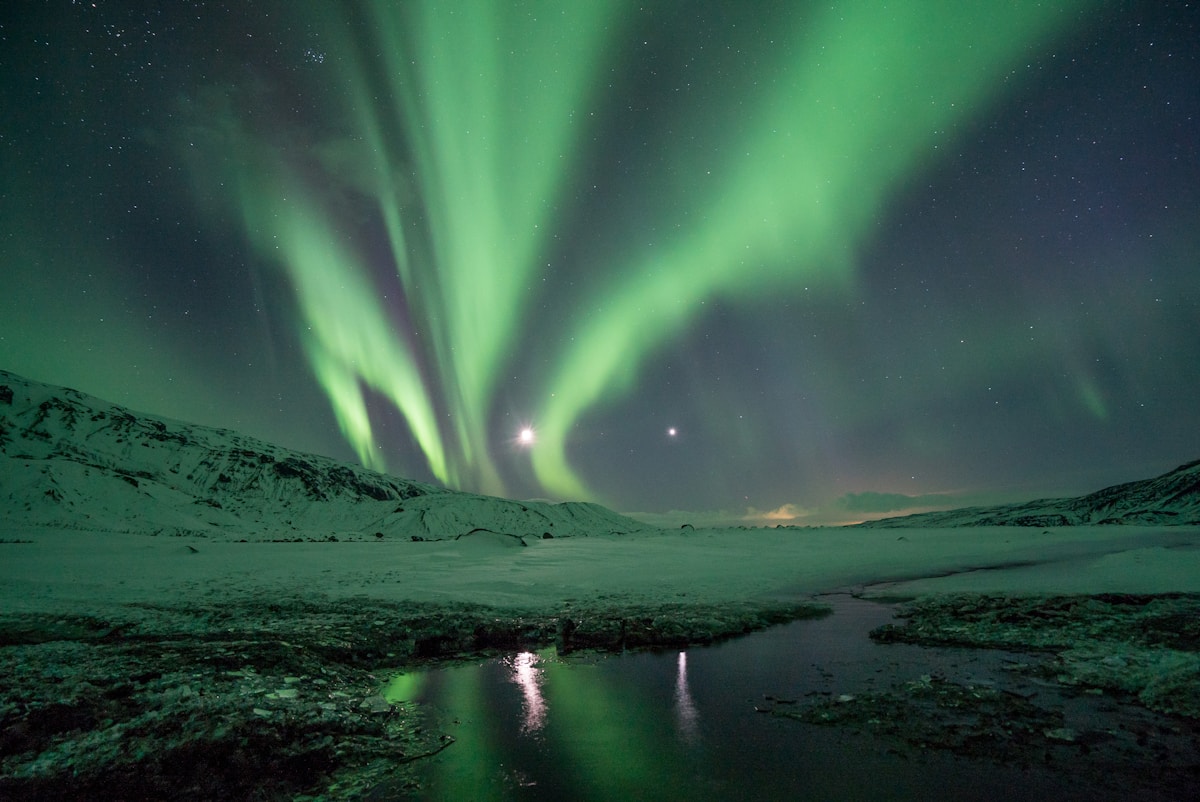
November is Iceland’s entry into full winter mode. Days are short - around 6–7 hours of daylight in Reykjavík - prices are at their annual low, and the island is quiet by tourist standards. It’s also when the ice cave season begins inside Vatnajökull, one of the most extraordinary experiences Iceland offers. The Iceland Airwaves music festival brings a burst of energy to Reykjavík. For travellers who know what to expect, November is a rewarding month.
Around Zero in Reykjavík with Frequent Storms: Days Shrink to 5.5 Hours
| Region | Avg High | Avg Low | Notes |
|---|---|---|---|
| Reykjavík | -1 to 4°C | -5 to -1°C | Frequent storms; snow possible |
| Akureyri | -2 to 2°C | -6 to -2°C | Colder and drier; snow more reliable |
| South Coast | -1 to 4°C | -4 to 0°C | Wind, rain, and snow mix |
| East Fjords | -2 to 3°C | -5 to -1°C | Variable; often cold and clear |
| Highlands | Closed | Closed | All F-roads closed until spring |
Approximate averages. Iceland’s weather is highly variable - check vedur.is before each drive.
November temperatures in coastal Reykjavík often hover around 0°C. The warming influence of the Gulf Stream keeps the city milder than its latitude suggests, but Atlantic storms bring wind, rain, and occasional heavy snow. Inland and in the north, cold is more consistent and snow accumulation more certain.
November Daylight Collapse: Sunrise at 10:30 and Sunset at 15:30 by Month’s End
| Early November | Mid-November | Late November |
|---|---|---|
| ~8.5 hours | ~6.5 hours | ~5.5 hours |
Days shorten dramatically through November. By late November, Reykjavík sees sunrise around 10:30 and sunset around 15:30. This gives a compressed window for outdoor activities - plan the day around the light. Northern Lights windows run from around 16:00 onwards on clear nights.
Crystal Ice Caves Open at Vatnajökull and Akureyri Lights Up for Christmas
Ice Caves Inside Vatnajökull
The natural ice cave season typically opens in November when the ice inside Vatnajökull glacier becomes stable enough for guided entry. These tours access caves of blue glacier ice formed by meltwater tunnels - a different experience from the exterior of the glacier.
The Crystal Ice Cave near Jökulsárlón glacier lagoon is the most accessible and most widely toured. Glacier Guides and Local Guide both run departures from a meeting point near the lagoon. Tours typically run approximately 3 hours (ISK 15,000–19,000 per person as of 2026). Group sizes are limited; book several weeks in advance for November and December departures.
Into the Glacier at Langjökull offers a different experience - a man-made ice tunnel inside the glacier reached by super-jeep. This runs year-round rather than seasonally (from approximately ISK 16,500 per person).
Ice cave availability depends on conditions. Storms can close tours on short notice. Most operators offer flexible rescheduling.
Northern Lights
November is one of the statistically best months for Northern Lights - long dark nights from mid-afternoon, reasonable (though not guaranteed) clear-sky windows between weather systems, and no competing midnight sun light. The challenge in November is that storm systems are more frequent than in September–October.
Strategy for November Northern Lights: Check vedur.is daily. Look for high-pressure systems moving in from the north, which bring cold clear nights after storms. When a clear window appears, act on it - they can be 1–2 nights at a time. Northern Lights tours from Reykjavík depart on evenings with good forecasts (from approximately ISK 8,900–12,500).
Self-drive: Drive away from Reykjavík’s light pollution on clear nights. Route 41 toward Keflavík and the Reykjanes Peninsula is one of the quickest ways to reach dark skies. Route 1 south toward Þingvellir, or north toward Akranes, also work.
Iceland Airwaves Music Festival
Iceland Airwaves is one of Europe’s most acclaimed music festivals, held in Reykjavík’s venues from major halls to small bars. The festival typically runs for 4–5 days in early-to-mid November, showcasing Icelandic artists alongside international acts across venues including Harpa Concert Hall, Gamla Bíó, and Frikirkjan. Check airwaves.is for current year dates and programme.
Festival passes from approximately ISK 25,000–35,000 for full access. Single-night tickets available. The festival is a genuine reason to visit Reykjavík in November and combines well with Northern Lights watching on clear evenings.
Akureyri Christmas Lights
Akureyri is famous throughout Iceland for its Christmas preparations - the town turns on its elaborate Christmas lighting early in November, and from then until January, the traffic lights in the town centre glow with heart-shaped red lights instead of the standard red circle. The town feels genuinely festive and is a worthwhile stop, particularly for families.
The Akureyri Christmas market typically opens in early December, but the lighting and general atmosphere in November already makes it one of Iceland’s most pleasant towns to visit in winter.
Glacier Walks
Glacier walks continue through November on Sólheimajökull and at Skaftafell. November conditions are generally stable for guided glacier walks. Fewer tourists than summer; same operators, same prices (from approximately ISK 10,500–13,000 per person for a standard 3-hour walk).
Skiing at Hlíðarfjall
Hlíðarfjall ski resort near Akureyri typically opens for its season around November, snow conditions permitting. Check hlidafjall.is for opening dates in November. Early-season snow cover can be thin, but when conditions are good from November, Hlíðarfjall has runs open across its 27 pistes. Day lift pass approximately ISK 7,000–9,000 adult as of 2026.
November Road Conditions: Winter Tyres Mandatory, Highland Routes All Shut
- All highland F-roads: Closed from November until approximately late May or June. Do not attempt.
- Ring Road: Open and maintained year-round. Ice and snow are common on elevated sections. Winter tyres are mandatory from November 1 (all rental cars carry them from this date by law).
- Mountain passes and secondary roads: Can close temporarily after heavy snowfall. Always check road.is before departing.
- Driving in darkness: Much of November driving will occur after dark. Reindeer cross roads in East Iceland; slow down on rural sections at night.
What to Pack for November in Iceland
- Heavy insulated jacket (down or synthetic, genuinely warm - not just a light jacket)
- Waterproof jacket and trousers (for layering over insulation)
- Thermal base layers (top and bottom - essential for any outdoor activity)
- Hat, gloves, and scarf (mandatory from November)
- Sturdy waterproof boots with ankle support
- Microspikes for grip on icy paths (strong recommendation - pavement ice in Reykjavík is common)
- Hand warmers if you feel the cold
- Small torch or headlamp for dawn/dusk walks
November Prices: Annual Low Alongside February, 30–40% Below July
November is Iceland’s lowest-price month alongside February and March:
- Accommodation: Can be 30–40% cheaper than July peaks. Some rural summer-only guesthouses are closed; check ahead for remote areas.
- Car hire: Lowest annual prices. Compact cars from approximately ISK 5,500–9,000/day. Strongly consider upgrading to a 4WD for November driving comfort and safety (approximately ISK 10,000–16,000/day for an SUV).
- Flights: Often cheaper than summer peak, particularly from European cities.
November Bases: Reykjavík for Airwaves, Jökulsárlón Area for Ice Caves
Reykjavík: Best November base - all-weather city activities, Northern Lights tours depart from here, Iceland Airwaves venue. Mid-range hotels from approximately ISK 22,000–38,000 in November.
Jökulsárlón area (Diamond Beach area): Stay near the glacier lagoon for ice cave access. Options are limited - Fosshotel Glacier Lagoon is the main hotel in the area (approximately ISK 45,000–60,000 in season). Book well ahead.
Akureyri: Good base for northern Iceland, Hlíðarfjall skiing, and Northern Lights. Hotels from approximately ISK 20,000–32,000 in November.
Browse Iceland tours - day trips, activity bookings, and multi-day packages across the country in one place.
Compare car hire in Iceland - a 4WD or campervan gives the flexibility to explore at your own pace.
Get travel insurance for Iceland - policies covering glacier hikes, F-road driving, and volcanic disruption.
Related Guides
- Iceland in October - The month before: shoulder season, first frosts, early aurora
- Iceland in December - The month after: winter in full, Christmas festivities, peak darkness
- Ice caves in Iceland - November marks the opening of ice cave season
- Northern lights in Iceland - November offers long dark nights for aurora viewing
- Best time to visit Iceland - Full year comparison of weather, crowds, and activities
Plan Your Trip
November is Iceland’s quietest month — and one of the most underrated. Crystal ice caves at Vatnajökull open for the season as temperatures stabilise the glacial ice; book tours from Jökulsárlón as soon as November dates appear, since they sell quickly. Akureyri lights up for the Christmas season from late November, making it a worthwhile stop on a northern circuit. Daylight collapses to about five and a half hours by month’s end, so plan your driving for the middle of the day and use evenings for aurora watching from the car park at Þingvellir or the Reykjanes Peninsula. Prices are at their lowest in November — hotel rates in Reykjavík drop to off-season levels.
✈️ Book your flights to Iceland 🛡️ Get travel insurance 📱 Stay connected with an eSIM 🚗 Rent a car