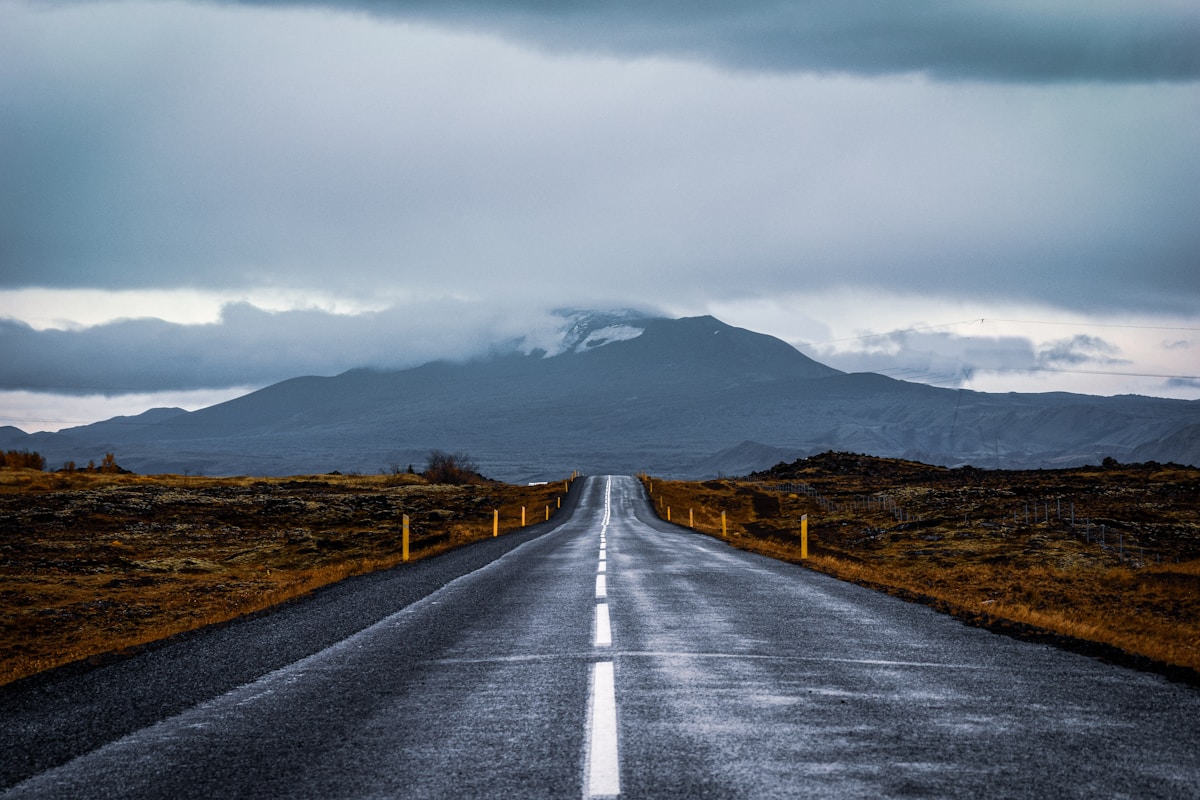
The F35, commonly called the Kjölur route, is Iceland’s most approachable highland crossing - a 200-kilometre gravel road that runs through the interior from the Golden Circle area in the south to the Ring Road in the north, with no river crossings, no technical driving sections, and reliable conditions for any competent 4WD driver. If you have been looking for a gateway into Iceland’s interior highlands without committing to the more demanding F26 or F88 routes, this is where to start.
What the F35 Is - and Isn’t
The F35 cuts through the central highland plateau between the Langjökull and Hofsjökull glaciers, running roughly north-south through the volcanic interior. It connects two easy approach points: the southern end is near Gullfoss, already on most visitors’ itineraries as part of the Golden Circle; the northern end meets the Ring Road near Blönduós and Varmahlíð in northwest Iceland.
What makes the F35 accessible compared to other highland routes:
- No river crossings - Unlike the F26, F88 or most F-roads in the eastern highlands, the F35 has no mandatory water fords. This is the single biggest factor for inexperienced highland drivers.
- Moderate surface conditions - The gravel is loose in places and can be corrugated, but the road width and banking are consistent. Driving speeds of 60–80km/h are reasonable on good sections; 40–50km/h is more appropriate where surfaces are rougher.
- Established fuel and accommodation stops - Hveravellir, roughly midway, offers a service station, café and accommodation. This is the only fuel available on the route itself - plan accordingly.
What the F35 is not:
- A paved road. The central section is gravel from end to end. Short paved approaches exist at the Gullfoss end and near the Ring Road, but these are brief.
- Suitable for 2WD vehicles. The legal designation is an F-road, meaning 4WD is required. Rental contracts for 2WD cars exclude F-roads, and roadside assistance may refuse to help if your insurance is void.
- Open in winter. The F35 is a seasonal road. The highland interior is inaccessible in winter, and attempting it outside the open season is dangerous and irresponsible.
Driving the Route: South to North
Most travellers drive the F35 from south to north, starting from the Gullfoss area after completing the Golden Circle. This is the logical direction if you are making your way up to north Iceland. The return trip - starting at the Ring Road and finishing near Gullfoss - works equally well if you are heading southward.
Gullfoss to the F35 junction (approx 10km paved, then gravel): The turnoff onto the F35 is well-signed from the road leading north from Gullfoss. Once on the gravel, the road climbs gradually onto the highland plateau and views open up quickly. The glaciers of Langjökull appear to the west within the first 30–40km.
F35 to Kerlingarfjöll junction - F347 (approx 130km from Gullfoss): The Kerlingarfjöll junction is marked and easily identifiable. The F347 spur runs approximately 10km to the Kerlingarfjöll Mountain Resort and its geothermal Hveradalir valley. This is one of the best overnight stops on the entire F35 - see our dedicated Kerlingarfjöll highland resort guide for accommodation options and hiking information.
Hveravellir (approx 35km north of the Kerlingarfjöll junction): The only fuel stop on the F35 is at Hveravellir, a highland oasis with a natural geothermal pool, café, guesthouse and petrol pump. The hot spring pool here is free to guests of the Hveravellir huts and campsite; day visitors pay approximately 1,500–2,500 ISK as of 2026. The pool is small and the setting - surrounded by hissing steam vents and the open plateau - is excellent. Fill your tank here regardless of your remaining range; there is no fuel again until you reach the Ring Road.
Hveravellir to Ring Road (approx 90km): The northern section of the F35 is generally smoother than the southern half. The road descends gradually as it approaches the Ring Road junction. The final 10–15km transition to paved road is a welcome shift after hours on gravel.
Key Stops in Detail
Hveravellir
Hveravellir is the natural midpoint stop and worth building time into your schedule. The geothermal field is compact but active - boiling mud pools and steam vents surround the pool area, and you can walk a short loop around the active area in about 30 minutes. The café serves hot soup, sandwiches and coffee; expect to pay approximately 2,000–3,500 ISK for a meal. Accommodation ranges from camping at roughly 2,500 ISK per person per night to dorm beds and private rooms at the hut - book ahead for July and August.
Kerlingarfjöll (F347 junction)
The Kerlingarfjöll massif is visible from the F35 well before you reach the junction - a cluster of rust-coloured rhyolite peaks rising above the plateau. The F347 spur is 10km on rough gravel. The Hveradalir geothermal valley and overnight resort make this the most rewarding detour on the entire route. If you are only stopping once on the F35, stop here.
Highland Plateau Views
The central section of the F35 between Kerlingarfjöll and Hveravellir passes through open highland plateau with views of both Langjökull and Hofsjökull glaciers. On clear days, the scale of the ice caps is remarkable - Langjökull is Iceland’s second-largest glacier and covers nearly 950 square kilometres. There are no formal viewpoints, but the road shoulders are generally wide enough to pull over safely.
4WD Requirements and Vehicle Choice
The F35 can be driven by any competent 4WD driver with a suitable vehicle. You do not need a modified super jeep or professional highland experience - but you do need:
- Genuine 4WD engagement, not just all-wheel-drive. Check with your rental company that 4WD locks properly on your vehicle.
- High clearance - The F35 is generally not extreme in this regard, but the Kerlingarfjöll spur (F347) has sections that require reasonable ground clearance. A standard 4x4 SUV is fine; a standard saloon car is not.
- Gravel tyres or all-terrain tyres - Standard summer tyres are legal and usually adequate. Off-road mud-terrain tyres are unnecessary for the F35.
Appropriate vehicles include: Dacia Duster 4WD, Toyota Land Cruiser, Toyota Hilux, Land Rover Defender, 4WD Isuzu campervans. Not appropriate: any 2WD car, standard city-SUV without 4WD lock, large motorhome without proper 4WD.
Gravel damage insurance is important. Stone chips thrown up on gravel roads are the most common source of rental damage claims in Iceland. Many standard rental policies exclude gravel damage - check yours and consider adding a highland supplement. Driving at a safe following distance (at least 150 metres) behind other vehicles significantly reduces chip risk.
When to Drive the F35
The F35 typically opens in late May or early June and closes in October or November depending on the year. Opening is announced at road.is - check the F-road status page before you travel, as conditions can change and sections may close after heavy rain or early snow.
Best months:
- Late June to mid-August - Maximum daylight, best road surfaces, fullest services at Hveravellir and Kerlingarfjöll. Busiest.
- Late August to mid-September - Fewer vehicles, pleasant temperatures, early autumn colour beginning on the highland plateau. Often the best combination of conditions and crowds.
- Late May to mid-June - Route may be partially open but snowfields can persist. Hveravellir may not be fully staffed. Not recommended unless you have confirmed open status.
Fuel Planning
This is non-negotiable. There is one fuel stop on the entire F35: Hveravellir. Fill your tank before entering from either end, and fill it again at Hveravellir.
- Driving south to north, fill at Gullfoss service station before you turn off for the F35.
- Driving north to south, fill in Blönduós or Varmahlíð before heading south.
- Hveravellir to either end is approximately 120–130km - a vehicle returning under 10L/100km consumption should have sufficient range, but do not rely on this calculation with a low tank.
Carry a small jerrycan (5–10 litres) if you are driving an older or less fuel-efficient 4WD.
Combining the F35 with a Wider Highland Trip
The F35 integrates naturally into a north-south Iceland road trip. A common itinerary runs: Reykjavík → Golden Circle → F35 south entrance → Kerlingarfjöll overnight → Hveravellir → Ring Road north → Mývatn → Akureyri. This structure allows you to experience both the mid-highland stops and the north Iceland highlights in a single sweep. If you’d rather join a guided highland day trip from Reykjavík instead of self-driving, browse Iceland highlands tours on GetYourGuide for current options.
For a more detailed multi-day plan covering Kerlingarfjöll, Landmannalaugar and Þórsmörk, see our Iceland highlands itinerary.
Practical Notes
- Speed limits: Iceland’s F-road gravel speed limit is 80km/h, but 40–60km/h is more appropriate for most of the F35. Slower is safer and less damaging to your vehicle.
- Passing: The F35 is single-track in places. Slower vehicles use wider shoulders to let others pass. If you stop, pull completely off the driving surface.
- Wildlife: Reindeer and Arctic foxes are sometimes seen on the highland plateau, particularly in the early morning. The golden plover is common in summer.
- Emergency: Download the 112 Iceland app before you enter the highlands. It allows you to send your GPS coordinates to emergency services even with no data signal, as long as you have completed the pre-registration.