Quick answer: the five historical sites that explain Iceland best are Þingvellir (the first parliament, 930 CE), the Settlement Exhibition in Reykjavik (a Viking-age longhouse), Skógar Museum (turf houses and rural life), Goðafoss (the conversion to Christianity in 1000 CE) and Eldheimar on the Westman Islands (the 1973 eruption). Together they cover roughly 1,100 years.
Iceland is better known for geology than for history, but the two are linked: the country was settled late, by people who farmed marginal land, ran their own parliament and lived with volcanoes. These five sites, from the south-west round to the north, show that story in order. Each is a real place you can visit, and several fit into routes you may already be planning. For wider context, our Iceland itineraries show how to place them along a week-long trip.
1. Þingvellir National Park
In 930 CE the Althing was founded at Þingvellir, and it met here every summer until 1798. The Lawspeaker recited the legal code from memory at the Law Rock (Lögberg), disputes were settled and marriages and outlawries were announced. The same valley sits on the rift between the North American and Eurasian plates, which is why the walk down Almannagjá is both a history lesson and a geology one. The park is a UNESCO World Heritage Site, designated in 2004.
How to visit: about 45 minutes north-east of Reykjavik by car. Walking is free, with parking charged per vehicle (approximately ISK 750 to 1,000 as of 2026). Allow two hours for the historic area, Law Rock and Öxaráfoss. Local tip: start at the visitor centre viewpoint, then walk down through Almannagjá rather than back up, so the rift walls rise above you. Details are in our Þingvellir guide, and the park’s own site is thingvellir.is. To combine it with Gullfoss and Geysir, see Golden Circle tours.
2. The Settlement Exhibition, Reykjavik
Beneath Aðalstræti 16 in central Reykjavik, archaeologists uncovered the remains of a Viking-age longhouse, and the museum is built around it. The ruin is preserved in place in the basement, with digital displays showing how the house would have looked. The dating connects it to the settlement of the area from about 870 CE, which fits the story of Iceland’s first settlers.
How to visit: in the centre, a short walk from the Old Harbour and Tjörnin. Ticket prices and hours vary between sources, so check the museum operator Borgarsögusafn before you go. The museum has also offered free entry on Culture Night in August. Allow about an hour. Local tip: pair it with a free walk, since our free things to do in Reykjavik list puts several landmarks within ten minutes. For the rest of the city see things to do in Reykjavik.
3. Skógar Museum
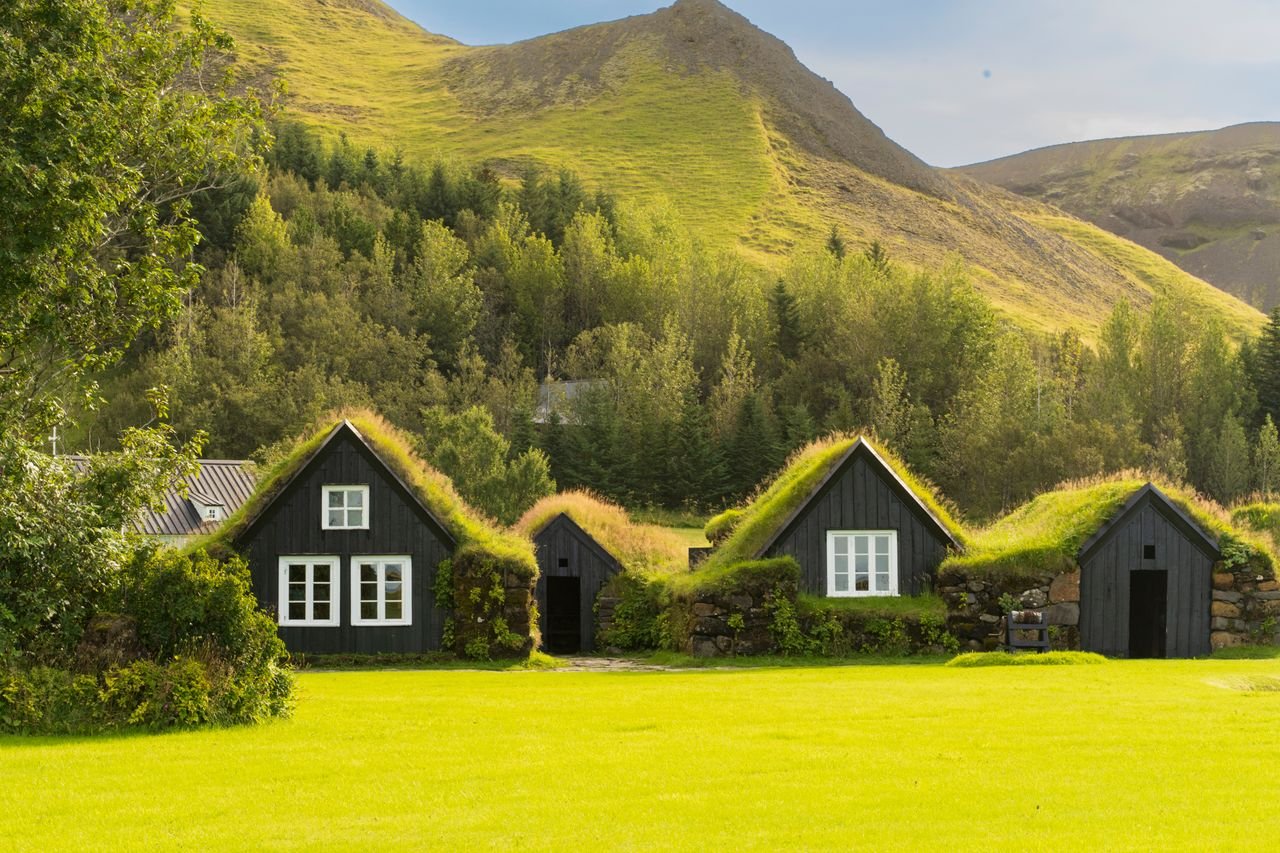
Skógar Museum, on the South Coast, holds well over 15,000 objects, by visitor-guide estimates, and an open-air section of reconstructed turf-roofed buildings. These include a farmhouse from Skál in Síða, built in 1919 to 1920 and rebuilt at the museum in 1989, and a schoolhouse from Mýrdalur. The collection was built up over decades by Þórður Tómasson, who curated it until he retired in 2013 at the age of 92. The museum opened in 1949.
How to visit: the official site lists 09:00 to 18:00 from June to August and 10:00 to 17:00 from September to May, and says it is open 362 days a year. Check skogasafn.is before travelling. Local tip: Skógafoss waterfall is a few minutes’ walk away, so do both on the same stop. Read the Skógafoss guide, and see where to stay in Vík for the nearest base. A good way to see the area with a guide is South Coast tours.
4. Goðafoss
Goðafoss means “waterfall of the gods”. Our north Iceland guides record the story that in 1000 CE the lawspeaker Þorgeir Ljósvetningagoði, after deciding at the Althing that Iceland would adopt Christianity, threw his idols into the falls. Whether the details are exact or not, the site has carried that meaning for centuries.
How to visit: it sits right beside the Ring Road in north Iceland, around 45 minutes east of Akureyri, and there is no entry charge. Both banks have viewing paths. It makes a natural stop on the way to Mývatn, so see the Mývatn guide and North Iceland road trip. For waterfall comparisons, our Iceland waterfalls guide covers Goðafoss alongside Skógafoss and Gullfoss. Local tip: morning light and few visitors are the reason to start early from Akureyri; Akureyri tours can fill the rest of the day.
5. Eldheimar, Westman Islands
On 23 January 1973 a fissure opened on Heimaey, and the island’s roughly 5,300 residents were evacuated by boat to the mainland within hours, with near-zero casualties. Eldheimar is the museum built around a house that was buried by the eruption, then excavated and preserved with its contents. Exhibits cover the evacuation, personal accounts and the long clean-up.
How to visit: take the Herjólfur ferry from Landeyjahöfn (about 35 minutes), and Eldheimar is walkable from the harbour. Check current opening times and entry on the museum website before you travel. The Eldfell trail starts nearby, so a day trip can include both. Our Westman Islands things to do guide has the timings, and you can also browse Westman Islands tours. Local tip: in rough weather the ferry can divert to Þorlákshöfn, adding hours, so build slack into the day.
Planning a History-Focused Trip
If you only have one day, Þingvellir plus the Settlement Exhibition covers Iceland’s founding from both ends. With a car and three days, add Skógar on the South Coast and Eldheimar by ferry. Goðafoss belongs on any northern loop. For official planning information, see Visit Iceland. If you plan to drive between sites, compare car hire in Iceland. Prices quoted here are approximate as of 2026, so confirm them on each site’s own page.